


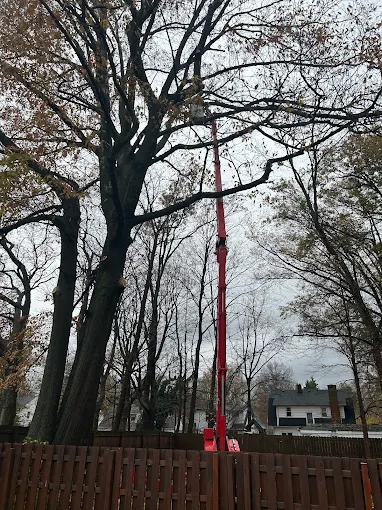
The benefits of stump removal in Lake County, OH are easiest to see once the stump is gone. A leftover stump can interrupt mowing, collect water, attract insects, send up sprouts, and make an otherwise clean yard feel unfinished.
For homeowners in Mentor, Painesville, Willoughby, Madison, Kirtland, Wickliffe, and nearby Lake County communities, stumps can also become more noticeable after spring rain, summer mowing, and winter freeze-thaw cycles. What looks like a small leftover piece of a tree can become a recurring obstacle in the middle of a lawn, garden bed, driveway edge, or play area.
Removing a stump is not only about appearances. It can make the yard easier to maintain, reduce tripping concerns, improve access for lawn equipment, and give you more usable space for grass, planting, hardscaping, or future tree care.
Premier Tree Specialists provides tree removal, trimming, emergency service, and stump grinding across Lake County and Northeast Ohio. If you recently removed a tree or inherited an old stump from a previous owner, finishing the job can make the whole yard safer and cleaner.
In this article, you will learn about:
- Why old stumps create safety and maintenance problems
- How stump removal makes your yard cleaner and easier to use
- What stump removal can prevent below the surface
- When to schedule stump removal after tree work
Keep reading to decide whether an old stump is worth keeping or ready to go.
Why old stumps create safety and maintenance problems
A stump may seem harmless because it does not move, grow tall, or threaten the roof the way a damaged tree can. The problem is that it sits right where people walk, mow, carry tools, play, garden, or move equipment.
Over time, grass grows around the edges, bark softens, soil settles, and the stump becomes easier to miss. That is when a leftover stump turns from a visual nuisance into a practical yard hazard.
Stumps can become tripping hazards
A low stump is easy to overlook, especially when it is surrounded by tall grass, leaves, snow, or mulch. Kids, guests, delivery drivers, and older family members may not know it is there.
Falls are not a small concern for households with older adults. The CDC reports that falls among adults 65 and older caused more than 38,000 deaths in 2021, and emergency departments recorded nearly 3 million visits for older adult falls that same year.
Removing a stump does not eliminate every outdoor fall risk, but it does remove one hard, fixed obstacle from the yard. That matters most in high-traffic spaces near patios, walkways, driveways, gates, and play areas.
Mowing around stumps can be frustrating and risky
Stumps make lawn care slower because you have to steer around them, trim around the edges, and avoid hitting exposed wood or roots. A mower blade that catches a stump, root flare, or hidden surface root can damage equipment or throw debris.
Lawn equipment already carries enough risk without extra obstacles. A CPSC report cited an estimated 934,394 lawn mower-related injuries treated in U.S. emergency departments from 2005 to 2015, an average of 84,944 injuries per year.
Stump removal helps simplify the mowing path. Instead of circling the same obstacle every week, you can grade the area, seed it, and treat it like the rest of the lawn.
Old wood can make a yard look unfinished
Even when a stump is not dangerous, it can make a yard look like the tree work stopped halfway. It interrupts open lawn space, draws attention to a previous removal, and can make landscaping feel less intentional.
That can be especially frustrating after paying for tree work, cleanup, or new planting. The tree is gone, but the stump keeps the area from feeling complete.
Stumps are most noticeable when they sit in places you use often, such as:
- Front yards with open curb visibility
- Side yards used for mowing or storage access
- Backyards with patios, playsets, or pets
- Garden beds where the stump interrupts planting
- Edges of driveways, fences, and walkways
Once the stump is removed, the area can be leveled and folded back into the yard. That gives you more flexibility whether you want grass, mulch, flowers, a new tree, or a cleaner open space.
It also makes routine care feel less patched together. Instead of trimming weeds around decaying wood, you can maintain one smooth, usable surface.
How stump removal makes your yard cleaner and easier to use
The biggest day-to-day benefit of stump removal is that the yard becomes simpler. You have fewer obstacles, fewer awkward edges, and fewer spots where weeds and sprouts keep coming back.
In Lake County, that simplicity matters because yards go through wet springs, humid summers, leaf drop, lake-effect snow, and freeze-thaw movement. A stump that feels manageable in one season can become more annoying in the next.
You can reclaim usable lawn space
A stump takes up more room than its visible top. You also lose the area around it because mowing, planting, grading, and foot traffic all have to work around the leftover wood and roots.
When the stump is ground below grade, the space can be filled, leveled, and reused. Iowa State University Extension notes that professional stump grinders typically chew away the stump and large lateral roots 8 to 12 inches down, often within a matter of hours.
That depth gives homeowners a more practical surface to restore. The area may still need soil, settling time, and reseeding, but the large wood obstacle is no longer controlling the layout.
Cleanup is easier after storms and leaf drop
Stumps catch leaves, sticks, grass clippings, and storm debris. They also create awkward pockets where weeds can grow and where water can sit after heavy rain.
Cleveland-area climate normals from the National Weather Service show 41.03 inches of normal annual precipitation and 3.56 inches of normal August precipitation. In a Lake County yard, that moisture can keep low spots around old stumps messy during parts of the year.
Removing the stump makes cleanup more straightforward. Leaves can be raked, grass can be cut evenly, and water is less likely to collect around a decaying obstacle.
Landscaping options open back up
A stump limits what you can do with a section of yard. You may want a new bed, a cleaner lawn, a path, a patio extension, or a replacement tree, but the stump keeps dictating the shape of the space.
Once the stump is handled, you can plan the area based on how you actually use the property. That might mean planting grass, expanding a bed, creating a safer walking route, or keeping the area open for kids and pets.
For larger projects, the best choice may depend on whether you need grinding or full extraction. If the goal is planting, grading, or construction, the right stump removal method depends on stump size, root spread, access, and what you want to do with the space afterward.
What stump removal can prevent below the surface
The visible stump is only part of the issue. Roots, decay, moisture, and regrowth can keep affecting the area long after the tree itself has been cut down.
Not every stump will cause a major problem, but leaving one in place means the yard has to keep working around a decomposing root system. In some cases, that is fine. In others, it creates years of extra maintenance.
Sprouts can keep coming back
Some tree species send up new shoots from the stump or root system after cutting. These sprouts can grow quickly, especially when the roots still have stored energy.
Repeated sprouting creates more trimming, more herbicide decisions, and more frustration for homeowners who thought the tree was already gone. It can also make the area look messy even after the larger trunk is removed.
Stump removal helps reduce that cycle. If sprouts are already appearing, mention them during the estimate so the crew can explain what grinding or removal can and cannot address based on the species and root system.
Decay can attract insects and nuisance activity
A stump is dead wood in contact with soil. As it breaks down, it can hold moisture and become a place where insects, fungi, and small nuisance activity are more likely to appear.
That does not mean every stump will create an infestation. It does mean a decaying stump near the house, garage, deck, fence, or shed is worth paying attention to.
Common concerns include:
- Ant activity in softened wood
- Mushrooms or fungal growth around the stump
- Bees or wasps using cavities nearby
- Rodents using overgrown stump areas as cover
- Weeds and volunteer growth hiding the stump edge
Removing the stump takes away one source of decaying material. It also makes the area easier to inspect, mow, and maintain.
If insects are already active around the stump, avoid disturbing it casually with hand tools. A professional can help you decide whether to grind, remove, or coordinate with pest control first.
Old roots can interfere with future plans
Roots left underground may slowly decay, settle, or interfere with planting and light landscaping. If you are planning a new tree, garden bed, walkway, fence, or drainage adjustment, the remaining root system can affect where and how the work should happen.
This is one reason stump decisions should match the future use of the space. A lawn repair may only require grinding and topsoil, while a construction or replanting project may need a more detailed plan.
If the stump is connected to a larger tree project, tree removal and stump work should be discussed together. That helps avoid paying for one phase, then realizing the remaining wood still blocks the next step.
When to schedule stump removal after tree work
Stump removal can happen soon after tree removal, or it can be scheduled later if access, budget, weather, or landscaping plans require it. The best timing depends on how the yard is used and whether the stump is creating an immediate problem.
For many homeowners, the cleanest option is to plan stump grinding while the rest of the tree work is being estimated. That way the crew can explain cleanup, chips, depth, access, and restoration before equipment arrives.
Remove the stump sooner in high-use areas
If the stump is in a walkway, play area, mowing route, driveway edge, or front lawn, waiting often creates more inconvenience. These are the areas where people notice the stump every week.
Sooner removal also helps when you are trying to restore curb appeal after a tree comes down. A clean, level area looks more finished than a cut stump surrounded by weeds and chips.
Stumps in high-use areas should move up the list when they:
- Sit where children or guests walk
- Interrupt regular mowing paths
- Block a gate, garden bed, or driveway edge
- Are close to a patio, deck, or play space
- Have already started sprouting or decaying
If none of those apply, the timing may be less urgent. A stump in a wooded edge or low-use back corner may be more of a long-term cleanup decision than an immediate safety issue.
The important part is to decide intentionally. If you leave it, know why. If you remove it, match the method to the next use of the space.
Talk through grinding depth and cleanup
Before scheduling, ask how deep the stump will be ground and what happens to the chips. Some homeowners want the chips left for mulch, while others want them hauled away so the area can be filled and seeded.
Depth matters because a shallow grind may still leave wood near the surface. A deeper grind can make lawn repair easier, though the right depth depends on stump size, roots, access, and the plan for the area.
If the job is part of a larger cleanup, ask whether the estimate includes debris removal, backfilling, topsoil, or seeding. Those details affect how quickly the yard looks finished afterward.
Consider budget before delaying too long
Some homeowners delay stump work because the tree removal itself was the urgent expense. That is understandable, especially after storms or unexpected hazards.
Still, it is worth asking about options while the tree work is fresh. Combining services, phasing the work, or using financing may make the project easier to plan without leaving the yard half-finished for another season.
If the stump is small, out of the way, and not causing problems, waiting may be fine. If it affects safety, mowing, drainage, landscaping, or curb appeal, removing it sooner can save repeated hassle.
Conclusion
Stump removal gives Lake County homeowners a safer, cleaner, and more usable yard after tree work. It removes a fixed obstacle, makes mowing easier, improves the look of the lawn, and opens the space for grass, planting, or future landscaping.
It can also reduce ongoing maintenance around sprouts, weeds, decaying wood, and awkward low spots. For yards with children, older adults, pets, frequent mowing, or tight access areas, those practical benefits can matter every week.
The best approach depends on the stump's size, location, root spread, and what you want to do with the area next. A professional estimate can help you decide whether grinding is enough or whether a more complete removal plan makes sense.
If an old stump is making your Lake County yard harder to use, Premier Tree Specialists can inspect the area, explain your options, and provide a free quote for professional stump grinding or removal.
