


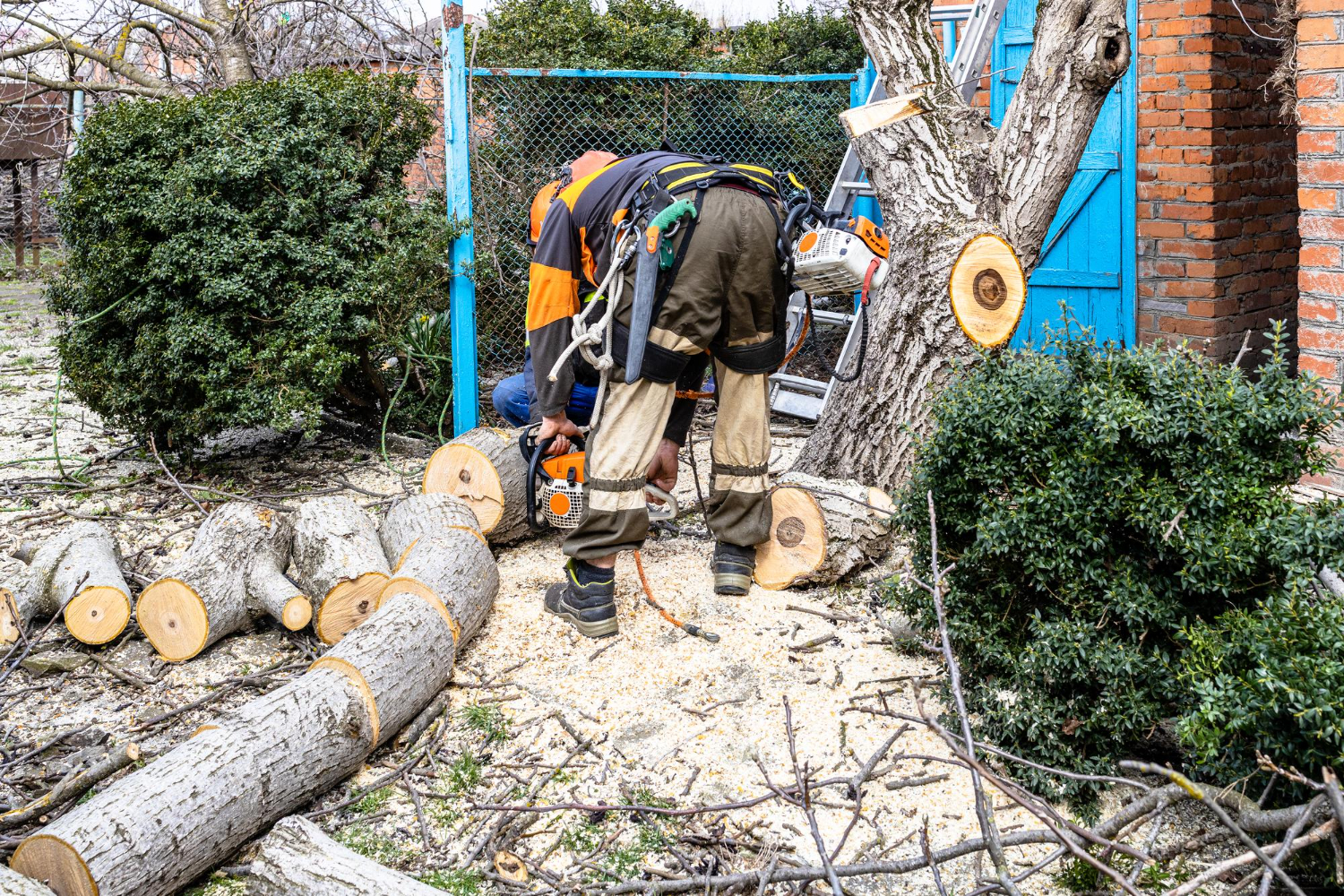
Stump grinding vs stump removal Ohio is a decision most property owners face within days of having a tree taken down, and the right choice depends on what you plan to do with the space afterward.
Both methods eliminate the visible stump, but they leave your yard in very different conditions and carry different costs, timelines, and long-term implications. Choosing the wrong method for your situation can mean spending more than necessary, or worse, creating a problem for a future landscaping or construction project.
In this article, you will learn exactly how stump grinding and stump removal each work, what affects the cost of each method in Ohio, which situations call for one over the other, and what to do with the space after the stump is gone.
Here's what you'll find below.
In this article, you will learn about:
- How stump grinding works and what it leaves behind
- How stump removal works and when it is the right call
- Stump grinding cost in Ohio and what drives price differences
- How to choose the right method based on your property goals
Keep reading to get a clear, side-by-side understanding of both methods so you can make the right call for your yard before the crew arrives.
Stump grinding vs stump removal refers to the choice between mechanically shredding a tree stump down to ground level using a rotating cutting wheel, versus physically extracting the entire stump and its root system from the soil, each producing a different result and serving different long-term property uses.
How stump grinding works and what it leaves behind
Stump grinding is the more common of the two methods for residential properties in Ohio, and for most standard situations it is the faster, less disruptive, and more cost-effective choice. Understanding exactly what the process involves helps you set accurate expectations for what your yard will look like when it is done.
The grinding process does not remove the stump entirely. It reduces it to a pile of wood chips and leaves the root system intact beneath the soil surface. That distinction matters depending on what you plan to do with the area afterward.
The stump grinding process step by step
A stump grinder is a self-propelled or towable machine equipped with a rotating steel cutting wheel mounted with carbide-tipped teeth. The operator positions the wheel over the stump and works it back and forth across the surface, progressively cutting the wood into chips. Most residential stumps are ground to a depth of 6 to 12 inches below grade, though grinding to 16 inches or deeper is possible when requested.
The process for a typical medium-sized stump takes 30 minutes to two hours depending on stump diameter, wood hardness, and the depth requested. The result is a depression filled with wood chip mulch, with the root system remaining underground.
According to the U.S. Forest Service, mechanized stump grinding is a widely adopted industry method for urban residential stump management due to its low site disturbance and efficient processing time relative to excavation-based alternatives.
A few variables consistently drive how long a grinding job actually takes on-site:
- Stump diameter, since wider stumps mean more material for the wheel to process
- Wood density, with hardwoods like oak taking noticeably longer than softer species
- Grinding depth requested, since deeper grinding requires more passes
- Root flare and surface roots, which can slow the initial passes until the grinder reaches clean wood
Most residential jobs fall on the shorter end of that range, but a large hardwood stump ground to full depth can take considerably longer than a homeowner might expect.
What stump grinding leaves in your yard
After grinding, the hole left by the stump is filled with the chips produced during the process. Those chips can be left in place to decompose over one to three years, raked out and replaced with topsoil, or hauled away entirely if a cleaner finish is preferred. Most Ohio homeowners who plan to reseed or sod the area choose to have the chips removed and the depression backfilled with topsoil.
The root system remains in the ground and will gradually decay over several years. For most grass and garden applications this is not a problem.
The roots do not typically regrow once the stump is ground, though some species, including certain oaks, elms, and trees prone to suckering, may produce new shoots from the remaining root tissue. A follow-up treatment with a stump killer applied to the freshly ground surface can prevent suckering in susceptible species.
When stump grinding is the right choice
Stump grinding suits the majority of residential situations in Ohio. It is the preferred method in several common scenarios.
It is the preferred method when:
- The stump is in a lawn area that will be reseeded or sodded after removal
- The surrounding landscape, driveway, or hardscape would be damaged by excavation equipment
- The project budget favors a lower upfront cost over complete root extraction
- The timeline is tight and minimal site disruption is a priority
- No construction, deep foundation work, or underground utility installation is planned for the area
The benefits of removing a stump through grinding include eliminating a tripping hazard, stopping pest harborage in decaying wood, improving lawn mowing access, and restoring the visual appearance of the yard without major ground disturbance.
How stump removal works and when it is the right call
Full stump removal goes further than grinding by extracting the entire stump and its primary root system from the ground. It is a more invasive process that requires heavier equipment and leaves a significantly larger void in your yard, but it is the only method that produces a completely clear, root-free site.
Understanding when that level of clearance is actually necessary helps you avoid overpaying for excavation work your situation does not require.
The full stump removal process
Full stump removal typically uses one of two approaches depending on stump size and site conditions. Smaller stumps may be removed using a tractor-mounted loader or hydraulic stump puller that grips the stump and extracts it with direct upward force. Larger stumps with extensive root systems require an excavator to cut and expose the lateral roots before the main root ball can be lifted.
The process leaves an open pit that can range from two to four feet deep and several feet in diameter for a mature tree, depending on root spread. That void must be backfilled with clean fill and topsoil before the area can be graded, seeded, or built upon. Research published in Arboriculture & Urban Forestry has found that root spread in open-grown deciduous trees averages nearly three times the canopy drip line radius, which means the excavation footprint for full removal is often larger than the visible stump suggests.
What full removal leaves behind and what it costs extra
After extraction, the stump and root ball are hauled from the site. The remaining void requires backfill material, grading, and in most cases topsoil and seeding before the area is usable. Those post-excavation steps are often quoted separately from the removal itself, so confirm with your contractor whether backfill and grading are included in the stump removal cost Ohio estimate you receive.
Full removal also carries a higher risk of disturbing nearby landscaping, underground irrigation lines, and utility conduits. Before scheduling excavation-based stump removal, verify the location of any underground utilities by calling Ohio 811 at least 48 hours before the job.
When full stump removal is worth the added cost and disruption
Full stump removal is the right choice in a specific set of situations where the remaining root system would create a genuine problem.
Those situations include:
- New construction, an addition, or a poured foundation is planned for the area where the stump sits
- Underground utility installation, drainage work, or irrigation lines will run through the root zone
- A new tree will be planted in the same location and the old root system would compete with or impede establishment
- The root system of the removed tree has already caused damage to hardscape, foundation, or drainage infrastructure and complete extraction is required to stop ongoing damage
For the majority of Ohio residential properties without these specific conditions, full removal adds cost and disruption without a proportional benefit over grinding.
Stump grinding cost in Ohio: what drives price differences
Stump grinding cost in Ohio varies based on several measurable factors, and getting an accurate estimate requires an in-person assessment rather than a phone quote. Understanding what drives cost helps you evaluate quotes and avoid being underprepared for the final invoice.
Both stump grinding and full removal are typically priced per stump, though some contractors use a per-inch diameter pricing model for grinding jobs with multiple stumps.
Factors that affect stump grinding cost
The primary cost drivers for stump grinding in Ohio are worth understanding before you compare quotes from different providers.
They include:
- Stump diameter: larger diameter means more material to process and longer machine time
- Wood hardness: dense hardwoods like oak and hickory wear cutting teeth faster and take longer to grind than softer species
- Grinding depth requested: standard residential grinding to 6 inches costs less than deep grinding to 12 or 16 inches
- Access to the stump: stumps behind fencing, in confined spaces, or on slopes may require smaller equipment or hand work, adding time and cost
- Chip disposal: leaving chips in place is the least expensive option; hauling them away adds a disposal fee
- Number of stumps: multiple stumps on the same visit typically reduce the per-stump cost
For full stump removal, cost is driven primarily by root system size, excavation depth required, equipment needed, and the cost of backfill material and grading. Full removal almost always costs more than grinding for the same stump, often significantly so on larger specimens.
Getting an accurate Ohio stump removal services estimate
The most reliable way to get an accurate price for either method is to have a certified arborist assess the stump in person. A reputable stump removal service in Ohio will measure the stump diameter, evaluate wood condition and access, confirm your intended use for the space, and provide a written quote that specifies exactly what is included before any work begins.
A written quote worth trusting should spell out:
- The method being used, grinding or full removal, and why
- The grinding depth or excavation depth included in the price
- Whether chip removal, backfill, or grading are included or billed separately
- The estimated timeline for completion
- Whether the price changes if the crew finds different conditions once work begins
Be cautious of quotes provided over the phone without a site visit. Stump diameter and access conditions are the two most variable cost factors, and neither can be accurately assessed without seeing the site. A quote that sounds low without an in-person assessment frequently increases once the crew arrives and evaluates the actual conditions.
Multi-stump jobs and bundling with tree removal
If you are having one or more trees removed and stumps ground in the same visit, bundling the services typically reduces the overall cost compared to scheduling them separately.
The grinding equipment is already on site, the crew is already mobilized, and the debris management can be consolidated. When hiring a professional for tree removal, ask specifically whether stump grinding can be included in the same visit and quoted together for a combined rate.
What to do with the space after stump removal in Ohio
Once the stump is gone, what you do with the cleared area determines how quickly your yard returns to a usable, finished condition. The right post-removal approach depends on which method was used and what you intend to plant or build in the space.
Planning for this phase before the job begins, rather than after, avoids unnecessary delays and additional service calls.
After stump grinding: filling, seeding, and planting
After grinding, the depression filled with wood chips needs preparation before grass or plants will establish reliably. Wood chips are high in carbon and low in nitrogen, and as they decompose they temporarily pull nitrogen from the surrounding soil, which can inhibit grass germination if chips are left in place without amendment.
For the best results when reseeding after stump grinding, remove as many chips as possible from the depression, backfill with a mix of topsoil and compost, firm the surface to reduce settling, and apply a starter fertilizer before seeding. If planting a new tree or shrub in the same area, allow six to twelve months for the remaining root system to begin decomposing before planting to reduce competition for nutrients and water.
After full stump removal: grading and ground preparation
After full extraction, the void left by the root ball must be backfilled in layers and compacted progressively to prevent uneven settling. Using clean fill for the lower layers and topsoil for the final six to eight inches produces a stable, plantable surface. Grade the area to match the surrounding terrain, accounting for settling of approximately 10 to 15 percent of the fill depth over the first season.
If construction is the intended use, a soil compaction test after backfilling confirms whether the bearing capacity meets the requirements for the planned structure. This step is especially important for poured concrete applications such as driveways, patios, or foundation footings.
Lawn restoration and replanting options
Whether you used grinding or full removal, the cleared area offers an opportunity to improve your yard's overall condition.
Overseeding with a turf variety suited to Ohio's climate and your yard's sun exposure, combined with a light mulch cover to retain moisture, produces the fastest grass establishment. For areas with significant shade from remaining trees, a shade-tolerant fescue blend performs better than bluegrass or ryegrass mixes under Ohio canopy conditions.
If you plan to plant a new tree, consulting with an ISA-certified arborist before selecting a species ensures the new tree is appropriate for the site's soil, drainage, and sun conditions. This reduces the risk of early failure and future plant health care complications.
Why Premier Tree Specialists handles both methods across Ohio
At Premier Tree Specialists, we offer both stump grinding and full stump removal across Northeast and Central Ohio, and we help every customer determine which method actually fits their situation before committing to either one.
How we assess your stump and recommend the right method
We start every stump job with an in-person evaluation by a member of our team. We measure the stump diameter, assess the wood condition and species, confirm equipment access, and ask you directly what you plan to do with the space. That conversation shapes our recommendation. We do not default to one method over the other for any reason other than what genuinely serves your property goals and budget.
Our team includes ISA-certified arborists and holds TCIA membership, meaning our assessments follow industry-standard protocols rather than guesswork. We carry full liability and workers' compensation insurance, and we provide written quotes before any work begins so there are no surprises on invoice day.
Our equipment and service area
We operate professional-grade stump grinders capable of processing stumps to standard and deep grinding depths, as well as the excavation equipment required for full root extraction on larger specimens. We serve all of Cuyahoga, Lorain, Summit, Geauga, Lake, and Medina counties, as well as the Columbus-area counties of Franklin, Delaware, and Fairfield.
If your stump job is part of a larger tree trimming project, we can add it to the same visit. This canopy management approach reduces cost and minimizes disruption to your property.
Pricing, financing, and getting started
All estimates are free and conducted in person. We offer interest-free financing on qualifying projects. We also provide discounts for seniors, veterans, and new customers across our full service area. Same-day responses are available for standard scheduling inquiries, and our 24-hour emergency line handles urgent situations around the clock.
Conclusion
Stump grinding vs stump removal in Ohio comes down to one central question: what do you plan to do with the space after the stump is gone? Grinding is faster, less disruptive, and more cost-effective for the vast majority of residential situations where lawn restoration or general landscaping is the goal. Full removal is the right investment when construction, underground work, or complete root clearance is required and the added cost and site disturbance are justified by the intended use.
Neither method is universally better. The right choice depends on your specific tree species, stump size, site conditions, and long-term plans for that area of your property. Getting an in-person assessment from a certified arborist before deciding ensures your choice is based on the actual conditions of your yard rather than a general rule of thumb.
When you are ready to move forward with stump grinding or full stump removal anywhere in Northeast or Central Ohio, contact Premier Tree Specialists for a free on-site estimate and a clear recommendation tailored to your property.
