

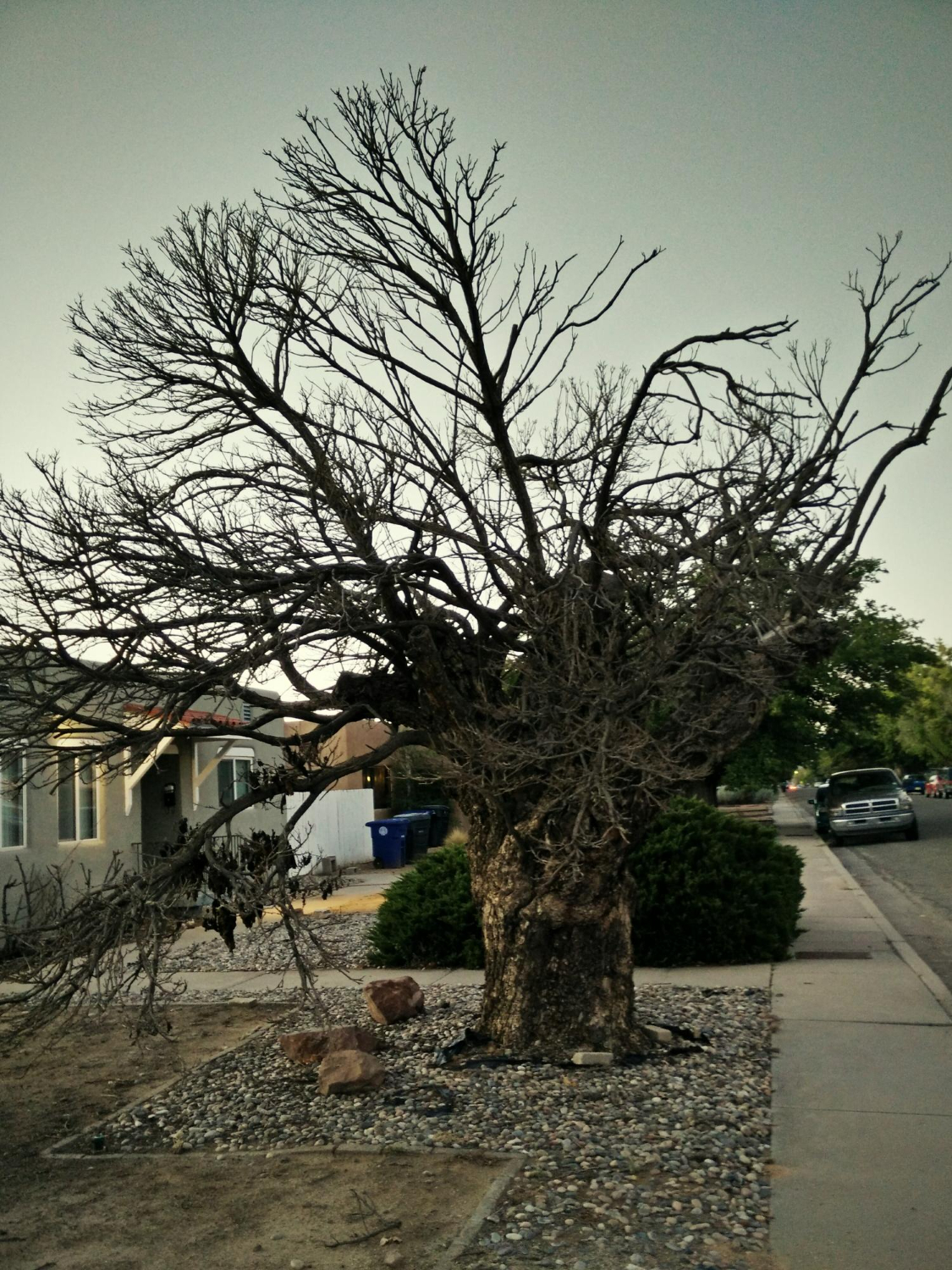
Recognizing dead tree signs in Ohio early can prevent a hazardous situation from becoming a costly emergency. Across Northeast and Central Ohio, trees face a specific combination of stressors, from harsh winters and ice storms to fungal pathogens and invasive insects, that accelerate decline in ways that are not always obvious to the untrained eye.
In this article, you'll learn how to identify the visual and structural signs of a dead or dying tree, understand the most common causes of tree decline in Ohio, know when a tree can be saved versus when removal is the right call, and understand what a professional assessment involves.
Below, we'll walk through each important aspect.
- Visual signs your tree may be dead or dying
- Common causes of tree decline in Ohio
- Dead versus dormant: how to tell the difference
- When to remove a tree and when to wait
- Why Premier Tree Specialists is the right call for Ohio homeowners
Keep reading to protect your property, your family, and the trees worth saving before a declining tree becomes a dangerous one.
Visual signs your tree may be dead or dying
The earliest and most reliable indicators of tree decline are visible from the ground. Knowing what to look for, and when to look, can mean the difference between saving a tree and managing a hazard. The signs below apply to most deciduous and evergreen species common across Ohio's residential and suburban landscapes.
Foliage and branch tip indicators
Leaf behavior is one of the clearest early signals of tree stress. A tree that fails to leaf out in spring, produces undersized or discolored leaves, or drops foliage well before fall is showing active signs of systemic decline. Key indicators include:
- Leaves that are brown, wilted, or scorched without a weather explanation
- Sparse canopy where full foliage was present in previous years
- Branches with no buds visible in late winter or early spring
- Dead branch tips, also called flagging, scattered unevenly through the crown
A single dead branch does not indicate a dead tree. Widespread flagging across multiple scaffold branches, however, signals a systemic problem that warrants a professional evaluation. Professional tree trimming and pruning can sometimes address early crown dieback if the underlying cause is caught in time.
Bark and trunk warning signs
The bark and trunk tell a more complete story than the canopy alone. Healthy bark maintains consistent color and texture for its species. Significant departures from that baseline are worth investigating. Signs to watch for include:
- Vertical cracks or splits running along the main trunk
- Large sections of bark peeling or falling away without new growth underneath
- Soft, spongy wood beneath detached bark, indicating internal decay
- Discolored streaks in the cambium layer visible where bark has separated
Cankers, which are sunken, discolored lesions on the bark surface, are another indicator of fungal or bacterial infection. A canker that encircles an entire branch or stem, called a girdling canker, will kill everything above it. Plant health care intervention at the canker stage can sometimes halt progression before it reaches the main trunk.
Root zone and base of tree symptoms
Decline often begins below ground, where it is least visible. By the time root problems manifest above the soil line, the tree's structural integrity may already be compromised. Watch for:
- Fungal conks or mushrooms growing at the base of the trunk or on surface roots
- Heaving soil on one side of the tree, indicating root failure
- Sawdust-like frass near the base, a sign of wood-boring insect activity
- Leaning that has developed or worsened over a single season
According to the U.S. Forest Service, root decay is a leading cause of urban tree failure, with basal fungal indicators present in a significant proportion of trees that experience sudden structural collapse. Trees showing these symptoms should be assessed promptly.
Common causes of tree decline in Ohio
Understanding what kills trees in Northeast Ohio helps homeowners identify problems earlier and make more informed decisions about treatment versus removal. Several pathogens and environmental stressors are disproportionately responsible for decline across the region.
Fungal pathogens and wood decay organisms
Ohio's humid summers and wet springs create favorable conditions for a range of fungal pathogens. Oak wilt, caused by Bretziella fagacearum, is one of the most destructive, capable of killing a mature red oak within a single growing season. Symptoms include rapid wilting and browning of leaves starting at the branch tips and moving inward.
Armillaria root rot, caused by Armillaria spp., attacks the root system and lower trunk of a wide range of species. Honey-colored mushrooms at the base in late summer or fall are a reliable indicator. Unlike oak wilt, Armillaria progresses slowly but is rarely reversible once established in the root system.
Invasive insects and secondary colonizers
Several invasive insects have caused widespread tree mortality across Ohio in recent decades. The emerald ash borer (Agrilus planipennis) has eliminated a significant portion of Ohio's ash tree population. Infested trees show canopy dieback starting at the top, S-shaped larval galleries under the bark, and D-shaped exit holes.
The 3 reasons to remove dead trees include the risk that standing dead wood from insect-killed trees becomes a structural hazard and a breeding reservoir for secondary colonizers that spread to healthy neighboring trees.
Environmental stress and site conditions
Drought, soil compaction, poor drainage, and construction damage to root zones are among the most common non-pathogenic causes of decline in residential settings. Trees weakened by environmental stress are significantly more susceptible to pathogen and insect attack, making site conditions a critical part of any health assessment.
According to Ohio State University Extension, a majority of tree health problems diagnosed in urban and suburban Ohio settings involve an environmental stress factor as a primary or contributing cause, underscoring the importance of evaluating the full growing environment rather than focusing solely on visible above-ground symptoms.
Dead versus dormant: how to tell the difference
One of the most common points of confusion for Ohio homeowners is distinguishing between a tree that is dead and one that is simply dormant in winter. A tree that looks bare and lifeless in January may be completely healthy. Misidentifying a dormant tree as dead, or vice versa, leads to either unnecessary removal or dangerous inaction.
The scratch test and bud examination
Two simple field tests help clarify the question. The scratch test involves lightly scraping the bark of a small branch with a fingernail or knife blade. Living wood beneath the bark will appear green or white and slightly moist. Brown, dry, or brittle tissue underneath indicates that section is dead.
Bud examination is equally reliable. In late winter, living deciduous trees carry buds that are firm, plump, and slightly pliable. Dead branches carry no buds, or carry buds that are dry, shriveled, and fall apart when pressed. Checking multiple branches across different areas of the crown gives a more accurate picture than testing a single location.
When the whole tree shows no signs of life
If the scratch test and bud examination return negative results across the entire crown, including branches from multiple scaffold limbs, the tree is very likely dead. At that point, the focus shifts from saving the tree to managing it safely. A dead tree does not always need to be removed immediately, but its structural condition and proximity to structures, utilities, and people determine the urgency.
A consultation with an ISA-certified arborist is the most reliable way to confirm a tree's status and receive a professional assessment of removal timing and risk. Arborist consultations are especially valuable when the tree is large, close to a structure, or located in a difficult access area.
Partial dieback and the salvageable tree
Not every tree showing dead signs is beyond recovery. Partial dieback, where one or two limbs have died while the rest of the crown remains healthy, is common after storm damage, localized disease, or insect activity. In these cases, targeted pruning and treatment can often stabilize the tree.
Homeowners who have questions about whether their tree falls into this category can review how a trusted tree company evaluates and protects a landscape before deciding on a course of action.
When to remove a tree and when to wait
Removal is not always the first or only answer when a tree shows signs of decline. The decision involves weighing the tree's structural condition, species, location, rate of decline, and the risks it presents to people and property. Several factors push the decision toward removal rather than monitoring or treatment.
Structural failure risk and proximity to targets
A tree's risk level is always evaluated in relation to what it could hit if it fell. Arborists refer to this as target assessment. A dying tree in an open field with no structures, utilities, or foot traffic nearby carries low immediate risk. The same tree leaning toward a house, over a driveway, or near a power line is a high-priority removal candidate regardless of how slowly it is declining.
Structural indicators that elevate removal urgency include large dead branches in the upper crown, a compromised root plate, significant trunk decay, and co-dominant stems with included bark, a condition where two main stems grow together in a V-shape and are prone to splitting under load.
Timing removal before storm season
Northeast Ohio's severe weather season, which runs from late spring through early fall, is when structurally compromised trees are most likely to fail. Scheduling tree removal before that window opens is significantly safer and less expensive than responding to a tree that has already come down on a structure.
Emergency removal following storm damage is available, but proactive removal of a known hazard tree is always the more controlled and cost-effective option. After removal, stump grinding eliminates the remaining root plate and prevents the stump from becoming a fungal host that spreads decay to nearby trees.
Trees worth treating versus trees past the threshold
Not every declining tree is a removal candidate. Species with high landscape value, structural integrity despite some dieback, and treatable underlying conditions are often worth treating and monitoring. An ISA-certified arborist can distinguish between a tree in recoverable decline and one that has crossed the threshold into irreversible deterioration. That distinction is the core of what a professional assessment provides.
Why Premier Tree Specialists is the right team for Ohio homeowners
Identifying dead tree signs accurately requires more than a visual inspection. It requires knowledge of Ohio-specific pathogens and insects, an understanding of species behavior across seasons, structural engineering principles for risk assessment, and the judgment to distinguish treatable decline from irreversible failure. That is precisely the expertise Premier Tree Specialists brings to every property.
ISA-certified arborists with regional expertise
Premier Tree Specialists employs ISA-certified arborists and holds active TCIA membership, meaning every assessment follows current industry standards. The team's over 80 years of combined experience covers the full range of tree health challenges specific to Northeast and Central Ohio, from emerald ash borer damage to Armillaria root rot in aging residential maples.
Every assessment begins with a thorough on-site inspection of the canopy, bark, trunk, and root zone. No recommendation is made without a complete picture of the tree's condition and its relationship to surrounding structures and site conditions.
A full range of services from assessment to removal
Whether the outcome is targeted pruning, a structured treatment plan, or full removal with stump grinding, Premier Tree Specialists handles every stage of the process. Homeowners who have followed along on the Premier Tree Specialists blog will recognize the consistent emphasis on doing the right thing for the tree and the property, not the fastest or most profitable option.
Full liability insurance and workers' compensation are maintained on every job. Ground protection mats are used on all projects to protect landscaping. Free estimates are available, along with interest-free financing and discounts for seniors, veterans, and new customers.
Getting started with a free assessment
The most important step for any Ohio homeowner who suspects a tree on their property is dead or in decline is to schedule a professional evaluation before the problem progresses. Waiting for obvious structural failure is the highest-risk and highest-cost approach.
Contact Premier Tree Specialists for a free on-site estimate. The sooner the tree's condition is assessed by a certified professional, the more options remain available, whether that means saving it or safely removing it on your terms.
Conclusion
Dead tree signs in Ohio range from subtle foliage changes and bark irregularities to obvious structural failure and fungal growth at the base. The challenge for homeowners is knowing which signs indicate a tree in temporary stress versus one in irreversible decline, and acting on that information before the tree becomes a hazard.
Northeast Ohio's climate and pest pressure make that evaluation more complex than a simple visual check. Fungal pathogens, invasive insects, root zone stress, and winter damage all interact in ways that require professional knowledge to interpret accurately. The scratch test and bud examination provide useful starting points, but they are no substitute for a full on-site assessment by an ISA-certified arborist.
Protecting your property starts with understanding what your trees are telling you. Premier Tree Specialists offers free estimates and professional evaluations for homeowners across Northeast and Central Ohio who want a clear, honest answer about their trees' condition and their options going forward.
