

Does tree removal increase home value? The answer depends almost entirely on which tree is being removed, why it is being removed, and what condition it is in before the work is done. Blanket assumptions in either direction, that removal always adds value or always subtracts it, miss the specificity that drives real estate outcomes in Northeast Ohio's residential market.
In this article, you'll learn when removing a tree raises property value, when it reduces it, how buyers and appraisers evaluate trees during a home sale, and what the decision-making process looks like for Ohio homeowners weighing a removal before listing or simply managing their landscape long-term.
Here's what you'll find below.
- When tree removal increases home value
- When tree removal hurts your property value
- How buyers and appraisers evaluate trees
- Tree removal before selling: a practical Ohio guide
- Why Premier Tree Specialists helps Ohio homeowners make the right call
Keep reading to understand exactly how tree removal affects property value in Northeast Ohio, so you can make a decision grounded in evidence rather than assumption.
Does tree removal increase home value is a question with a conditional answer. Removing a dead, hazardous, or structurally compromised tree typically increases value by eliminating liability, improving curb appeal, and removing a visible defect. Removing a healthy, mature tree in a desirable location typically decreases value by eliminating a landscape asset that contributes to energy efficiency, aesthetics, and buyer appeal.
When tree removal increases home value
Not every tree is an asset. Trees in poor condition, poorly positioned trees, and species with known structural problems can actively reduce a property's market appeal and introduce liability that informed buyers will factor into their offers.
Dead and declining trees as visible liabilities
A dead or visibly declining tree is one of the most straightforward cases where removal adds value. Buyers touring a property see a dead tree as an unresolved maintenance problem, a future expense, and a potential hazard. The presence of a clearly dead tree signals that the property has deferred maintenance, which can trigger broader skepticism about the home's overall condition during the inspection process.
According to the U.S. Forest Service, dead and structurally compromised trees in residential settings are associated with measurable reductions in perceived property condition during buyer evaluations, with removal and site restoration consistently improving assessed curb appeal scores compared to properties with unresolved tree hazards. Addressing dead tree removal before listing eliminates a visible objection before buyers have the chance to raise it.
Hazard trees and insurance implications
A tree that poses a clear structural risk to the home, a fence, a vehicle, or a neighboring property creates liability exposure that informed buyers and their insurers will not ignore. Home inspectors routinely flag hazard trees in their reports, and those flags become negotiating points that reduce sale price or require resolution before closing.
Removing a confirmed hazard tree before listing removes that flag from the inspection report entirely. It also eliminates the insurance complication that comes with a property where a known tree risk has not been addressed. The cost of professional tree removal in Ohio is consistently lower than the negotiated price reduction a hazard tree flag typically generates during a sale.
Poorly positioned trees affecting structures and usability
Trees that have grown too close to foundations, that have root systems actively lifting driveways or walkways, or that cast excessive shade over solar panels, gardens, or outdoor living areas reduce the functional value of the property regardless of the tree's health. In these cases, removal restores usability and eliminates an ongoing structural maintenance cost that buyers would otherwise inherit.
Stump grinding and removal following extraction restores the ground plane fully, allowing the space to be replanted, hardscaped, or simply returned to lawn without the tripping hazard and fungal host that a remaining stump would create.
When tree removal hurts your property value
Removal is not a universally positive intervention for property value. Healthy, well-positioned mature trees are among the most valuable landscape features a residential property can have, and removing them without clear justification produces a net loss in multiple dimensions simultaneously.
The economic value of mature healthy trees
Mature trees in good structural condition contribute measurable economic value to residential properties through several mechanisms. Their canopies reduce summer cooling loads by shading the home's roof and walls. Their root systems manage stormwater runoff, reducing erosion and drainage problems. Their presence signals an established, well-maintained landscape that buyers in Northeast Ohio's market consistently respond to positively.
According to the USDA Forest Service, trees in good condition on residential properties contribute an average of one to ten percent to assessed property value depending on species, size, location, and regional market, with large canopy trees in desirable positions at the higher end of that range. Removing a healthy mature oak or maple to simplify yard maintenance is a trade that rarely favors the homeowner financially.
Curb appeal and the buyer's first impression
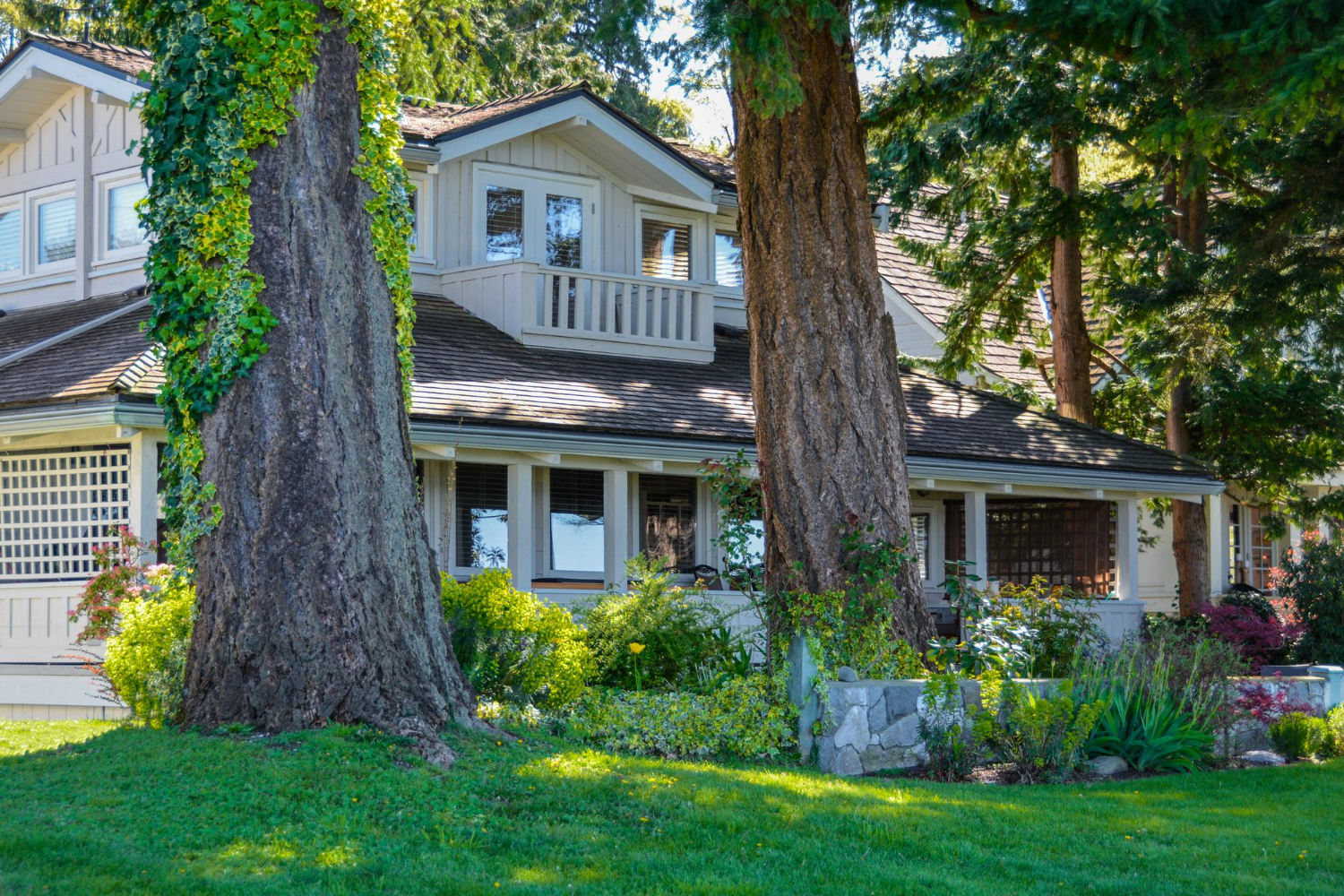
A property's curb appeal is shaped significantly by its tree canopy. A well-treed front yard communicates maturity, stability, and landscape investment that buyers register within seconds of arriving. Removing a prominent healthy tree from the front of a property before listing can produce a visually stark result that works against the home in an initial showing, particularly in established neighborhoods across Cuyahoga, Lake, and Summit Counties where mature canopy is a neighborhood characteristic buyers are specifically seeking.
The benefits of regular tree trimming for curb appeal are well documented, and in many cases professional pruning of an overgrown or structurally messy healthy tree produces a better visual and financial outcome than removal would.
Neighborhood context and comparable properties
Property value is always relative to the surrounding market. In neighborhoods where mature tree canopy is the norm, a property that removes a significant healthy tree without replacement stands out negatively against its comparables. Buyers comparing similar homes on the same street will factor the relative landscape quality into their offers, even if they do not articulate it explicitly.
How buyers and appraisers evaluate trees
Understanding how trees factor into formal property valuation and buyer decision-making gives homeowners a clearer picture of which tree situations genuinely affect sale outcomes and which are unlikely to move the needle.
Appraisal methods for tree value
Licensed appraisers do not typically assign a standalone line-item value to individual trees in a standard residential appraisal. Tree value is embedded in the overall assessment of landscaping quality, lot condition, and curb appeal. However, in cases involving significant landscape features, appraisers may apply the trunk formula method or comparable sales analysis to account for mature specimen trees.
The Council of Tree and Landscape Appraisers guidelines, maintained in coordination with the ISA, provide the framework most commonly used when tree value is formally assessed, as in insurance claims or legal disputes. For typical residential sales, the influence of trees shows up in the comparable selection and adjustment process rather than as an explicit line item.
What home inspectors look for in trees
Home inspectors assess trees from a liability and structural risk perspective rather than a value perspective. They are looking for conditions that could generate a future insurance claim or property damage event. The tree conditions most likely to appear in an inspection report include:
- Dead or structurally compromised trees within fall distance of the structure
- Branches in contact with or overhanging the roof
- Root systems visibly affecting the foundation, driveway, or walkways
- Trees showing signs of advanced disease or pest damage
An arborist consultation before listing gives homeowners the opportunity to resolve any of these conditions on their own terms, before an inspector documents them as deficiencies.
Buyer psychology and landscape perception
Beyond formal appraisal, buyers respond to trees emotionally as well as analytically. A healthy, well-maintained tree canopy communicates that a property has been cared for consistently. A yard with tree stumps, visible decay, or awkwardly removed trees communicates the opposite, even if the removals were technically justified.
This is why the how of tree removal matters as much as the whether. Professional removal followed by stump grinding and site restoration presents a clean, intentional result. A visible stump or raw soil patch left behind after removal tells a different story to a buyer walking the yard during a showing.
Tree removal before selling: a practical Ohio guide
For Ohio homeowners preparing to list a property, the tree removal decision benefits from a structured approach rather than a last-minute judgment call.
Start with a professional assessment, not assumptions
The most common mistake homeowners make in this process is deciding whether to remove a tree based on visual impression rather than professional evaluation. A tree that looks unhealthy may be in early recoverable decline. A tree that looks fine may have internal decay or root zone problems that a home inspector will flag regardless.
A pre-listing plant health care assessment from a certified arborist gives homeowners an accurate picture of every tree on the property before committing to removal, trimming, or treatment. That assessment is the foundation of a defensible, value-maximizing decision rather than a guess.
Prioritize hazard trees and visible defects first
If the assessment identifies any trees that would generate an inspection flag, those are the first priority for removal or remediation. Eliminating inspection report items before listing is one of the highest-return pre-sale investments available to homeowners, as each flagged item becomes a negotiation point that typically costs more in price reduction than it would have cost to resolve.
After hazard trees are addressed, the remaining decision involves healthy trees in positions that may or may not be adding value. This is where the landscaping and home resale value calculus becomes genuinely contextual and where an arborist's input, combined with a real estate professional's perspective on local buyer preferences, produces the most informed outcome.
Allow time for site restoration before listing
Removal followed immediately by listing leaves visible raw soil, fresh stump grinding debris, and an unfinished landscape appearance that works against the property. Wherever the timeline allows, scheduling removal with enough lead time for basic site restoration, whether through reseeding, replanting, or simply allowing the ground to settle, produces a cleaner presentation at listing.
According to Ohio State University Extension, strategic landscape improvements made in the season before a home listing, including hazard tree removal combined with replanting of appropriate species, consistently support faster sale timelines and stronger buyer response compared to properties where landscape decisions were deferred until the active listing period.
Why Premier Tree Specialists helps Ohio homeowners make the right call
The question of whether tree removal increases home value does not have a universal answer, but it does have a correct answer for each specific property. Arriving at that answer requires honest professional evaluation from someone whose recommendation is based on the tree's actual condition, not on which service generates more revenue.
Assessment-first, service-second
Every engagement with Premier Tree Specialists begins with an on-site assessment by an ISA-certified arborist. Whether the outcome is removal, trimming, treatment, or a recommendation to leave the tree alone entirely, the arborist's job is to give the homeowner an accurate picture of what the tree needs and what the property value implications of each option are.
That assessment-first approach reflects a straightforward professional standard: homeowners deserve accurate information before making permanent decisions about trees that have taken decades to reach their current size and condition.
Full-service execution from removal to restoration
For homeowners who proceed with removal, Premier Tree Specialists manages the complete process, from ISA-certified assessment and professional rigging through debris removal, stump grinding, and site cleanup. Ground protection mats are used on every job. The property is left in clean, usable condition that supports rather than undermines its presentation to buyers or neighbors.
Free estimates are available across the full service area in Northeast and Central Ohio. Interest-free financing and discounts for seniors, veterans, and new customers make professional tree care accessible without deferring decisions that affect the property's condition and market value.
Conclusion
Does tree removal increase home value? It depends on the tree. Dead, hazardous, and structurally compromised trees consistently add value when removed, by eliminating inspection flags, reducing liability, and improving curb appeal in ways buyers and appraisers respond to directly. Healthy, well-positioned mature trees consistently subtract value when removed unnecessarily, taking with them energy savings, aesthetic appeal, and the landscape maturity that Northeast Ohio buyers actively seek.
The variable that resolves the question for any specific property is an accurate professional assessment of what each tree actually is, what condition it is actually in, and what role it plays in the property's overall presentation and function. That assessment is worth obtaining before any removal decision is finalized, particularly when the tree in question is large, visible from the street, or close to a structure that a home inspector will evaluate.
Premier Tree Specialists provides free on-site estimates and ISA-certified arborist assessments for homeowners across Northeast and Central Ohio who want a clear, honest answer before making a permanent decision about the trees on their property.
