


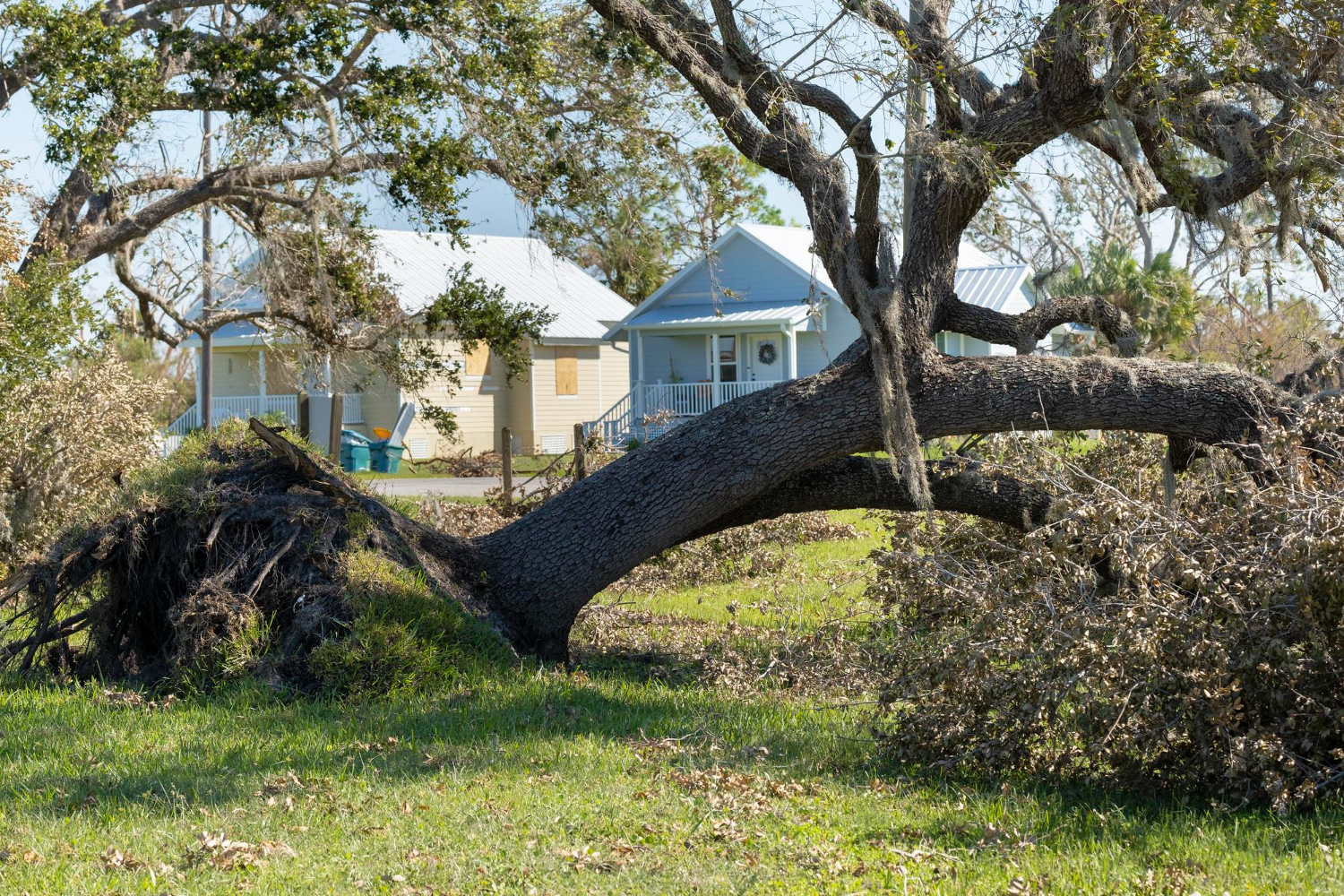
Storm damage tree removal in Cleveland becomes an urgent priority the moment severe weather passes and homeowners step outside to assess what the wind, ice, or heavy snow has left behind. Northeast Ohio storms are capable of splitting mature trees, uprooting shallow-rooted species, and sending large limbs through roofs, fences, and vehicles with very little warning.
In this article, you'll learn what to do immediately after a storm affects the trees on your property, how to assess damage safely before calling a professional, what factors determine whether a tree can be saved or needs to come down, and what the removal process looks like from start to finish.
Let's break down the key points you should consider:
- Immediate safety steps after a storm
- Assessing storm damage: what to look for
- When storm-damaged trees need emergency removal
- The removal process and what comes after
- Why Cleveland homeowners call Premier Tree Specialists first
Keep reading to understand how to protect your property, your family, and the trees that are still worth saving after a serious storm moves through.
Immediate safety steps after a storm
The moments immediately after a storm are when the risk of secondary injury is highest. Fallen trees create a range of hazards that are not always visible on the surface, and moving too quickly around damaged trees without assessing the situation can put homeowners in serious danger.
Stay clear of downed trees and power lines
The first and most important rule after any storm is to keep distance from any tree or branch that is in contact with, or near, a power line. A downed tree leaning against a utility line may be energized even if no sparks are visible. Treat every downed wire near a tree as live until the utility company confirms otherwise.
Do not attempt to move a tree or branch that is touching a structure, vehicle, or fence until a professional has assessed whether the tree is under tension. A tree pinned against a roof or car can shift unpredictably when weight is removed from one side, creating a sudden and dangerous release of stored energy.
Document the damage before touching anything
Once it is safe to move around the exterior of your property, photograph and video the damage thoroughly before any debris is moved or cut. This documentation serves two purposes: it supports insurance claims accurately, and it gives the removal crew a complete picture of the situation before they arrive on site.
Note which trees are still standing but visibly damaged, which limbs are hanging or partially attached, and whether any root plates have heaved. Hanging broken limbs, commonly called widow-makers, are among the most dangerous post-storm hazards and should be flagged clearly. Reviewing how a trusted tree company assesses and protects a landscape can help homeowners understand what the crew will be evaluating when they arrive.
Assess structural damage to your home and property
Before calling for tree removal, do a quick exterior walk of your property to identify any breach in the roof, damage to gutters or siding, or broken windows caused by fallen branches. This information helps determine whether the removal crew needs to work around an active structural compromise or coordinate with other contractors.
Do not enter any area of your home directly beneath a tree that has partially fallen onto the structure until the tree's stability has been confirmed by a professional. Partial roof penetrations carry the risk of further collapse if the tree shifts.
Assessing storm damage: what to look for
Not every tree that sustains storm damage needs to be removed. Understanding the difference between superficial damage and structural failure helps homeowners make faster, more informed decisions when calling for an assessment.
Signs of repairable versus irreparable damage
Trees that have lost one or two branches but retain a structurally sound trunk and root system are often good candidates for remedial pruning rather than full removal. Repairable situations typically include:
- Single scaffold limb failure with clean separation at the attachment point
- Crown damage limited to less than a third of the total canopy
- Bark wounds or splits that have not penetrated deeply into the heartwood
- Leaning caused by wet soil and wind, where the root plate remains mostly intact
Irreparable damage, by contrast, involves the structural core of the tree. A split trunk, a shattered main leader, or a fully uprooted root plate leaves no viable path to recovery. These trees require prompt emergency tree removal before secondary failure causes additional damage to the property.
Hanging limbs and partially attached branches
Partially attached branches are among the most dangerous outcomes of storm damage. A limb that has cracked but not fully separated may appear stable while still holding hundreds of pounds of wood under significant tension. Wind, additional rain, or simply the weight of the limb itself can trigger sudden failure hours or even days after the original storm.
Any hanging limb over a walkway, driveway, roof, or occupied area should be treated as an active hazard requiring immediate professional attention. These are not situations suited to a ladder and a handsaw. The reasons not to attempt DIY tree work are especially relevant when dealing with storm-stressed wood under tension.
Root and soil disruption after heavy rain
Severe storms combining high winds with saturated soil are particularly destructive to root systems. Trees that appear upright may have experienced significant root plate movement that is not visible above ground. Signs of root disruption include:
- Soil heaving or cracking in a circle around the base of the tree
- A visible gap between the root flare and the surrounding soil on the windward side
- New leaning that was not present before the storm
According to the U.S. Forest Service, wind-induced root failure is one of the leading causes of whole-tree collapse in urban settings, with saturated soils reducing anchorage capacity by a significant margin compared to dry conditions. A tree showing post-storm lean combined with root zone disturbance should be evaluated before the next wind event, not after.
When storm-damaged trees need emergency removal
Some post-storm situations allow for scheduled removal within a few days. Others require same-day response. Knowing which category a situation falls into helps homeowners prioritize their calls and manage risk while waiting for a crew.
Scenarios that require immediate response
Call for emergency removal the same day when any of the following conditions exist:
- A tree or large limb has fallen on or partially through the roof
- A tree is in contact with power lines or utility infrastructure
- A hanging limb is directly over a doorway, driveway, or frequently used path
- A tree has uprooted and is resting against a fence, wall, or neighboring structure
- A split trunk is visibly spreading under the weight of the remaining canopy
These situations carry active and escalating risk. Waiting for a standard appointment window is not appropriate when a tree's failure mode is already in progress.
Situations that allow for scheduled removal
Trees that have sustained significant but stable damage can often wait for a scheduled crew visit within one to three days. This includes trees with major crown loss that are still rooted and upright, stumps left behind by clean trunk failure, and large debris piles that are not blocking access or threatening structures.
After debris is cleared, stump grinding and removal eliminates the remaining root plate, prevents fungal colonization, and restores usable ground space on the property.
Trees that appear stable but warrant an assessment
A subset of post-storm trees present the most difficult judgment call: they look intact from the street but have sustained internal damage that increases their long-term failure risk. Lightning-struck trees, trees with new cracks near the base, and trees that shed large limbs may have compromised internal structure that is not visible externally.
According to Ohio State University Extension, lightning-struck trees that survive the initial strike often develop internal decay at the strike channel over the following one to three growing seasons, making delayed assessment of apparently intact trees an important post-storm practice. An arborist consultation following any major strike is worth scheduling even when the tree appears unharmed.
The removal process and what comes after
Understanding what a professional storm damage removal involves helps homeowners set accurate expectations and prepare their property for the crew's arrival.
Site assessment and access planning
Every removal begins with a site walk conducted by the crew lead or ISA-certified arborist. They evaluate the tree's condition, the proximity of structures and utilities, equipment access points, and the safest dismantling sequence. For trees that have partially fallen onto structures, the assessment also determines whether the tree needs to be cut in place or rigged and lifted to prevent further damage.
Ground protection mats are deployed before any equipment moves across the lawn. This is standard practice on every Premier Tree Specialists job, regardless of whether the ground is wet or dry following the storm.
Debris removal and site cleanup
Storm removals generate significantly more debris volume than standard scheduled removals. Branches, split trunks, and root balls require systematic staging and removal. The crew hauls away all material, leaving the property clear and safe.
Storm removals generate significantly more debris volume than standard scheduled removals. Branches, split trunks, and root balls require systematic staging and removal. The crew hauls away all material, leaving the property clear and safe before moving to the next phase of the job.
Post-removal assessment of remaining trees
After the immediate hazard is resolved, the crew can walk the rest of the property and flag any standing trees that show storm stress not severe enough to require same-day action but worth monitoring or scheduling for follow-up pruning. This proactive step is where significant long-term damage prevention happens.
Targeted tree trimming and pruning of storm-stressed but salvageable trees, combined with a plant health care evaluation for trees showing signs of internal stress, gives the remaining canopy the best chance of recovering fully and staying structurally sound through the next storm season.
Why Cleveland homeowners call Premier Tree Specialists first
Storm damage tree removal in Cleveland requires more than a chainsaw and a truck. It requires rapid response, professional risk assessment, ISA-certified judgment about what can be saved and what must come down, and the equipment to execute safely in difficult post-storm conditions.
24/7 emergency response across Northeast Ohio
Premier Tree Specialists maintains 24/7 emergency availability for storm damage calls across Northeast and Central Ohio. When severe weather hits Cuyahoga, Lake, Geauga, or surrounding counties, crews are available to respond the same day regardless of when the storm passes.
Response time matters when a tree is on a roof or a hanging limb is over a doorway. The team arrives prepared with the equipment, rigging, and crew size the situation requires, assessed from the information gathered during the initial call.
ISA-certified arborists on every assessment
Every storm damage assessment is conducted by, or under the direct supervision of, an ISA-certified arborist. This credential matters specifically in storm scenarios because the judgment calls involved, whether to remove or save a damaged tree, how to sequence a complex removal over a structure, how to identify hidden internal damage, require formal training and field experience that general tree service crews may not have.
Full liability insurance and workers' compensation are maintained on every job, which is particularly important in storm scenarios where site conditions are unpredictable and removal risks are elevated.
Financing, discounts, and free estimates
Storm damage is unplanned expense by definition. Premier Tree Specialists offers interest-free financing to help homeowners manage the cost without delay, along with discounts for seniors, veterans, and new customers. Free on-site estimates are available so homeowners receive a clear scope of work and pricing before any cuts are made.
Conclusion
Storm damage tree removal in Cleveland is a situation that rewards fast, informed action and punishes hesitation. Hanging limbs, uprooted root plates, split trunks, and trees leaning against structures are all active hazards that can escalate quickly, especially if another weather system moves through before the damage is addressed.
The steps that matter most are straightforward: stay clear of downed lines and unstable trees, document the damage thoroughly, identify which situations require same-day response versus scheduled removal, and call a certified professional before attempting any work yourself. The combination of post-storm soil saturation, wood under tension, and proximity to structures makes storm removal among the most technically demanding work in tree care.
Premier Tree Specialists provides 24/7 emergency storm response, free estimates, and ISA-certified arborist assessments across Northeast and Central Ohio. If a storm has left your property with damaged or fallen trees, call the team that Cleveland homeowners have trusted for over 80 years of combined experience.
