


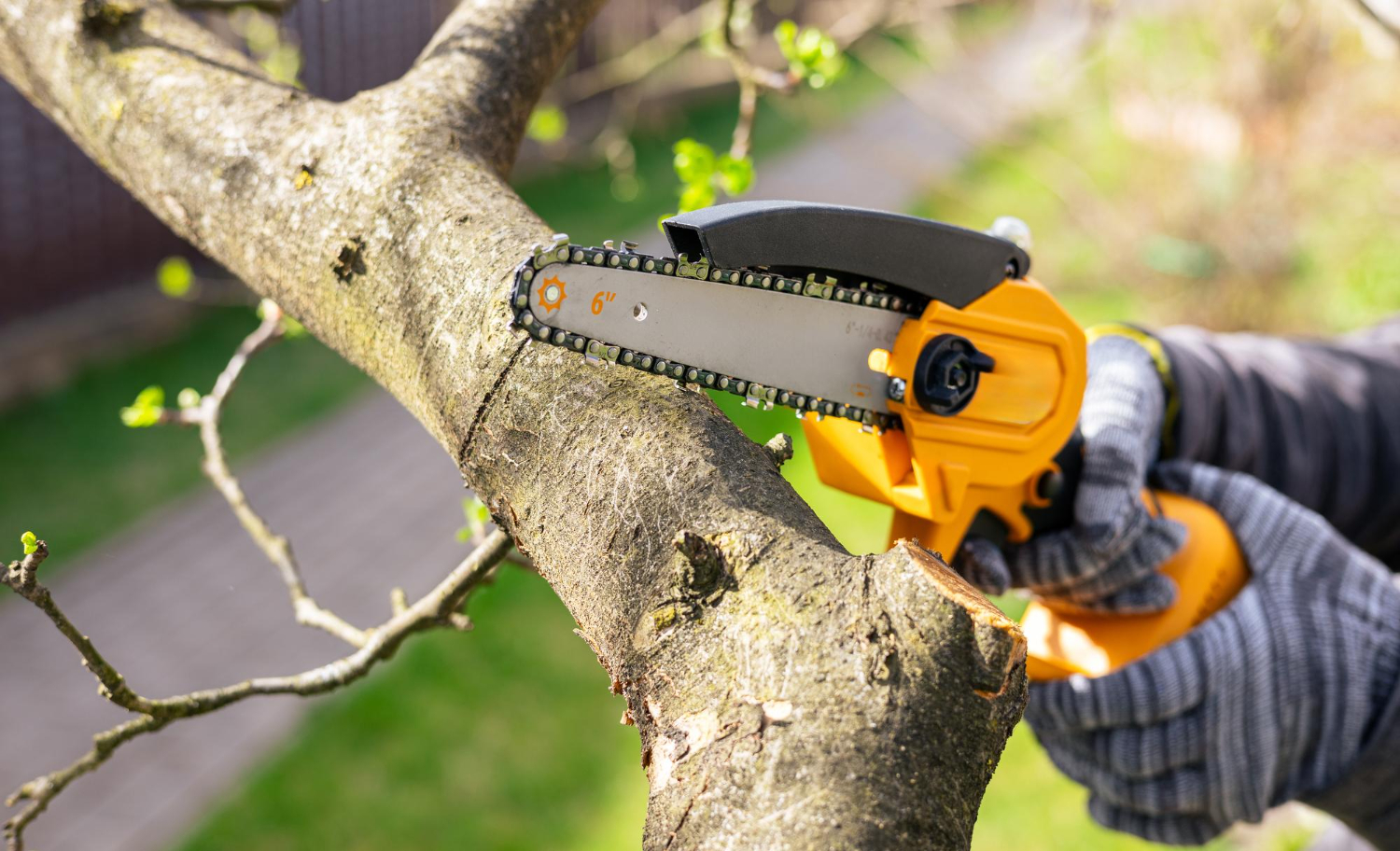
Knowing the best time to trim trees in Ohio can mean the difference between a tree that thrives for decades and one that declines after a well-intentioned cut. Northeast Ohio's climate, with its cold winters, humid summers, and unpredictable spring freezes, creates specific windows when pruning delivers the best results for tree health, structure, and long-term vigor.
In this article, you'll learn how Ohio's seasons affect trimming outcomes, which tree species require special timing considerations, how to recognize signs that a tree needs pruning outside the ideal window, and what to expect from a professional trimming service.
Here's what you need to know.
- Late winter and dormancy: the best default window
- Spring and summer: when trimming helps and when it hurts
- Fall trimming: why most arborists advise caution
- Species-specific timing and what changes the equation
Keep reading to understand how trimming at the right time protects your trees' health, prevents disease, and reduces the cost of long-term care.
Late winter and early spring: the optimal trimming window
For the majority of trees in Northeast Ohio, late winter, roughly January through mid-March, represents the most effective and least risky time to prune. Timing pruning to this dormant period aligns with how trees naturally manage stress and allocate energy reserves.
Why dormancy produces the best pruning outcomes
During full dormancy, a tree's vascular system is largely inactive. Carbohydrates are stored in the roots and trunk rather than circulating through branches. Pruning at this stage means the tree is not diverting energy from active growth to respond to wounds.
When temperatures rise in March and April, the tree breaks dormancy and immediately directs stored energy toward closing pruning wounds. This rapid compartmentalization, the process by which trees wall off damaged tissue, reduces the entry points for decay fungi and wood-boring insects.
According to the U.S. Forest Service, proper pruning timing directly affects a tree's ability to compartmentalize wounds and resist pathogen entry, with dormant-season cuts generally producing faster and more complete wound closure than cuts made during active growth.
Structural visibility and accurate canopy assessment
Leafless canopies give arborists a significant practical advantage. Without foliage, every branch is visible. Dead wood, crossing limbs, codominant stems, and weak branch unions are easy to identify and remove precisely.
Crown cleaning and crown thinning performed in this window can be more thorough than the same work done in summer, when dense foliage obscures structural problems. This is particularly important for mature oaks, maples, and ashes common across Cuyahoga, Lake, and Geauga Counties.
Pest and disease exposure during dormancy
Many of the most destructive tree pathogens and insects in Ohio are inactive or in low population cycles during late winter. Oak wilt, one of the most serious fungal diseases affecting Ohio oaks, spreads primarily through sap beetles that are active from April through July.
Pruning oaks outside the dormant window, particularly in late spring, significantly increases disease transmission risk. Trimming during dormancy largely removes this risk, as the vectors are not yet active. The benefits of regular tree trimming extend well beyond appearance, with timing playing a direct role in long-term tree health.
Spring and summer trimming: targeted work, not general maintenance
Once trees leaf out in April and May, large-scale pruning becomes more stressful for most species. That said, spring and summer trimming is not always wrong. It depends heavily on the goal of the work.
When spring trimming is appropriate
Spring is the right time to remove branches that failed to leaf out, which confirms dieback that was not visible in winter. It is also the appropriate window for:
- Removing hazardous branches that pose an immediate safety risk
- Light crown raising to improve clearance over driveways or structures
- Deadwood removal that was missed during the winter window
- Pruning of spring-flowering trees, such as crabapples and cherries, immediately after bloom
Pruning spring-flowering species before they bloom removes the flower buds set the previous fall. Waiting until after bloom preserves that year's display while still allowing structural correction.
Summer pruning for growth control
Controlled summer pruning can be used intentionally to slow the growth of specific branches. Removing foliage mid-season reduces the photosynthetic capacity of that branch, limiting the carbohydrates it contributes to overall tree growth.
This technique is sometimes used by ISA-certified arborists to redirect energy toward a preferred leader or to reduce the weight of overextended limbs. It requires precise execution and should not be confused with general maintenance pruning. Understanding why DIY tree trimming carries real risk is especially relevant during the growing season, when incorrect cuts create wounds that take the full summer to begin closing.
Heat stress and large wound management
Large cuts made in mid-summer expose fresh wood during peak evaporative demand. Newly exposed cambium tissue can desiccate in hot, dry conditions before the tree has a chance to begin callus formation.
For mature trees with significant diameter branches, summer pruning of large limbs should be deferred unless there is a clear safety or health reason. A plant health care assessment can help determine whether a concerning branch requires urgent action or can safely wait for the dormant window.
Fall trimming: why most arborists advise against it
Fall is the season when homeowners most often notice their trees and feel motivated to trim them. Leaves are dropping, the canopy is thinning, and branches are visible again. Despite the temptation, fall is widely regarded by arborists as the least favorable general trimming window in Ohio.
How fall pruning disrupts the storage cycle
As days shorten in August and September, trees begin redirecting carbohydrates from the canopy down into the root system. This stored energy is what fuels the burst of growth the following spring.
Pruning in fall interrupts this process. Removing branch tissue in September or October forces the tree to spend stored energy responding to fresh wounds at exactly the moment it should be conserving resources for winter. The result is reduced cold hardiness and slower wound closure the following spring.
Fungal spore activity and open wounds
Fall is also a high-risk period for fungal infection. Many wood decay fungi release spores in autumn, and freshly pruned wounds in October and November provide direct entry points into the wood.
According to Ohio State University Extension, trees pruned in late fall before full dormancy sets in showed greater rates of decay initiation compared to those pruned at dormancy or in early spring. Allowing full dormancy to establish, which typically occurs after several hard frosts in Northeast Ohio, significantly reduces this risk.
Exceptions: dead wood and hazard removal
Dead branches do not follow the seasonal rules that apply to live tissue. Deadwood removal is appropriate at any time of year and does not stress the tree. Similarly, a branch posing an active safety hazard over a roof or a pedestrian area should be removed regardless of season.
Severely deteriorated trees may also require professional tree removal rather than pruning, particularly when structural integrity is compromised by decay that started after off-season cuts. Knowing which situation applies is part of what an on-site evaluation determines.
Species-specific timing: what the best time to trim trees in Ohio depends on
General seasonal guidance applies broadly, but specific tree species have characteristics that shift the optimal trimming window. Northeast Ohio's urban and suburban canopy includes dozens of species, each with its own growth pattern, disease susceptibility, and structural considerations.
Oaks: strict dormant-season trimming only
Oaks (Quercus spp.) are the species where timing matters most in Ohio. Oak wilt, caused by the fungal pathogen Bretziella fagacearum, spreads via sap beetles that are attracted to fresh pruning wounds from April through July.
The only safe trimming window for oaks in Northeast Ohio is full dormancy, December through February. Any pruning outside that window should include wound sealant applied immediately to fresh cuts, a practice the ISA recommends specifically for oak wilt prevention in high-risk regions.
Maples and elms: timing around sap flow and disease
Sugar and red maples pruned in late winter may experience heavy sap flow from wounds, which is not harmful but can be unsightly and attracts insects. Waiting until after sap flow peaks, which occurs when daytime temperatures consistently exceed 40°F, produces cleaner healing on maple pruning wounds.
Elms require attention to Dutch elm disease, caused by Ophiostoma novo-ulmi, which spreads through elm bark beetles active from April through August. Like oaks, elms should be pruned during full dormancy. An arborist consultation with a specialist familiar with Northeast Ohio's disease pressures will help schedule elm and oak work correctly.
Fruit trees and ornamentals: post-dormancy timing
Ornamental cherries, crabapples, and serviceberries common in residential landscapes across Summit and Medina Counties are best pruned in late winter before bud break for structural work, or immediately after flowering for light maintenance. Pruning these species in mid-summer can reduce next year's flowering by removing buds set on current-year wood.
According to the USDA National Agroforestry Center, ornamental flowering trees respond best to pruning timed to their specific bloom and bud-set cycles, with late dormant pruning preserving the highest proportion of next season's flower buds for most commonly planted varieties. Homeowners unsure about their specific species can find guidance through recent articles on the Premier Tree Specialists blog covering tree care decisions across different property types.
Why Premier Tree Specialists is the right team for the job
Timing a pruning job correctly requires more than a calendar. It requires knowing the species, assessing the tree's current health, identifying any active disease or pest pressure, and understanding what the property owner wants to achieve. That combination of factors is what ISA-certified arborists evaluate before making a single cut.
Over 80 years of combined experience in Northeast Ohio
Premier Tree Specialists brings over 80 years of combined experience to tree trimming and pruning across Northeast and Central Ohio. Every job begins with an on-site assessment that accounts for species, structural condition, seasonal timing, and site-specific risks.
The crew uses ground protection mats, professional rigging, and ISA-standard pruning protocols on every project, whether it's a routine crown cleaning on a residential maple or a dormant-window oak prune on a commercial property.
ISA-certified arborists and TCIA membership
Premier Tree Specialists employs ISA-certified arborists and holds active membership in the Tree Care Industry Association (TCIA). These credentials mean every pruning decision follows current industry best practices, not guesswork.
Full liability insurance and workers' compensation coverage are maintained on every job, so homeowners carry no risk if something unexpected happens on their property during the work.
What to expect when you schedule a trimming service
The process starts with a free on-site consultation. For homeowners unsure whether their trees need pruning or a deeper evaluation, a plant health care assessment can identify underlying conditions, from fungal stress to root zone compaction, that affect both timing and technique.
Interest-free financing is available, along with discounts for seniors, veterans, and new customers. To get a clear picture of your trees' condition before the next pruning window opens, an arborist consultation is the right starting point.
Conclusion
Understanding when to trim trees in Northeast Ohio is not a single answer but a seasonal and species-informed decision. Late winter dormancy offers the broadest window of safety for most deciduous trees, combining minimal stress, maximum structural visibility, reduced pest and disease pressure, and rapid spring wound closure.
Spring trimming serves specific corrective and post-bloom purposes. Summer pruning is a targeted technique, not a general maintenance strategy. Fall trimming carries meaningful risks for most species and should be limited to deadwood and hazard removal.
The trees on your property represent decades of growth and significant structural value. Timing their care correctly protects that investment and reduces the likelihood of disease entry, structural decline, and costly remediation down the road. The right cut at the right time is what separates routine maintenance from true expert tree care.
If you want your trees trimmed at the right time by the right team, Premier Tree Specialists offers free estimates and on-site assessments from ISA-certified arborists serving Northeast and Central Ohio.
