


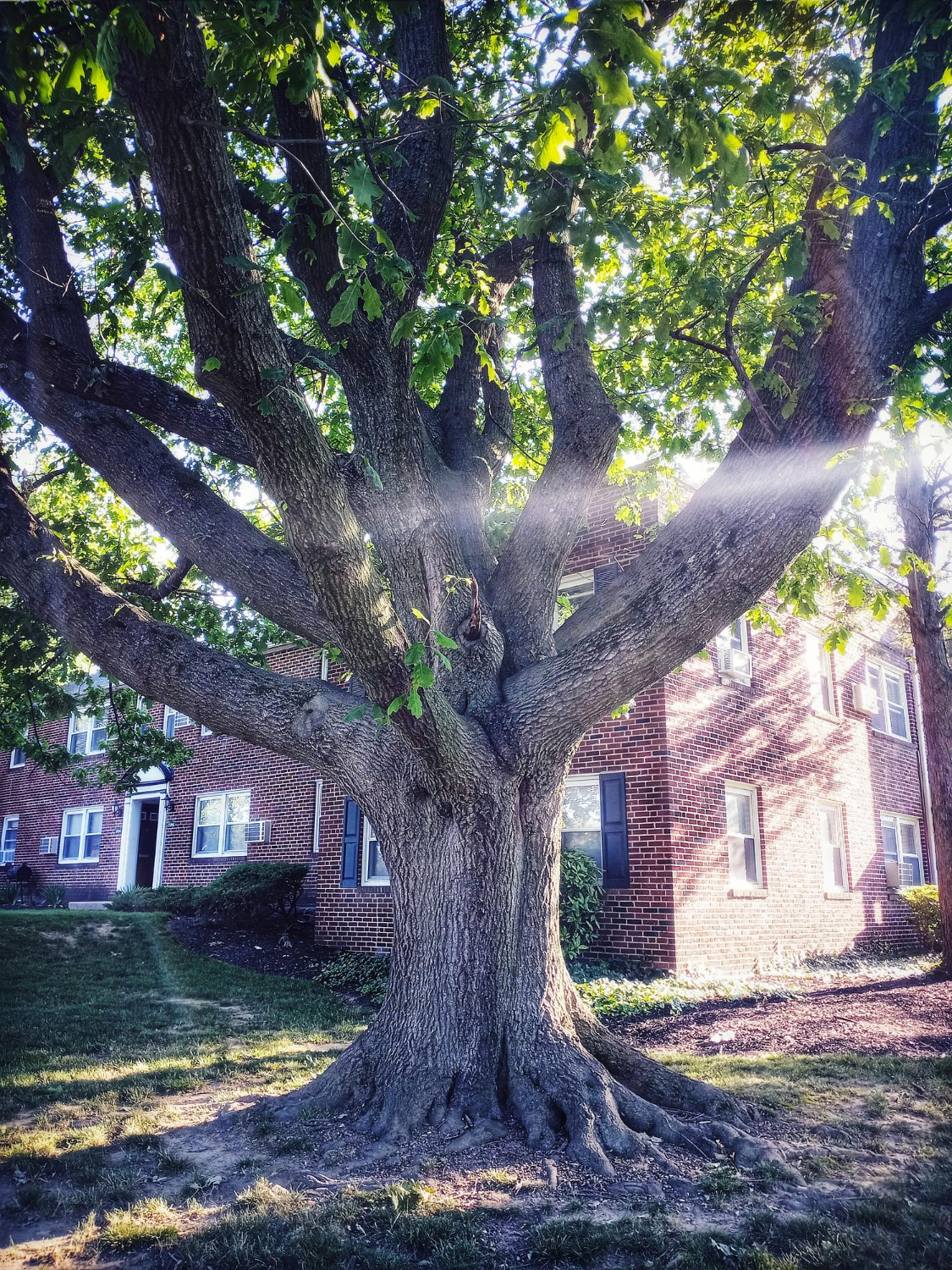
Winter tree damage in Ohio is a widespread and frequently underestimated problem for residential and commercial property owners across the state. Ohio's winters combine multiple damaging mechanisms, including hard freezes, ice accumulation, heavy wet snow, freeze-thaw cycling, and desiccating winds, that affect trees in fundamentally different ways depending on species, age, structural condition, and site exposure.
What looks like minor winter stress in February can reveal itself as significant structural compromise or irreversible root damage by the time spring growth resumes.
In this article, you will learn how Ohio's specific winter conditions damage trees, how to identify the most common types of cold weather tree injury, which treatment and recovery approaches are appropriate for different damage types, and how to protect your trees before winter arrives.
Here's what you'll find below.
In this article, you will learn about:
- How Ohio winters damage trees through frost, ice, snow load, and desiccation
- Identifying winter tree damage: what to look for and when
- Treatment and recovery options for cold-weather tree injury in Ohio
- Prevention strategies and cold weather tree protection for Ohio homeowners
Keep reading to build a complete picture of how Ohio's winters affect your trees and what proactive steps make the biggest difference in long-term canopy health.
Winter tree damage refers to physical, vascular, or structural injury sustained by trees as a result of cold temperatures, ice accumulation, snow load, frost penetration, or wind desiccation during the dormant season, ranging from superficial bark splitting to fatal root zone damage.
How Ohio winters damage trees
Ohio's climate sits in USDA Hardiness Zones 5b through 6b across most of the state, a range that exposes trees to winter low temperatures between minus 10 and 0 degrees Fahrenheit in severe years. That temperature range alone does not account for the full picture, because Ohio winters are defined as much by variability as by cold.
Rapid temperature swings, ice storms, and late-season freeze events after early spring bud break create conditions that damage trees in ways that sustained cold alone would not. Understanding the specific mechanisms helps homeowners identify damage accurately and respond appropriately.
Frost damage and freeze-thaw injury
Tree frost damage in Ohio occurs through two distinct mechanisms. The first is cellular ice formation, in which water inside plant cells freezes, expands, and ruptures cell walls. This type of damage is most severe during sudden deep freezes that occur before trees have fully hardened off in late autumn, or after trees have begun to break dormancy in early spring.
The second mechanism is frost cracking, also called radial shakes, in which rapid temperature drops cause the outer wood to contract faster than the inner wood, producing a sudden longitudinal split along the trunk. These cracks can be several feet long and are often accompanied by a loud report. Research from the
U.S. Forest Service confirms that frost cracks are most common in thin-barked species including maples, beeches, and lindens, and they tend to reopen in the same location during subsequent winters if the underlying wood does not callus over completely.
Freeze-thaw cycling, a hallmark of Ohio winters, compounds both mechanisms by repeatedly stressing tissue that has not had time to fully recover between temperature events.
Ice accumulation and snow load
Ice damage to trees in Ohio follows a different physical logic than frost injury. When freezing rain coats branches with glaze ice, the weight accumulation can be substantial. A one-inch coating of glaze ice on a medium-sized tree can add several hundred pounds of load to the canopy, stressing branch unions, splitting co-dominant stems, and uprooting shallow-rooted species entirely.
NOAA notes that heavy ice accumulation regularly brings down trees and topples utility infrastructure across regions prone to ice storms, including the Great Lakes area that covers Northeast Ohio. Snow load tree branch failure follows a similar pattern, particularly with wet, heavy snow events common in the Lake Erie snowbelt counties of Geauga, Lake, and Ashtabula.
A few tree characteristics make ice and snow load damage more likely on a given property:
- Included bark unions where branches attach at a narrow angle rather than a wide, rounded collar
- Long, overextended limbs with heavy end weight and little taper
- Species with brittle wood, including silver maple and Bradford pear
- Trees already carrying deadwood or storm-weakened branches from a prior season
- Dense, unthinned canopies that catch more ice and snow than an open crown structure
Branches with narrow attachment angles, also called included bark unions, are most vulnerable to ice and snow loading because their structural integrity is inherently lower than branches with wide, rounded collars.
Winter desiccation and salt damage
Desiccation, or winter burn, occurs when evergreen foliage continues to lose moisture through transpiration while frozen ground prevents root uptake to replace it. The result is browning or scorching of needles and leaves, most visible on the windward side of the tree or on foliage closest to reflected heat from structures.
Broadleaf evergreens including rhododendrons, hollies, and some ornamental magnolias are most susceptible, but needle evergreens including arborvitae, false cypress, and certain junipers also show significant cold weather tree damage in exposed Ohio locations. Road salt spray and soil salt accumulation from deicing products add a secondary injury mechanism for trees within 30 feet of treated roads or driveways, damaging fine root systems and interfering with water uptake even after temperatures moderate.
Identifying winter tree damage in Ohio
Accurate identification of winter tree damage requires knowing what to look for, where to look, and when different types of injury become visible. Some damage is apparent immediately after a weather event. Other injury, particularly to root systems and vascular tissue, may not manifest visibly until spring growth reveals which parts of the tree failed to break dormancy.
A systematic approach to post-winter inspection prevents both misdiagnosis and missed damage that could compromise the tree's structural integrity during the growing season.
Visible signs to assess after a winter event
Following any significant ice storm, heavy snowfall, or hard freeze event in Ohio, inspect your trees for the following:
- Frost cracks: longitudinal splits along the trunk, often sealed at the surface but open deeper into the wood
- Broken or hanging branches: limbs that have fractured at the union but remain suspended in the canopy, a condition requiring immediate professional attention
- Crown dieback: branch tips that remain bare after surrounding growth resumes in spring, indicating vascular damage or root zone injury
- Bark splitting or peeling: sunscald on the south and southwest facing sides of thin-barked trees, caused by daytime warming followed by rapid overnight refreezing
- Leaning or root heaving: frost heave can lift shallow root systems partially out of the ground, destabilizing young or recently transplanted trees
Any broken or hanging limb over a structure, walkway, or vehicle should be treated as an urgent hazard regardless of the time of year. The reasons to remove dead or damaged trees extend beyond aesthetics; structurally compromised wood fails unpredictably and without warning.
The scratch test for vascular viability
One of the most reliable field assessments for winter-damaged wood is the scratch test. Using a fingernail or a small knife, scratch through the outer bark on a small section of a suspect branch. Healthy cambium tissue directly beneath the bark will appear bright green or white and moist. Tissue that is brown, dry, or tan indicates that the vascular layer has died in that section.
Work from the branch tip toward the trunk, scratching every six to twelve inches, to identify where viable tissue ends. The boundary between dead and living wood is the natural pruning point, and understanding that boundary prevents unnecessary removal of wood that may still recover.
When to involve a certified arborist
Not all winter tree damage is visible from the ground, and some of the most structurally significant damage involves internal decay, root zone injury, or compromised branch unions that require professional evaluation.
Involve an ISA-certified arborist when:
- The tree has visible frost cracks that extend more than a few inches into the wood
- Multiple large limbs have failed and you are uncertain whether the remaining structure is sound
- The tree is leaning at a new angle that was not present before the winter event
- Crown dieback is extensive, affecting more than 30 percent of the canopy
- The tree is large, located near a structure, or of a species with known susceptibility to internal decay following freeze injury
Treatment and recovery for Ohio winter tree damage
The appropriate response to winter tree damage depends on the type and severity of injury. Some damage resolves through the tree's own compartmentalization response with minimal intervention. Other situations require professional pruning, structural support, or in some cases removal if the tree cannot safely recover.
Timing matters considerably. Most corrective pruning for winter damage in Ohio is best completed in late winter or early spring, before new growth begins and while the tree is still dormant.
Pruning out dead and damaged wood
Removing dead, fractured, and hanging branches is the most important active step following winter damage. Clean cuts made just outside the branch collar allow the tree to compartmentalize the wound efficiently. Stub cuts or flush cuts both interfere with this process and increase the risk of decay entry.
For DIY tree trimming, the practical limit is small branches reachable safely from the ground. Any damaged wood above approximately 10 feet, near a structure, or involving limbs larger than 3 to 4 inches in diameter should be handled by a professional crew with proper equipment and training. Attempting to remove heavy damaged limbs without rigging and technical knowledge is one of the leading causes of secondary injury during post-storm cleanup.
Treating frost cracks and bark injuries
Frost cracks do not require wound dressings or sealants. Decades of arboricultural research have established that wound paints and tree sealants do not accelerate healing and in some cases trap moisture and promote decay. The appropriate response to a frost crack is to ensure the surrounding wood is structurally sound and to monitor the crack over subsequent growing seasons to confirm the tree is forming callus tissue at the margins.
Sunscald injuries, in which bark splits or dies on the south-facing side of a thin-barked tree, can be addressed preventively in future years by wrapping the trunk with commercial tree wrap from October through April. Wrapping moderates the temperature differential between sun-exposed and shaded bark, reducing the freeze-thaw cycling that causes the injury.
A few practical notes make trunk wrapping more effective:
- Apply the wrap starting at the base and overlapping upward, similar to shingles, so water sheds outward rather than pooling
- Remove the wrap in spring once temperatures stabilize, since leaving it on year-round can trap moisture and invite pests
- Focus wrapping on young, thin-barked trees such as newly planted maples, since mature trees with thicker bark rarely need it
- Reapply each fall for the first two to three years after planting, until the bark has thickened enough to handle temperature swings on its own
Addressing snow load and ice damage to structure
When ice or snow loading has caused branch failures at major unions, the remaining structure of the tree should be evaluated for balance and future load tolerance before the next growing season adds new weight to the canopy. An arborist may recommend structural pruning to redistribute crown weight, installation of tree cabling systems to support compromised co-dominant stems, or removal of the tree if the structural deficit cannot be corrected safely.
Research from the University of Florida IFAS Extension confirms that structural pruning after a significant ice or snow damage event reduces the probability of future failure by shortening overextended branches and thinning weak or poorly attached limbs, addressing the exact weak unions and imbalanced crown loads that make trees most vulnerable in the next storm.
Prevention: cold weather tree protection strategies for Ohio
The most cost-effective approach to winter tree damage in Ohio is prevention, implemented before the first hard freeze of the season. Several straightforward practices significantly reduce the risk of frost injury, snow load failure, and desiccation damage across a wide range of species and site conditions.
Pre-winter pruning and structural assessment
Late summer and early autumn are ideal times to have an arborist assess your trees for structural vulnerabilities that would be worsened by ice or snow loading. Co-dominant stems with included bark, crossing branches that create friction points, and dead wood in the upper canopy all become more dangerous once ice accumulates.
Corrective pruning completed before dormancy achieves two goals simultaneously. It removes the specific structural liabilities most likely to fail under winter loading, and it allows wounds to begin callusing before the tree enters its lowest-activity period.
Oaks and elms are best pruned in winter to reduce exposure to disease vectors, but most other Ohio species can be pruned safely in late summer through early autumn.
Mulching, watering, and root zone protection
A 3 to 4-inch layer of organic mulch applied in a ring extending to the drip line of the tree, kept clear of direct trunk contact, insulates the root zone against freeze-thaw cycling and retains soil moisture that supports root function through dry winter periods. This single practice provides more measurable benefit to tree winter survival than most other interventions, particularly for young or recently transplanted trees.
A deep watering in late October or early November, before the ground freezes, gives trees the moisture reserves they need to resist desiccation through the dormant season. This is especially important for plant health care of broadleaf evergreens and recently established trees that have not yet developed deep root systems.
A short pre-winter checklist covers most of what a homeowner can reasonably do without professional help:
- Apply 3 to 4 inches of mulch to the root zone, keeping it clear of the trunk itself
- Water deeply once in late October or early November, before the first hard freeze
- Wrap the trunks of young, thin-barked trees planted within the last two to three years
- Remove any obviously dead or hanging branches that could become hazards under ice load
- Schedule a professional structural assessment for mature trees near structures or with a history of storm damage
Anti-desiccant applications and physical protection
Anti-desiccant sprays, applied to evergreen foliage in late November before temperatures drop consistently below freezing, create a thin waxy film that reduces moisture loss through transpiration during winter months.
These products are most effective on broadleaf evergreens including rhododendrons, hollies, and boxwoods, and they require reapplication after significant precipitation events.
Physical barriers such as burlap screens on the windward side of susceptible evergreens provide effective protection against both desiccating wind and road salt spray.
Avoid wrapping burlap directly against foliage, as this traps moisture and can promote fungal issues. A screen positioned 12 to 18 inches from the plant on the prevailing wind side provides wind protection without contact damage.
Why Premier Tree Specialists is Ohio's winter tree care partner
We work year-round across Northeast and Central Ohio, and winter is one of the busiest and most consequential seasons we respond to. Ice storms, heavy snow events, and the structural damage they leave behind are a consistent part of what we do, and our team is built to handle both the emergency response side and the proactive prevention work that reduces how often homeowners face those emergencies in the first place.
What we bring to winter tree assessments
Our ISA-certified arborists conduct pre-winter structural assessments that go beyond a visual scan from the driveway. We evaluate branch union angles, identify co-dominant stems with included bark, locate dead wood in the upper canopy, and assess root zone conditions that affect how a tree handles freeze-thaw stress. That assessment gives you a specific, prioritized list of what needs attention before the season's first ice event, not a general recommendation to prune everything.
We are members of the Tree Care Industry Association and carry full liability and workers' compensation insurance on every job. When we identify a tree that needs corrective pruning, cabling, or removal ahead of winter, we can complete that work in the same visit or schedule it immediately so your property is protected before conditions deteriorate.
Our emergency response capability through winter
When an ice storm or heavy snow event causes acute damage, our 24-hour emergency line is staffed around the clock across our full service area. We arrive with the rigging equipment, bucket trucks, and crew size that the specific job requires, and we conduct a full site assessment before any cutting begins, regardless of how urgent the situation feels from the property owner's perspective.
Knowing what questions to ask during a tree consultation helps you evaluate any crew before authorizing work, especially in post-storm conditions when less reputable operators tend to solicit jobs door-to-door. We provide written estimates, verifiable credentials, and transparent pricing on every call.
Getting started before the next winter season
Free estimates are available across all of Northeast and Central Ohio. We offer interest-free financing and discounts for seniors, veterans, and new customers. Whether you want a pre-winter structural assessment, corrective pruning on a storm-damaged tree, or a full property evaluation covering all the trees on your lot, our team is ready to schedule a visit at a time that works for you.
Conclusion
Winter tree damage in Ohio spans a wide range of injury types, from visible frost cracks and snow-broken limbs to less obvious root zone stress and vascular damage that only reveals itself when spring growth resumes.
Ohio's combination of hard freezes, ice storms, heavy snowfall, and rapid temperature swings creates conditions that challenge even well-established native trees, and the structural vulnerabilities those conditions expose are often predictable and preventable with the right assessment and intervention before winter arrives.
Identifying damage accurately, responding with appropriate pruning and structural support, and implementing targeted prevention practices before the season are the three actions that most consistently protect residential trees through Ohio winters.
The investment in professional assessment and corrective work before a severe event is almost always lower than the cost of emergency removal and property repair after one.
When you are ready to protect your trees ahead of Ohio's next winter season, contact Premier Tree Specialists for a free on-site assessment across Northeast and Central Ohio.
