


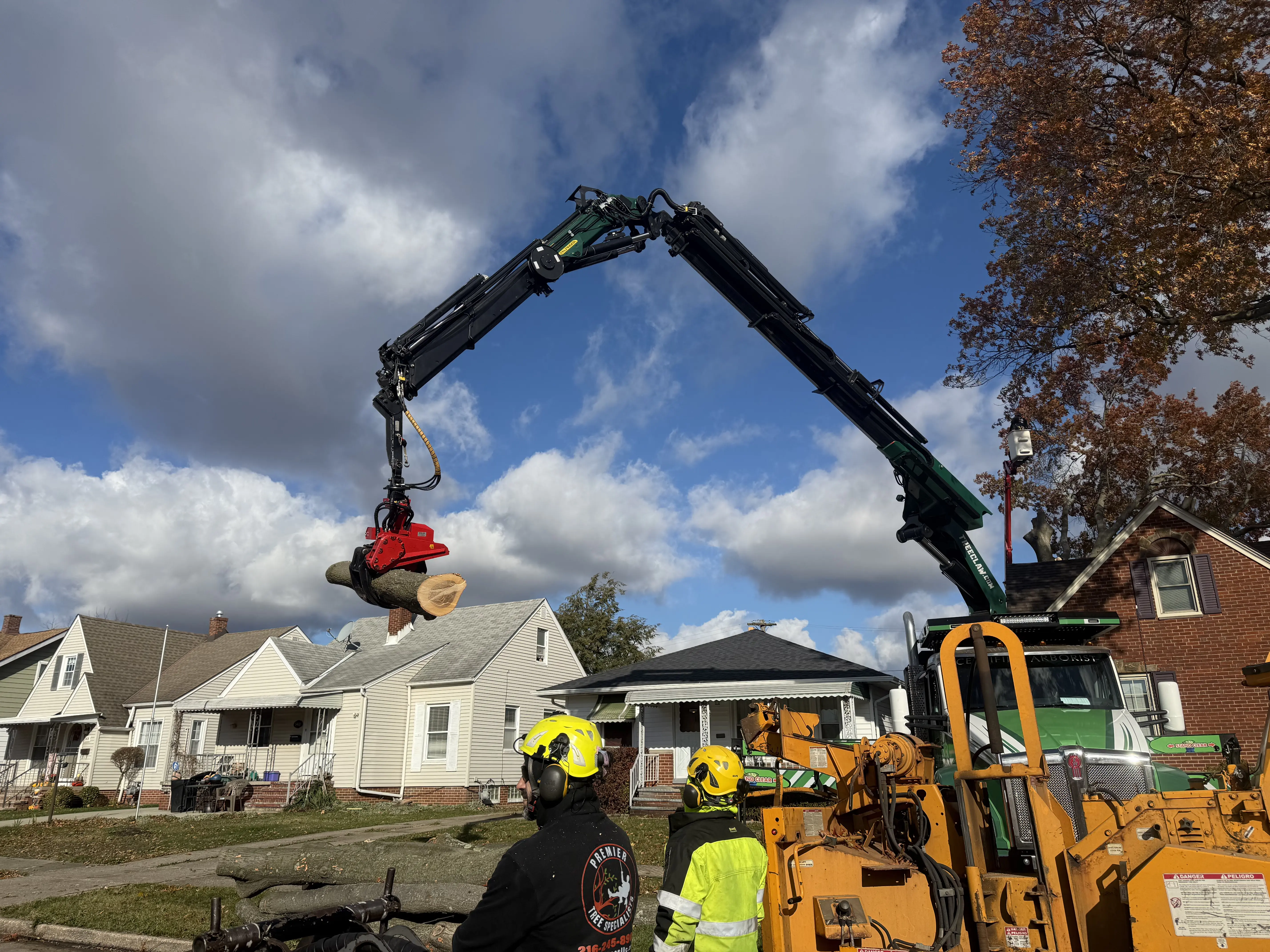
When a tree comes down on your house in Northeast Ohio, the first question is how fast someone can get there. Emergency tree removal response times depend on a few things you can see coming: how big the storm was, whether power lines are involved, how many other homes were hit and how safe the site is to work. Winter makes this more pressing, since heavy lake-effect snow and ice can load up limbs across Lake, Geauga and Cuyahoga counties in a single night. This guide explains what affects response times, what happens in what order, and what you can do while you wait.
What "24/7 emergency tree service" actually means
Premier Tree Specialists provides 24/7 emergency tree removal. That means you can reach us at any hour, and we can triage your situation and plan a response. It does not mean every call gets a crew in the same amount of time. After a large storm, emergency crews across the region work through calls based on risk, and the most dangerous situations come first.
What affects how fast a crew can reach you
The size of the storm
A single tree down on a calm night is very different from a windstorm that drops trees across several counties. After big storms, call volume spikes and crews prioritize.
Power lines
If a tree is touching a power line, no tree crew should touch it until the utility has made the line safe. In Northeast Ohio, that means calling your electric utility first. Tree work can start once the utility has cleared or de-energized the line.
Roads and access
Blocked roads, ice and downed trees on other streets can slow everyone down. Clear, safe access to your property helps crews get to work faster once they arrive.
The level of risk
Trees on occupied homes, trees blocking the only way in or out, and trees hanging over living spaces are top priority. A limb across the lawn can usually wait until daylight.
Daylight and weather
Some work is safer in daylight or after high winds pass. At night, a crew may make the situation safe first and finish the full removal the next day.
What happens in what order
- Your call. We ask what happened, where the tree is, whether anyone is hurt, whether wires are involved and whether the home is damaged.
- Triage. We decide how urgent it is and what equipment is needed.
- Make safe. On arrival, the first goal is to stop further damage. That can mean removing the weight off a roof or cutting a hanging limb.
- Full removal. Once the site is safe, the crew removes the tree in controlled sections and clears the debris.
- Follow-up. We can grind the stump and check other trees that may have been weakened by the same storm.
For a step-by-step on staying safe in the first hour, see our guide to emergency tree removal in Cleveland.
What to do while you wait
- Get everyone out of rooms under or near the damage.
- Stay at least 30 feet from any downed wire, and assume it is live.
- Call your electric utility if wires are involved, and 911 if anyone is hurt or in danger.
- Do not try to cut or move a tree that is resting on the house or under tension.
- Take photos of the damage for your insurance claim.
- Clear a path for the crew if you can do so safely.
Our guide to tree removal insurance in Ohio explains what your policy may cover.
How to cut your risk before winter storms
The best emergency is the one that never happens. Many storm failures come from trees that showed warning signs for months, such as dead limbs, cracks, decay at the base or a heavy lean toward the house.
- Have an ISA Certified Arborist inspect large trees close to your home before winter.
- Remove dead limbs over the roof, driveway and play areas.
- Deal with dead ash trees, which become brittle over time.
- Consider cabling and bracing for valuable trees with weak unions.
Read winter tree damage in Ohio for more on preparing trees for snow and ice. A free arborist consultation is a quick way to find the trees most likely to fail.
Areas we cover for emergency tree removal
Our emergency service covers Northeast Ohio, including Lake County, Cuyahoga County, Geauga County and the surrounding counties. Our home base is in Wickliffe. Learn more on our tree removal page.
FAQs: emergency tree removal response times
Can I call for emergency tree service at night?
Yes. We provide 24/7 emergency tree removal, so you can call at any hour.
Why can't a crew remove a tree on a power line right away?
Because it is dangerous. The utility needs to make the line safe first. Once it does, a tree crew can begin work.
What counts as an emergency?
A tree on your home or car, a tree blocking your only exit, a hanging limb over a living space or a tree that has started to fall. A limb on the lawn can usually wait for a normal appointment.
Will my insurance cover emergency tree removal?
It depends on your policy and what the tree damaged. Take photos and call your insurer early.
Dealing with storm damage in Northeast Ohio? Call Premier Tree Specialists at (216) 245-8908 (NE Ohio) or (614) 526-2266 (Columbus).
