

Knowing when to call a certified arborist in Medina County, OH can help you make safer decisions before a tree problem becomes expensive, dangerous, or harder to correct. A tree may look healthy from the driveway while its roots, trunk, branch unions, or canopy are showing signs that need trained attention.
For homeowners in Medina, Brunswick, Wadsworth, Seville, Lodi, Hinckley, Valley City, and nearby communities, tree care often involves more than routine trimming. Mature shade trees, wooded lots, storm exposure, clay soil, construction projects, and trees near homes or driveways can all change the risk picture.
A certified arborist can evaluate tree structure, health, site conditions, pests, disease, pruning needs, and whether a tree can be preserved. That kind of assessment is especially useful when you are deciding between monitoring, treatment, pruning, support, or removal.
Premier Tree Specialists provides arborist consultations, tree trimming, tree removal, stump grinding, emergency service, and plant health care across Medina County and Northeast Ohio. Calling early can give you more options than waiting until a limb falls or a tree declines beyond repair.
In this article, you will learn about:
- When a tree problem needs a certified arborist
- How arborists help with tree health and disease concerns
- Why storm damage and structural defects need expert eyes
- What to expect during an arborist consultation
Keep reading to know when a tree issue is worth a professional opinion.
When a tree problem needs a certified arborist
Not every tree question requires a certified arborist. Small dead twigs, minor seasonal leaf drop, and routine cleanup may be manageable with normal property care.
The call becomes more important when the tree is valuable, close to a target, changing quickly, or showing more than one symptom. A certified arborist can connect what you see in the canopy with what may be happening in the roots, trunk, and surrounding site.
Call when the tree could hit something important
Tree risk is not only about whether a tree has a defect. It is also about what the tree or limb could hit if it failed.
A dead branch over a wooded edge carries a different level of urgency than the same branch over a roof, driveway, sidewalk, deck, barn, or service line. In Medina County, larger lots can make some trees feel out of the way, while others sit directly over high-use areas.
Common reasons to schedule an inspection include:
- A large limb over the house, garage, driveway, or walkway
- A tree leaning toward a structure
- Deadwood above a play area or patio
- Cracks in a trunk near a target
- Root movement near a road, sidewalk, or foundation
Those signs do not automatically mean the tree has to come down. They do mean a trained assessment can help you decide whether removal, pruning, support, or monitoring is the safer path.
If the tree is already on a structure or blocking access, treat the area as urgent and keep people away. A non-emergency inspection is for concerns you can still approach safely from the ground.
Call when symptoms appear in more than one part of the tree
One symptom can be seasonal. Several symptoms together are more concerning.
For example, early leaf color alone may come from summer stress. Early color plus fungal growth, bark loss, thinning canopy, and soil cracking near the base may point to a deeper problem.
Call a certified arborist when you notice patterns such as:
- Canopy thinning and bark loss on the same tree
- Fungal growth near the trunk plus dead limbs above it
- A new lean after heavy rain or wind
- Small leaves, twig dieback, and root-zone disturbance
- Repeated limb drop during calm weather
These clues are easier to interpret when someone can inspect the whole tree. A professional inspection looks at structure, health, site conditions, and safety together instead of treating each symptom separately.
Taking photos and notes before the visit helps. Include when the symptoms started, whether construction or storms happened nearby, and whether the tree has been pruned or damaged before.
Call before major pruning or construction near mature trees
Large trees respond poorly to guesswork. Heavy pruning, root cutting, trenching, grading, and equipment traffic can all affect long-term health and stability.
An arborist can help set priorities before work begins. That may include deciding which limbs to prune, how much canopy can be reduced, where roots should be protected, or whether a tree is already too compromised to preserve.
The International Society of Arboriculture says an ISA Certified Arborist can recertify by earning at least 30 continuing education units during a 3-year certification period in its Certified Arborist application guide. That matters because proper recommendations depend on current tree care standards, not only field experience.
How arborists help with tree health and disease concerns
Tree health problems can be tricky because the visible symptom is often not the root cause. Brown leaves may come from drought, root damage, disease, insects, compacted soil, herbicide exposure, or several issues happening together.
A certified arborist evaluates the tree and the site. That is the difference between reacting to a leaf symptom and building a care plan that fits the tree's species, age, condition, and surroundings.
Call when leaves, bark, or branches change quickly
Fast changes deserve attention, especially if they affect one side of the tree or appear after a weather event, construction project, or drainage change. Trees often reveal stress through leaves first, but bark, twigs, and roots may explain why the leaves changed.
Watch for leaves browning from the edges, early fall color, wilting on one limb, peeling bark, branch tip dieback, and bare sections in the canopy. The pattern matters more than a few imperfect leaves.
If symptoms appear after a hot, dry stretch, drought stress may be part of the problem. If symptoms appear with fungal growth or repeated leaf spotting, disease pressure may need closer evaluation.
Call when pests or disease keep coming back
Some insect feeding is cosmetic. Some disease symptoms can be managed with sanitation, pruning, monitoring, or better site care.
The concern grows when the same tree struggles year after year, loses canopy density, drops limbs, or has multiple stress factors at once. A weak tree is less able to recover from pests, disease, drought, and storm damage.
Recurring problems worth inspecting include:
- Repeated fungal growth near the trunk or root flare
- Annual leaf spots that worsen over time
- Boring insect activity in stressed trees
- Dead branch tips across the canopy
- Sticky residue, webbing, or visible insect clusters
These signs should be matched to the whole tree. A plant health care plan may include monitoring, soil care, pest management, disease diagnosis, pruning, or a recommendation to remove a tree that is too far gone.
The goal is not to treat every symptom aggressively. The goal is to understand what is causing the decline and whether the tree still has a realistic path to recovery.
Call when you want to preserve a valuable tree
Some trees are worth extra effort because they provide shade, privacy, wildlife habitat, curb appeal, or emotional value. A certified arborist can help you decide what is realistic before decline becomes severe.
Preservation might involve pruning deadwood, improving mulch, protecting roots, monitoring disease, cabling a weak union, or changing irrigation around the root zone. The right plan depends on the defect and the tree's overall condition.
If the issue is structural, support systems may be part of the conversation. If the tree has major decay, root failure, or extensive canopy loss, preservation may no longer be the responsible choice.
Why storm damage and structural defects need expert eyes
Storm damage can make a healthy tree look worse than it is, and it can make a hazardous tree look less dangerous than it really is. That is why an arborist's structure-focused inspection matters after wind, heavy rain, ice, or snow.
The most important damage is not always on the ground. Cracked limbs, split unions, loosened roots, and hanging branches can remain in the canopy after the yard looks cleaned up.
Call after strong wind, heavy rain, or ice
Medina County trees deal with thunderstorms, saturated soil, freeze-thaw cycles, snow, and ice. A tree that was stable in dry weather may shift when soil is soaked or when wind pushes against a full canopy.
NOAA's National Severe Storms Laboratory classifies damaging thunderstorm winds as winds exceeding 50 to 60 mph in its damaging wind information. The National Weather Service also uses 58 mph wind gusts or 1-inch hail as severe thunderstorm criteria in storm safety information.
After that kind of weather, inspect only from a safe distance. Hanging limbs, cracks, fresh splits, or a new lean should be evaluated before anyone walks, parks, or works beneath the tree.
Call when pruning might not be enough
Many storm-damaged trees can be saved with proper pruning. Others have structural damage that makes pruning a short-term fix for a long-term hazard.
Iowa State University Extension notes that large trees with split trunks, extensive trunk damage, 50 percent or more canopy loss, or partial uprooting are often removal candidates in its guidance on damaged trees. Those thresholds help homeowners understand when damage has moved beyond cosmetic cleanup.
That does not mean every broken tree needs removal. It means the decision should be based on structure, remaining canopy, root stability, species, targets, and whether the tree can recover safely.
Call when a tree has weak unions or a new lean
Weak unions form where stems or large limbs attach poorly. A tight V-shaped union can trap bark between stems, reducing the strength of the connection.
A new lean is also a serious change. It may mean the root plate shifted, soil failed, or the trunk cracked below where you can easily see it.
A tree with weak unions may benefit from proper pruning, reduction cuts, support, or monitoring. A tree with a new lean toward a target may need faster action.
What to expect during an arborist consultation
An arborist consultation should give you more than a quick yes or no. It should explain what the arborist sees, what the risks are, and which options fit the tree and property.
For Medina County homeowners, that matters because a tree may be part of a larger landscape plan, wooded lot, driveway corridor, storm cleanup, or home improvement project. A good recommendation should match both tree health and how the property is used.
The visit starts with the tree and the site
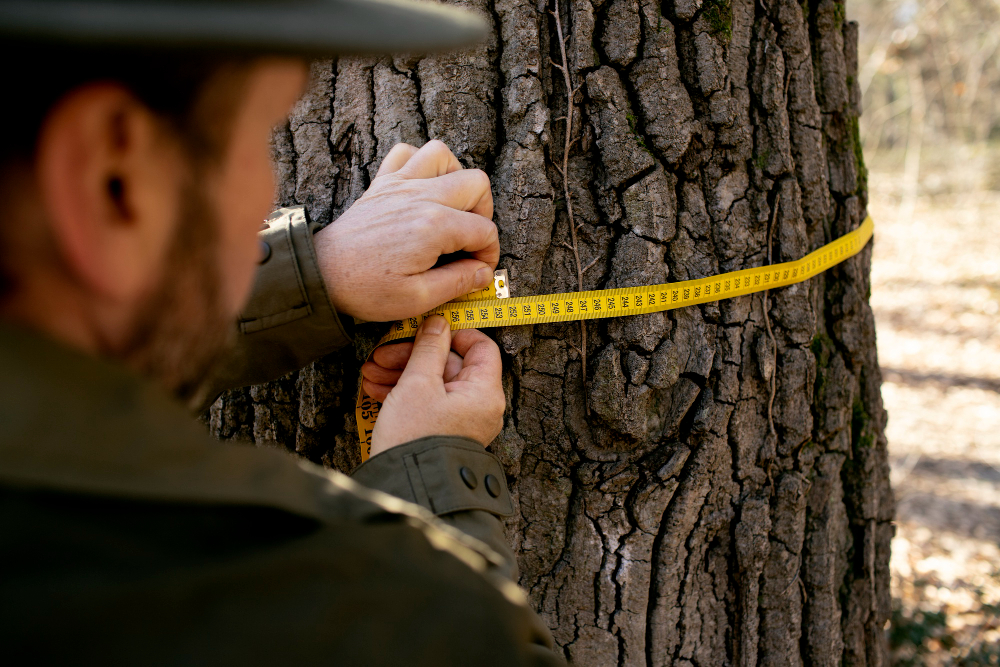
The arborist will usually look at the canopy, trunk, branch unions, root flare, soil, nearby targets, and recent site changes. They may ask about storms, construction, drainage, past pruning, pest issues, and when symptoms first appeared.
You can make the visit more useful by preparing a few details. Photos from earlier in the season, notes about fallen limbs, and information about recent digging or grade changes can all help.
Have these ready if possible:
- Photos of the tree before and after symptoms appeared.
- Dates of major storms or limb drops.
- Notes about construction, trenching, or driveway work nearby.
- A list of what the tree could hit if it failed.
- Your goal, such as preservation, clearance, safety, or future planting.
That context helps the arborist focus the recommendation. It also reduces the chance of treating a symptom while missing the site condition that caused it.
If roots are part of the concern, root behavior should be discussed along with the canopy. Roots, soil, hardscape, and nearby structures all shape the recommendation.
The recommendation should explain your options
After the inspection, you should understand whether the tree needs monitoring, pruning, plant health care, support, removal, or a combination of steps. The answer may also include timing, urgency, cleanup needs, and what could happen if you wait.
If the tree is healthy but overgrown, trimming may improve structure, clearance, and light. If the tree is declining, treatment or monitoring may be appropriate. If the tree is hazardous, removal may be the safer choice.
This is where pruning may be enough for one tree, while a similar-looking tree nearby needs removal because of decay, lean, root damage, or target risk.
The next step should fit the season
Timing matters in tree care. Some pruning is best during dormancy, some storm hazards need faster attention, and some plant health care decisions depend on pest cycles or disease timing.
For example, winter pruning may be preferred for certain species or goals, while a cracked limb over a driveway should not wait for an ideal pruning window.
If cost is part of the decision, ask about phasing, priorities, and financing. A certified arborist can help separate immediate safety needs from work that can be planned for a later season.
Conclusion
A certified arborist is worth calling when a tree is changing quickly, showing multiple symptoms, standing near something important, or raising questions that routine yard care cannot answer. The earlier you ask, the more options you may have.
In Medina County, mature trees face wind, storms, construction pressure, soil compaction, pests, disease, and seasonal stress. A trained inspection can help you decide whether the right next step is pruning, plant health care, support, monitoring, or removal.
The most useful arborist visit gives you a clear recommendation and explains why it fits the tree. That helps you protect your property while making informed choices about the trees you want to preserve.
If you need expert tree care in Medina County, Premier Tree Specialists can inspect your trees, explain your options, and provide a free quote for professional tree service.
