

A tree inspection by a certified arborist in Northeast Ohio is the single most effective way to find out whether the trees on your property are healthy, structurally sound, and safe, or whether they are quietly developing problems that will eventually cost you money, damage your property, or put someone at risk. Most tree failures are not random. They follow a progression of decay, structural weakness, or disease that a trained eye can identify months or years before the tree actually breaks apart.
The challenge for homeowners is that trees do not show distress the way most other things on your property do. A leaking roof is obvious. A furnace that stops working announces itself immediately. A tree with internal decay, a compromised root plate, or an active pest infestation often looks perfectly fine from the ground until the moment it does not. That gap between appearance and reality is exactly what a professional inspection is designed to close.
This article explains what an ISA Certified Arborist actually evaluates during a residential tree inspection, why each element matters specifically in Northeast Ohio's climate, and how to use the inspection findings to make informed decisions about your trees.
In this article, you will learn about:
- What happens during a professional tree inspection from canopy to roots
- Structural defects that signal hidden risk in otherwise healthy-looking trees
- Pest and disease indicators specific to the Northeast Ohio region
- How inspection findings translate into a practical action plan for your property
Keep reading to understand what your arborist is looking for and why it matters for the safety, health, and value of your landscape.
What happens during a professional tree inspection from canopy to roots
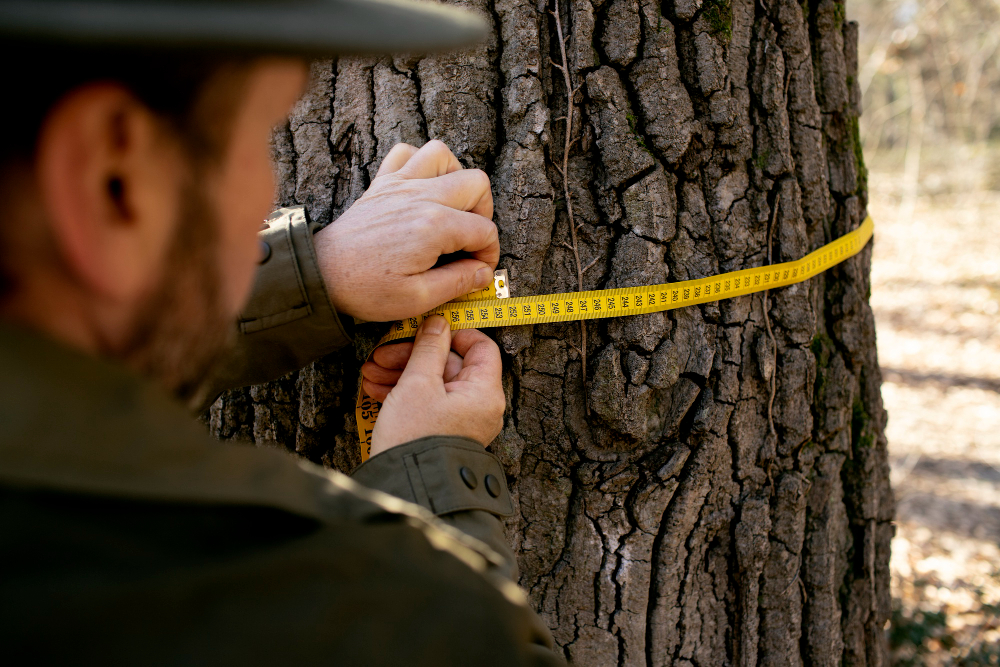
A professional tree inspection is a systematic, top-to-bottom evaluation of the tree's structure, health, and site conditions. The International Society of Arboriculture (ISA) has developed standardized assessment protocols that certified arborists follow to ensure nothing gets overlooked. The process is methodical, starting with the crown and working down through the trunk, root flare, and surrounding soil conditions.
An ISA Certified Arborist does not just look at the tree. They read it. Every scar, crack, lean, dead branch, fungal fruiting body, and growth pattern tells a story about what has happened to the tree in the past and what is likely to happen next. The inspection connects those individual observations into a complete picture of the tree's condition and risk profile.
At Premier Tree Specialists, the inspection team includes ISA Certified Arborists and a Board Certified Master Arborist (BCMA), which is a higher-level distinction held by only a small percentage of arborists nationwide. That depth of training matters because the difference between a tree that needs monitoring and one that needs immediate attention often comes down to subtle indicators that less experienced evaluators miss.
Starting at the top: canopy density, dieback patterns, and foliage health
The canopy is the first thing the arborist evaluates because it is the most visible indicator of overall tree health. A full, dense canopy with uniformly colored foliage and consistent new growth suggests a tree with a functioning vascular system and adequate root support. Deviations from that baseline signal specific problems.
What the arborist looks for in the canopy:
- Crown dieback, where branches at the top or outer edges of the canopy are dead or leafless while the interior is still green. This pattern often indicates root loss, vascular disease, or sustained drought stress.
- Undersized, discolored, or sparse foliage compared to what is normal for the species and time of year. Yellowing leaves on an oak in July, for example, may indicate iron chlorosis from alkaline soil or a vascular infection that is limiting nutrient transport.
- Epicormic sprouting, which is clusters of small shoots growing directly from the trunk or large branches. This is the tree's stress response, an attempt to produce replacement foliage when the existing canopy is failing to generate enough energy through photosynthesis.
- Asymmetry in the crown, where one side is significantly fuller or taller than the other. This can indicate root damage on the thin side, past storm injury, or a lean that has shifted the tree's growth pattern.
- Dead branches (deadwood) throughout the canopy, especially those larger than two to three inches in diameter. Scattered fine deadwood is normal in any mature tree, but concentrations of larger dead branches in specific areas suggest localized decay or vascular disruption.
In Northeast Ohio, the canopy evaluation is particularly important after winter, when ice and snow loading can cause damage high in the crown that is not visible from the ground until the tree leafs out in spring and the gaps become apparent.
Moving down the trunk: cracks, cavities, and bark anomalies
The trunk is the structural backbone of the tree, and defects here carry the highest consequence because a trunk failure typically means the entire tree comes down, not just a branch. The arborist inspects the full circumference of the trunk from ground level to where the main branches diverge, looking for indicators of internal decay, mechanical damage, and structural compromise.
Key trunk observations include:
- Vertical cracks that extend into the wood, which may indicate frost damage, internal stress from included bark at branch unions, or splitting that is actively progressing under wind loading
- Cavities and open wounds where wood has been lost to decay, animal activity, or past mechanical damage from equipment or vehicles. The arborist assesses the size and depth of the cavity relative to the remaining sound wood to determine whether the trunk retains enough structural integrity to support the canopy.
- Fungal fruiting bodies, such as mushrooms, conks, or shelf fungi, growing on the trunk surface. These are the reproductive structures of wood-decay fungi, and their presence means the fungus has been active inside the tree long enough to produce them. The species of fungus matters enormously: some cause slow, compartmentalized decay that the tree manages for decades, while others cause aggressive rot that can compromise the trunk within a few years.
- Bark anomalies, including sunken areas (cankers), sunscald scars on the south or southwest side, areas of missing bark exposing bare wood, and seeping or oozing sap that may indicate bacterial infection or borer activity.
- Lean, measured against the tree's root plate and the surrounding grade. Not all lean is dangerous. Many trees develop a natural lean toward sunlight over their lifetime. What concerns an arborist is a new or increasing lean, especially when accompanied by soil heaving, root plate lifting, or cracking on the tension side of the trunk.
Examining the root flare and below-ground indicators
The root flare, where the trunk transitions into the major structural roots at ground level, is one of the most important and most commonly neglected areas of a tree inspection. Many tree problems originate underground, and the root flare is the only above-ground window into root health without excavation.
What the arborist evaluates at ground level:
- Whether the root flare is visible at all. A trunk that goes straight into the ground like a telephone pole, with no visible flare, is either planted too deep or has had soil or mulch piled against it, both of which promote bark decay and girdling roots that can slowly strangle the tree.
- Girdling roots, which are roots that grow laterally across the root flare and compress the trunk as they expand. These restrict the flow of water and nutrients and can eventually kill the tree from the ground up.
- Fungal fruiting bodies at the base of the trunk or emerging from the soil surface near major roots. Mushrooms growing from the root zone are a strong indicator of root decay that may not be visible on the trunk itself. A tree with extensive root rot can fail catastrophically in moderate wind because the anchor system is compromised even though the trunk and canopy look healthy.
- Soil heaving, cracking, or lifting on one side of the root plate, which can indicate that the tree is actively separating from the ground and may be at risk of uprooting.
- Evidence of construction damage, including compacted soil, grade changes, severed roots from trenching, and paving or hardscaping installed over the root zone.
Structural defects that signal hidden risk in otherwise healthy-looking trees
Some of the most dangerous tree conditions in Northeast Ohio are the ones that do not look dangerous at all. A tree with a full green canopy and intact bark can be carrying structural defects that make it significantly more likely to fail under the loading conditions this climate regularly produces, including ice storms, heavy wet snow, summer thunderstorm winds, and saturated soils during spring thaw.
An arborist trained in structural assessment knows where to look for these hidden risks and how to evaluate their severity. The defects below are among the most common and most consequential findings on residential property inspections across Cuyahoga, Lake, Geauga, and Summit counties.
Codominant stems and included bark at major unions
Codominant stems, where two leaders of roughly equal diameter grow from the same point, are one of the most prevalent structural defects in Ohio landscape trees. The junction between codominant stems frequently develops included bark rather than a strong, interlocking wood grain connection. Included bark acts as a wedge that prevents the two stems from fusing, creating a weak point that is far more likely to fail under load than a properly formed branch union.
Species that commonly develop this defect in Northeast Ohio:
- Silver maples, which split at codominant unions more frequently than almost any other species in the region
- Bradford and other Callery pear cultivars, whose upright branching habit produces tight, weak unions at nearly every major junction
- Elms, red maples, and some ornamental cherries
When the arborist identifies codominant stems with included bark, the response depends on the size of the defect and the tree's location. Small, young trees can often be corrected with reduction pruning that favors one leader over the other. Larger, mature trees may be candidates for cabling and bracing that redistributes stress across the union. In some cases, the risk is too high and removal is the safest option.
Internal decay that does not show on the surface
Wood-decay fungi can consume a tree's heartwood for years before any external symptom appears. The tree continues to function because the sapwood, the outer living layer that transports water and nutrients, is still intact. But the structural wood that gives the trunk its strength is being hollowed from the inside, and the remaining shell of sound wood may not be thick enough to support the canopy under storm loading.
The arborist uses several diagnostic methods to assess internal decay:
- Sounding the trunk with a mallet. Solid wood produces a firm, resonant tone. Decayed or hollow wood produces a dull, flat sound. This simple technique is surprisingly effective at identifying large cavities that are not visible from the outside.
- Probing wounds, cavities, and soft spots with a thin metal rod to determine the depth and extent of decay behind the visible opening.
- For high-value or high-risk trees where more precise data is needed, advanced tools like resistographs (micro-drilling devices that measure wood resistance) or sonic tomography (which maps internal density using sound waves) can produce a cross-sectional image of the trunk's internal condition.
A tree does not need to be hollow to be dangerous. A trunk with a decay column on one side and a crack on the opposite side creates a compound defect that is far weaker than either condition alone. The arborist's job is to evaluate the interaction between multiple defects and determine whether the cumulative risk justifies intervention.
Previous pruning damage and old wounds that never healed
Trees that have been topped, had large limbs removed with improper cuts, or suffered repeated damage from lawn equipment often carry long-term structural consequences. Topping, which involves cutting large branches back to stubs, triggers a flush of weakly attached regrowth (epicormic sprouts) that grows fast but lacks the structural connection to the trunk that a naturally formed branch develops over time. Those sprouts become branches, then limbs, then heavy weight hanging on attachment points that were never strong enough to support them.
Old flush cuts, where a branch was removed by cutting tight against the trunk rather than just outside the branch collar, destroy the tree's ability to compartmentalize the wound. Instead of forming a clean callus roll around the cut, the wood behind the cut decays inward, creating an entry point for decay fungi that may not produce visible symptoms for years.
An arborist identifies these issues during the trunk and branch inspection and factors them into the overall risk assessment. A tree with multiple old topping cuts and a history of poor pruning may need corrective work to reduce the weight on weakly attached regrowth, or it may need to be evaluated for whether corrective work can adequately reduce the risk.
Pest and disease indicators specific to the Northeast Ohio region
Northeast Ohio's combination of heavy clay soils, humid summers, lake-effect moisture, and a growing list of invasive pests creates a specific set of health threats that arborists evaluate during every residential inspection. Some of these are visible on the canopy and bark. Others require knowing what to look for beneath the surface.
The arborist's regional knowledge is critical here because a symptom that is cosmetic and harmless on one species in this climate can be lethal on another. Correctly distinguishing between the two requires training and experience that goes beyond generic tree biology.
Emerald ash borer and the declining ash trees still standing across the region
Emerald ash borer has killed millions of ash trees across Ohio since 2003, and the Ohio Department of Natural Resources confirms that the pest is present in every county in the state. During inspections, arborists routinely evaluate ash trees for their current stage of infestation and whether they have crossed the threshold from treatable to hazardous.
The signs the arborist looks for progress in severity:
- Unusual woodpecker activity on the trunk, which is often the first visible sign because woodpeckers feed on EAB larvae beneath the bark before the D-shaped exit holes are easy to spot
- Canopy thinning starting at the top of the crown and progressing downward
- D-shaped exit holes approximately one-eighth inch in diameter on the trunk and major branches
- Epicormic sprouting along the trunk and lower branches as the tree tries to replace failing canopy
- Bark splitting and sloughing on dead or heavily infested sections
A standing dead ash is one of the most dangerous trees on any Northeast Ohio residential property. The wood becomes brittle quickly, and failure can occur without warning. If your property has ash trees that have not been professionally assessed, an arborist evaluation should be a priority.
Oak wilt, beech leaf disease, and fungal infections that thrive in this climate
Beyond emerald ash borer, the arborist evaluates for several diseases that are actively threatening Ohio's most valuable tree species:
- Oak wilt is a lethal fungal disease that can kill a red oak within a single growing season. The arborist looks for wilting leaves that start at the top of the crown and progress downward rapidly, leaves that turn brown from the margins inward, and premature leaf drop during summer. Avoiding pruning oaks between April and July is the primary preventive measure, as the beetle vectors that spread the fungus are active during this window.
- Beech leaf disease, caused by a nematode first identified at Holden Arboretum in Lake County, has spread across the region and is causing significant decline in American beech populations. The arborist looks for dark banding between leaf veins, leathery leaf texture, and progressive canopy thinning over successive years.
- Anthracnose on sycamores and maples, which causes irregular brown blotches on leaves and twig dieback during cool, wet springs. This is common but usually cosmetic on otherwise healthy trees.
- Cytospora canker on spruce, causing resin-soaked dead branches that progress from the bottom of the tree upward. This is particularly common on Colorado blue spruce in Ohio's humid climate.
Spotted lanternfly and other active pest pressures
With the Ohio Department of Agriculture's statewide spotted lanternfly quarantine now covering all 88 counties as of February 2026, arborists are incorporating lanternfly monitoring into routine inspections. The arborist checks for egg masses on trunks and branches, nymphs and adults on bark surfaces, honeydew accumulation and sooty mold beneath the canopy, and the presence of tree of heaven, which is the pest's preferred host.
Other pest indicators the arborist evaluates during a Northeast Ohio summer inspection include:
- Japanese beetle feeding damage (skeletonized leaves) on lindens, birches, crabapples, and other preferred hosts
- Bagworm cases on arborvitae, juniper, and spruce
- Scale insect populations on oaks, maples, and euonymus
- Borer activity on stressed or recently planted trees, identified by frass (sawdust-like material) in bark crevices and small round or oval exit holes
How inspection findings translate into a practical action plan for your property
The purpose of a tree inspection is not just to identify problems. It is to give you the information you need to make decisions about your trees based on facts rather than guesswork. A qualified arborist translates their findings into specific, prioritized recommendations that balance the health and value of your trees against the cost and urgency of each action.
The inspection report typically organizes findings by tree and assigns a priority level to each recommendation, from immediate safety concerns to long-term maintenance items that can be scheduled over the coming months or years.
Understanding risk ratings and what they mean for your timeline
The ISA's tree risk assessment framework assigns ratings based on three factors: the likelihood that a tree part will fail, the likelihood that a failure will hit a target (a person, a building, a vehicle, a walkway), and the consequences of that impact. The resulting risk rating guides the urgency of the response.
How risk categories typically translate to homeowner action:
- Extreme or high risk: the tree or a major part of it has a significant structural defect and is positioned over a high-use target. These require immediate action, either removal, hazard pruning, or restriction of access to the target zone until work can be completed.
- Moderate risk: the tree has identifiable defects but the failure likelihood or target exposure is lower. These are typically scheduled for corrective work, such as structural pruning, cabling, or weight reduction, within a defined timeframe.
- Low risk: the tree has minor conditions that should be monitored over time but do not currently justify intervention. The arborist notes these for follow-up at the next inspection cycle.
Not every finding requires spending money. A healthy tree with a minor cosmetic issue may simply need to be left alone and monitored. The arborist's job is to help you spend where it matters and save where it does not.
Building a multi-year care plan from inspection findings
The most valuable outcome of a professional inspection is not a single set of recommendations. It is the beginning of an ongoing relationship between you, your arborist, and your trees. Trees are long-lived assets that change over time, and the conditions that are manageable today can evolve into serious problems if they are not tracked.
A multi-year care plan based on inspection findings might include:
- Year one: address all high-priority safety concerns, including removing hazard trees, pruning deadwood over structures, and treating active pest infestations
- Year two: complete corrective pruning on trees with structural defects, install support systems where recommended, and begin plant health care treatments for trees showing decline
- Ongoing: annual or biennial inspections to monitor known conditions, adjust care as trees grow and the landscape changes, and catch new problems early while they are still inexpensive to address
This phased approach spreads the cost across multiple budget cycles while ensuring that the most urgent items are handled first. It also gives the arborist a longitudinal view of each tree's trajectory, which makes future assessments faster and more accurate.
When to schedule your first inspection (or your next one)
If your trees have never been professionally inspected, the best time to start is now, regardless of the season. An arborist can evaluate tree structure in any season, and some conditions are actually easier to identify during specific windows:
- Late fall through winter, when deciduous trees are bare, gives the arborist full visibility of the branch architecture, trunk defects, and codominant stem structure that foliage conceals during the growing season
- Spring through summer, when the canopy is fully leafed out, reveals foliage health, pest activity, canopy density, and disease symptoms that dormant-season inspections miss
- After any major storm event, to identify damage that may not be visible from the ground, including split crotches, hanging branches in the upper crown, and root plate shifts from saturated soil
For properties with mature trees, especially in the older neighborhoods of Cleveland, Lakewood, Shaker Heights, and the Geauga and Lake County snowbelt communities, annual inspections are a worthwhile investment. The cost of an inspection is a fraction of the cost of an emergency removal or the property damage from a failure that could have been caught early.
Conclusion
A tree inspection is not an expense. It is the most cost-effective form of property protection available to homeowners in Northeast Ohio, where mature trees face ice storms, invasive pests, fungal diseases, and construction damage that all compound silently until something gives. The homeowners who lose a tree through their roof during a February ice storm are rarely the ones who had their trees inspected the previous fall.
What a certified arborist finds during an inspection, from canopy dieback and trunk decay to root zone compromise and active pest infestations, gives you the information to act before the tree makes the decision for you. Some findings mean immediate work. Others mean monitoring. And some mean the tree is healthy and you can enjoy it with confidence.
Premier Tree Specialists provides free on-site tree inspections and consultations with ISA Certified Arborists and a Board Certified Master Arborist across Northeast and Central Ohio. Whether you have a specific concern about one tree or want a comprehensive assessment of every tree on your property, their team can evaluate the situation and give you a clear, prioritized plan. Reach out to schedule an inspection and get a professional read on what your trees actually need.
