


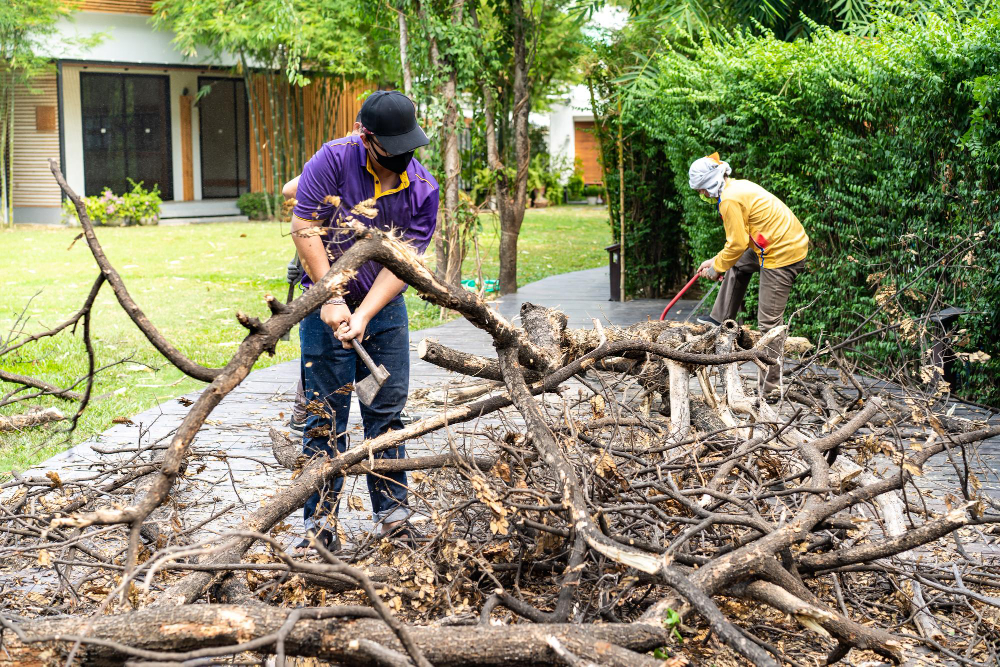
Tree removal is rarely just a landscaping decision in Cleveland or anywhere in Northeast Ohio. In many cases, it intersects with municipal regulations, protected tree ordinances, and property-specific restrictions that determine whether a tree removal permit Cleveland is required before work can begin.
For homeowners, this creates a common point of confusion: you may have a hazardous, dying, or storm-damaged tree on your property, but you are not always free to remove it without checking what tree removal regulations Ohio has in place. Rules vary depending on city jurisdiction, tree size, location, species, and whether the tree falls under protected status.
Understanding when a permit is required, how Cleveland tree ordinance rules apply, and what happens if removal is done without approval can help property owners avoid fines, delays, and unnecessary legal issues. It also ensures that necessary removals, especially emergency situations, are handled correctly and efficiently.
Here's what you'll learn:
- Why uncertainty about city rules delays urgent tree removal decisions
- When Cleveland and Northeast Ohio actually require a tree removal permit
- Which trees you might not realize are regulated before removal
- What happens if you remove a tree without the proper permit
- How a professional tree service helps you stay compliant and avoid costly mistakes
Keep reading to understand exactly when permits apply, what the consequences of skipping them are, and how to move forward confidently.
Why most homeowners hesitate before removing a tree and when that hesitation creates risk
Most homeowners reach a point where a tree transitions from an asset to a liability. It may be leaning after a storm, dropping large limbs, showing signs of disease, or interfering with structures. At that moment the urgency is clear — but so is the uncertainty. Can it be removed immediately, or does the city need to approve it first?
That question often slows down decision-making, especially when safety is involved. In some cases, delays increase risk. In others, proceeding without understanding local rules can create compliance issues that are costly to fix later.
Why uncertainty about city rules delays urgent tree removal decisions
When homeowners are unsure whether a permit is required, they tend to pause action. This hesitation is understandable, especially when dealing with municipal regulations that are not always clearly communicated. Common sources of confusion include uncertainty about whether the tree is regulated, questions over city versus private property rights, lack of clarity on emergency removal rules, and conflicting information found online.
This uncertainty can be genuinely dangerous when a tree poses a safety hazard. A delayed emergency tree removal can increase the risk of property damage or personal injury, particularly in the days following a storm. In most cases, the safest path is neither immediate removal nor indefinite delay, but a professional evaluation of whether a permit is required under Cleveland tree ordinance rules.
How property location inside Cleveland vs. surrounding suburbs changes the rules
One of the most important factors in determining permit requirements is location. Rules in the City of Cleveland may differ significantly from those in surrounding suburbs such as Lakewood, Parma, Cleveland Heights, or Shaker Heights. Each jurisdiction may regulate tree size thresholds, species protection lists, public right-of-way trees, development-related removal, and replacement requirements independently.
This means two properties only a few miles apart may face entirely different requirements for the same type of removal. Even within the same county, enforcement and permitting processes can vary, which is why local verification is always necessary before proceeding.
The risk of assuming "it's on my property so I can remove it"
Private property rights do apply in many cases, but they are often limited by municipal regulations — particularly for large mature trees, trees in designated conservation zones, street trees or right-of-way trees, and trees protected under city ordinances. Assuming unrestricted removal rights is one of the most common mistakes homeowners make, especially in areas with active urban forestry programs.
Understanding tree removal regulations Ohio enforces helps prevent accidental noncompliance and ensures homeowners make informed decisions before taking action.
When Cleveland and Northeast Ohio actually require a tree removal permit
Not every tree removal requires a permit, but certain conditions trigger regulatory oversight. Knowing these situations helps homeowners determine when approval is necessary before work begins.
How protected species or designated trees change approval requirements
Some trees are protected based on species, size, or ecological value. These protections are intended to preserve mature urban canopy and maintain environmental balance. Protected tree considerations may include heritage or landmark trees, trees above a specific trunk diameter, native species with conservation status, and trees in designated preservation zones.
In these cases, removal may require formal approval, documentation, or arborist justification. An ISA-certified arborist tree removal approval may be needed to confirm that the tree is hazardous, diseased, or structurally compromised before removal is authorized. Without this verification, removal may not be permitted even on private property.
Why public right-of-way and street trees are handled differently
Trees located in the public right-of-way are typically regulated more strictly than trees fully within private property boundaries. This includes trees between sidewalks and streets, near utility easements, on municipal land or buffers, and those planted by the city or utility providers. These trees are often considered public assets, even when they appear to sit adjacent to a homeowner's yard.
Beyond their visual role, the U.S. Environmental Protection Agency recognizes street trees as a key component of public green infrastructure, noting that their leaves, stems, and roots slow rainfall from reaching the ground and capturing stormwater runoff. This environmental value is part of why municipalities regulate them so closely. Unauthorized removal of street trees can result in penalties or mandatory replacement requirements.
Situations where emergency removal rules may apply after storms
Emergency situations are treated differently under most municipal regulations. If a tree has fallen onto a home, is blocking roadways or utilities, is structurally compromised after a storm, or poses an immediate safety risk, it may qualify for emergency removal without prior permitting.
However, documentation is still important. Many municipalities require photographic evidence of damage, post-event inspection reports, and notification to city forestry departments. Even in emergencies, involving a professional tree service familiar with local regulations is best practice to ensure compliance after the fact.
Trees you might not realize are regulated before removal
Many homeowners assume only obviously large or public trees are regulated. In reality, several less obvious categories may also fall under municipal oversight.
Large mature trees and diameter-based restrictions in some areas
Some Cleveland-area municipalities regulate tree removal based on trunk diameter measured at breast height, commonly referred to as DBH. Trees above a certain diameter may require formal approval, larger canopy trees may need mitigation plans, and mature specimens may be subject to replacement requirements. These rules are designed to preserve established canopy coverage within urban environments, and even trees that appear ordinary in scale may fall under regulation if they exceed local size thresholds.
Trees located near utilities, sidewalks, or city easements
Trees located near infrastructure are often subject to additional oversight, including those near power lines, sewer or water easements, sidewalks and public walkways, and drainage systems. Utility companies may also have jurisdiction over vegetation management in certain areas, especially when trees interfere with service lines. In these situations, coordination between property owners, municipalities, and utility providers may be required before removal can proceed.
HOA and neighborhood-level rules that override homeowner assumptions
In addition to city regulations, homeowners associations or neighborhood covenants may impose additional restrictions that govern tree removal approval processes, landscaping consistency requirements, preservation of community tree canopy, and replacement planting obligations. Even if a city permit is not required, HOA approval may still be necessary. This creates a layered regulatory structure where multiple approvals can apply simultaneously to a single removal.
What happens if you remove a tree without the proper permit
Failing to obtain a required permit can lead to serious consequences depending on the municipality and severity of the violation. Understanding potential outcomes helps homeowners avoid costly mistakes.
Potential fines, replacement requirements, and city enforcement actions
According to the U.S. Environmental Protection Agency, some communities impose direct fines for removing trees without authorization, while others assess higher stormwater fees based on the loss of permeable canopy cover. Beyond fines, homeowners may be required to plant replacement trees, sometimes at ratios exceeding one-to-one for protected or large canopy specimens. Some municipalities assign a formal monetary "tree value" that directly determines the penalty amount, which can increase significantly for heritage or large-diameter trees.
How violations can affect future property permits or inspections
Tree removal violations can also impact future property-related approvals. Potential consequences include delays in construction permits, increased scrutiny during inspections, requirements for environmental mitigation plans, and difficulty obtaining future variance approvals. Municipalities may track violations in ways that affect future interactions with permitting departments, which is particularly relevant for homeowners planning renovations, additions, or larger landscaping projects.
Why documentation matters even for emergency removals
Even when emergency removal is clearly justified, documentation plays a critical role in compliance. Important records include photos of the pre-removal tree condition, storm damage evidence, professional arborist assessments, work completion reports, and any communication with city departments. Proper documentation demonstrates that removal was necessary and compliant with emergency provisions under local regulations, and it protects homeowners in case questions arise after the fact.
How a professional tree service helps you stay compliant and avoid costly mistakes
Navigating tree removal permit Cleveland requirements can be complex, especially when multiple regulations apply. Professional tree services play an important role in helping homeowners remain compliant while addressing safety concerns.
When arborists handle permitting or advise on approval requirements
Experienced tree service providers are often familiar with local regulations and can help determine whether permits are required before work begins. They can assess whether a tree is regulated, identify protected species concerns, review municipal requirements, coordinate permit applications when necessary, and provide documentation to support approval processes. In many cases, arborists can supply inspection reports that directly support a permit application, particularly when tree health or structural risk is involved.
Why pre-removal inspections reduce legal and financial risk
A professional inspection before removal helps reduce uncertainty and prevents accidental violations. The inspection evaluates tree health and structural condition, species classification, size and regulatory status, location relative to easements or infrastructure, and risk level for nearby property. According to the USDA Forest Service, approximately 80 percent of tree damage during storms is associated with a preexisting structural defect — which means a professional assessment often uncovers documented justification for removal that strengthens a permit application or supports an emergency exemption.
By identifying requirements early, homeowners can avoid delays and unexpected penalties before any work begins.
How emergency storm cleanup is handled differently
Storm-related tree damage is one of the most common reasons for emergency removal in Northeast Ohio. In these situations, tree services prioritize safety and hazard removal, document damage conditions thoroughly, coordinate with utility providers if service lines are involved, and assist with any post-emergency compliance requirements. While immediate action is often necessary, proper documentation ensures that emergency removal aligns with municipal expectations and streamlines any follow-up permitting or reporting that may be required.
Conclusion
Understanding whether a tree removal permit Cleveland requires approval is an important part of responsible property management in Northeast Ohio. While not every tree removal requires municipal authorization, many do fall under tree removal regulations Ohio enforces, especially when dealing with protected species, large mature trees, or trees located near public infrastructure.
Cleveland tree ordinance rules, along with local suburban regulations, create a layered system that determines when approval is needed. Misunderstanding these requirements can lead to fines, replacement obligations, and unnecessary delays. On the other hand, proper planning ensures that necessary removals are handled safely, legally, and efficiently.
For homeowners asking whether they need a permit to cut a tree, the answer depends on location, tree characteristics, and municipal classification. Because of this complexity, professional evaluation is often the most reliable way to determine compliance requirements before work begins.
At Premier Trees LLC, our team assists property owners throughout Cleveland and Northeast Ohio with safe, compliant tree removal services. Whether you are dealing with storm damage, hazardous trees, or planned removals, we help evaluate permit requirements, coordinate arborist approvals when needed, and ensure all work is completed in accordance with local regulations. Contact our team to get started.
