


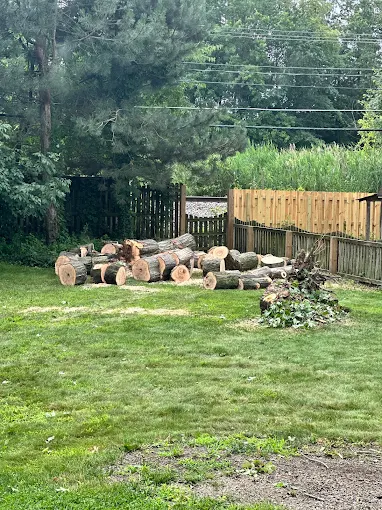
You had the tree taken down last fall, or a storm forced storm damage removal sooner than planned, and now there's a stump sitting in the middle of your yard that the mower has to dodge every week. The question that comes next is a fair one: what does it actually cost to make that stump disappear?
Stump grinding cost in Northeast Ohio isn't a single number you can look up and trust blindly. It moves based on the diameter of the stump, how many stumps you're dealing with, how accessible the yard is, and what condition the wood is in after sitting in the ground for a season or two.
That range exists for a reason, and understanding it protects you on both ends. A quote that seems suspiciously low might mean a smaller machine that can't get below grade, or a crew skipping cleanup of the wood chips left behind. A quote that's unusually high, with no explanation attached, might just mean you're paying more than the job requires.
In this article, you will learn about:
- What actually drives the price of stump grinding in Northeast Ohio
- How stump size and number change the estimate
- Stump grinding versus full stump removal, and why the price gap is so wide
- How to read a quote and avoid overpaying
Keep reading to walk into your next estimate already knowing what questions separate a fair price from a padded one.
Why stump grinding prices swing so widely
Ask around Lake or Geauga County and you'll hear a wide range of numbers for what sounds like the same job. That's not because anyone got ripped off. Stump grinding is priced per job, based on the physical reality of what's in the ground, not off a flat rate that applies to every yard the same way.
The diameter of the stump at ground level is usually the first number an estimator asks about, since it's the simplest way to size up how much wood and root mass the grinder has to chew through. A wide old maple stump takes a lot longer than a young ornamental that never got much bigger than a fence post.
Access matters almost as much as size. A stump sitting in an open front yard with a clear path from the street is a different job than one tucked behind a fence, wedged next to a foundation, or sitting on a slope where the machine can't get solid footing.
- Stump diameter measured at ground level
- Root flare and how far the roots spread near the surface
- Number of stumps on the property, since multiple stumps often price differently per stump than a single job
- Ground access for the grinder, including gates, slopes, and nearby structures
- How deep you want the grind, since below-grade grinding takes longer than a surface pass
- Wood condition, since long-dead, dry stumps sometimes grind faster than fresh, wet ones
None of these factors work alone. A wide stump in an open yard can sometimes cost less than a smaller one wedged against a fence with roots running under a walkway. That's part of why a written estimate that walks through the reasoning is worth more than a bare number at the bottom of a text message.
Ohio's own tree stock plays into this too. Emerald ash borer has left a large number of dead ash trees behind across the state, and a USDA Forest Service and Arboriculture & Urban Forestry study estimated that removal costs for ash trees lost to the pest across Ohio communities alone could range between $0.7 billion and $2.9 billion. A meaningful share of that figure includes the stumps left behind once the trees themselves come down.
How stump diameter changes the number
Diameter is the single biggest driver of stump grinding cost, and it's the easiest thing for a homeowner to measure before calling anyone. Estimators typically talk in terms of price per inch of diameter, though most also apply a minimum charge so a small job still covers the cost of showing up with the equipment.
Small stumps, generally under about 12 inches across, usually fall into the lowest pricing tier. These are quick jobs for a grinder, often taking less time than setting up and breaking down the equipment.
Mid-size stumps in the 12 to 24 inch range are the most common residential job, and this is where the per-inch pricing model earns its keep, since a 14 inch stump and a 22 inch stump from the same tree species can cost noticeably different amounts. Large stumps over 24 inches, often old oaks or maples that came down after decades in the ground, sit at the top of the range and sometimes require a larger machine entirely. A dead ash tree removed after years of emerald ash borer damage often leaves one of these larger stumps behind, since the tree had time to reach full size before it died.
- Measure the stump's diameter straight across at the widest point near ground level
- Note whether the root flare extends noticeably beyond the visible stump, since wide surface roots add grinding time
- Check the height of the stump itself, since a taller remaining stump takes an extra pass to bring down before grinding below grade
- Look at what's nearby, including sprinkler heads, buried cables, or a septic line the crew needs to work around
Getting a rough sense of these numbers before your first phone call means you'll understand the quote instead of just accepting it at face value. It also helps you catch an estimate that doesn't match what's actually in your yard.
Access and wood condition matter as much as size
A stump's diameter tells only part of the story. Two stumps of identical size can price very differently depending on what surrounds them and how long they've been sitting in the ground.
Wood condition changes how the grinder handles the job. A stump that's been dead and drying out for a couple of seasons sometimes grinds faster than a freshly cut one still holding moisture, though very old, rotted wood can occasionally clog equipment in ways that add time rather than saving it.
- Fences, garden beds, or structures close enough to limit machine movement
- Slopes or uneven ground that affect the grinder's stability
- Buried irrigation lines or landscape lighting near the stump
- How long the stump has been in the ground, since wood condition shifts over time
- Whether nearby plants or hardscaping need protection during the grind
A crew that walks the site before quoting, rather than pricing off a phone description, is far more likely to land on an accurate number the first time. That upfront look also catches obstacles that would otherwise turn into a surprise once the machine is already running.
Why multiple stumps change the math
Homeowners dealing with more than one stump, often after a lot clearing project or a round of storm cleanup, tend to get a better per-stump rate than someone with just one. That's mostly about efficiency. Once a crew has the grinder on-site and set up, moving it from one stump to the next costs far less than a separate trip for each one.
That said, more stumps doesn't automatically mean a proportionally bigger discount. If the stumps are spread across a large property with long distances between them, some of that efficiency gets eaten up by extra travel time within the same job.
- A cluster of stumps close together in one area of the yard
- Stumps spread across a larger property with more travel time between them
- A mix of stump sizes on the same job, since larger stumps in the group still price individually
- Whether all stumps share similar access conditions or some require extra maneuvering
If you know you'll eventually want several stumps removed, even if they're not all urgent right now, it's usually worth asking a crew to quote them together rather than scheduling separate visits. The savings on setup and mobilization alone often make it worth bundling the work into a single appointment.
Stump grinding versus full stump removal
These two services get lumped together constantly, but stump grinding vs stump removal are genuinely different jobs with a real price gap between them. Understanding the difference before you call anyone helps you ask for the right service and avoid paying for more, or less, than you actually need.
Stump grinding chews the wood down below the surrounding grade using a rotating cutting wheel, leaving wood chips and a mostly root-free surface that grass or mulch can go right over. The root system stays in the ground and slowly decomposes over the following years.
Full stump removal is a different animal entirely. It pulls the stump and a significant portion of the root ball out of the ground, usually with heavier equipment, leaving a hole that has to be backfilled. That extra step, along with the equipment required to excavate rather than just grind, is why removal typically costs more than grinding for a comparable stump size.
When grinding makes more sense than removal
For most homeowners, grinding is the right call, and it's worth understanding why before you assume removal is the more thorough option. If you're planning to reseed the lawn, spread mulch, or just don't want a hazard in the yard, grinding solves the visible problem quickly and at a lower cost.
The decomposing root system left behind after grinding generally isn't a structural concern for typical residential landscaping. It breaks down gradually on its own, and according to University of Illinois Extension horticulture research, encouraging natural decay through increased surface area, aeration, and moisture can speed that breakdown by up to 50 percent compared to leaving the root system untouched.
- You want the yard to look clean and mowable again quickly
- You're planning to plant grass or mulch directly over the area
- The stump isn't in the way of a new structure's foundation or a utility line
- Budget is a bigger factor than speed of full root removal
Grinding also tends to disturb the surrounding yard far less than removal, since there's no excavation and no large hole to fill and re-level afterward. If you're planning to seed or plant right over the spot, timing the grind ahead of your spring tree care routine gives new growth a head start before the season picks up.
When full removal is worth the extra cost
Removal earns its higher price tag in situations where the root system itself is the problem, not just the visible stump. If you're planning to build a shed, pour a patio, or plant a new tree in the exact same spot, leftover roots can interfere with digging, grading, or the new tree's own root development.
Roots from certain species can also be aggressive enough to cause ongoing headaches even after the tree is gone, working into nearby foundations, driveways, or underground pipes over time. In those situations, pulling the root ball out entirely solves a problem that grinding alone wouldn't.
- You're building directly on or near the old stump's location
- The species had an aggressive root system prone to regrowth or sprouting
- You want the area completely clear for landscaping that requires deep digging
- A previous grinding job left enough root mass that regrowth became a recurring issue
If you're not sure which one fits your situation, describing your longer-term plans for that spot in the yard to whoever comes out for the estimate is the fastest way to get pointed toward the right service rather than guessing.
Why the price gap between the two is so wide
The cost difference between grinding and full removal isn't arbitrary. Grinding uses a machine that chews wood down in place, while removal requires digging out a root ball that can weigh hundreds of pounds and extend several feet in every direction from the trunk.
That extra equipment and labor adds up quickly. A full removal crew often needs an excavator or a similar piece of heavy machinery, plus a place to haul the extracted root ball, backfill material to level the hole, and more time on-site than a typical tree removal job that stops at the stump.
- Heavier equipment required to excavate rather than grind in place
- Disposal of the extracted root ball, which is bulkier than wood chips
- Backfill material needed to level the resulting hole
- Additional labor time for excavation, hauling, and site restoration
None of this means removal is overpriced when it's quoted higher than grinding. It reflects genuinely more work, and understanding that difference upfront makes the two quotes easier to compare fairly rather than assuming one company is simply charging more for the same job.
What's included in a stump grinding quote
A price by itself doesn't tell you much without knowing what's actually covered. Two companies can quote the same stump at noticeably different numbers because one is including steps the other treats as a separate charge.
The core grinding work, running the machine until the stump is down to grade or below, is usually the baseline of any quote. What happens to the resulting wood chips and debris is where quotes start to diverge.
The line items that separate a complete quote from a bare-bones one
Most homeowners assume "stump grinding" means the stump disappears and the yard looks finished. In practice, several distinct pieces of work go into that result, and not every quote includes all of them by default.
Grinding depth is one of the more overlooked variables. Some companies grind flush with the surface as a standard offering, while others charge extra to grind several inches below grade, which matters if you're planning to plant grass or lay sod directly over the spot.
- Grinding the stump down to or below the surrounding grade
- Hauling away the resulting wood chips, or leaving them for you to use as mulch
- Backfilling the depression left once the stump is ground down
- Raking or leveling the surrounding area after the work is finished
- Grinding visible surface roots that extend beyond the main stump
Chips left behind aren't automatically a bad outcome. Plenty of homeowners want them for garden beds or as mulch around other plantings. The issue is only when a quote doesn't specify one way or the other, leaving you to discover the pile of chips after the crew has already left.
Why the number on the quote isn't always the final number
A written estimate should reflect an actual look at your stump and yard, not a guess based on a phone description. Estimates that come in noticeably lower than everyone else's are worth a second look rather than an automatic yes, since a low number sometimes means a smaller machine that can't grind deep enough, or a plan to skip hauling the chips away.
Hidden obstacles are the other place quotes can shift once work begins. A stump that looks straightforward from above can have surface roots running further than expected, or the crew might discover a sprinkler line, buried cable, or old concrete footing once grinding starts.
- Ask whether hauling and cleanup of wood chips is included or billed separately
- Confirm the grinding depth included in the base price
- Ask what happens if the crew hits something unexpected underground
- Get the estimate in writing rather than relying on a verbal number
- Ask whether backfilling the resulting depression is part of the job
A company confident in its pricing will answer these questions directly and without hesitation. Vagueness around what's included, or defensiveness about what happens if something unexpected turns up, is worth paying attention to before you commit.
The safety side of grinding equipment
Stump grinders aren't small machines, and the way a company handles safety says something about how the rest of the job will go. The cutting wheel spins fast enough to throw wood chips and debris a real distance, which is why professional crews rely on personal protective equipment and keep bystanders at a safe distance while the machine runs.
Federal workplace safety rules reflect how seriously this equipment is taken. Under OSHA's occupational noise exposure standard, employers must implement a hearing conservation program once worker exposure reaches an eight-hour average of 85 decibels, a threshold that stump grinders can exceed during normal operation.
That standard exists because grinding equipment is loud and the debris it throws is genuinely hazardous, not just an inconvenience. A crew that shows up with proper protective gear and a clear plan for keeping people and pets clear of the work area is signaling that they take the equipment, and your property, seriously.
Comparing quotes and choosing a stump grinding company
Once you've collected a couple of estimates, the instinct is to go with whichever number is lowest. That works fine only when every quote covers the exact same scope of work, and stump grinding versus stump removal quotes in particular tend to vary in what they include.
Matching what's actually included before comparing price
Line up the scope of each quote before you look at the total. A $150 quote that leaves the wood chips in a pile and skips backfilling isn't really cheaper than a $250 quote that includes both, once you factor in the cleanup you'd otherwise handle yourself.
Ask each company to spell out grinding depth, chip removal, and backfilling as separate line items if they aren't already broken out. That makes it far easier to see where the real price difference comes from once you're comparing two numbers side by side.
- Does the quote specify grinding depth, or leave it vague
- Is chip removal included, or will you be left with a pile to deal with
- Does the price account for the specific access challenges on your property
- Is backfilling part of the job or a separate add-on
Once the scope matches across quotes, the price comparison actually means something. From there, the conversation shifts to the company itself rather than just the number on the page.
Why insurance and experience are worth checking
A company operating stump grinding equipment without proper insurance is a real liability if something goes wrong on your property, whether that's a piece of equipment damaging a nearby structure or an injury to a crew member. This isn't a box to check quickly and move past.
Ask directly whether the company carries liability coverage and workers' compensation, and ask for proof rather than accepting a verbal assurance. A trustworthy tree service company will typically provide this without pushback.
- Liability insurance covering property damage during the job
- Workers' compensation coverage for the crew
- Experience with stumps similar in size or species to yours
- A track record of working in your specific area of Northeast Ohio
Experience matters here too, particularly with larger or oddly-rooted stumps. A crew backed by an ISA-certified arborist will generally spot hidden obstacles faster and avoid the surprises that turn a routine grind into a longer, more expensive visit.
Questions worth asking before you schedule the job
A short conversation before you commit can save you from an unpleasant surprise once the crew arrives. Most reputable companies expect these questions and have straightforward answers ready.
Come prepared with a few specifics about your property, not just the stump itself. Whether there's a gate wide enough for the machine, where the wood chips should end up, and whether any nearby plants or structures need protecting are all worth mentioning up front.
- What exactly is included in this price, and what would trigger an additional charge?
- How deep will the grinding go, and is that adjustable if I need it lower?
- What happens to the wood chips, and do I have a say in whether they're hauled away or left?
- Can you provide proof of insurance directly rather than a verbal assurance?
- How will you protect my lawn or nearby landscaping while the machine is working?
Asking these questions before you sign anything isn't about being difficult. It's about making sure the price you agreed to is the price you actually pay, with no gap between what was promised and what the yard looks like once the truck pulls away.
Conclusion
Stump grinding cost in Northeast Ohio depends on real, physical variables specific to your yard, from stump diameter and root spread to access and how many stumps you're dealing with at once. There's no single number that applies evenly across every property, and that's exactly why a fair estimate should walk you through the reasoning behind it.
Once you understand what drives the price, comparing quotes gets a lot easier. You'll know which numbers reflect a complete job and which ones are missing pieces you'll end up paying for later, one way or another.
If you've got a stump, or several, that need to go, Premier Tree Specialists can take a look at your property and give you a clear, honest estimate before any work begins.
