


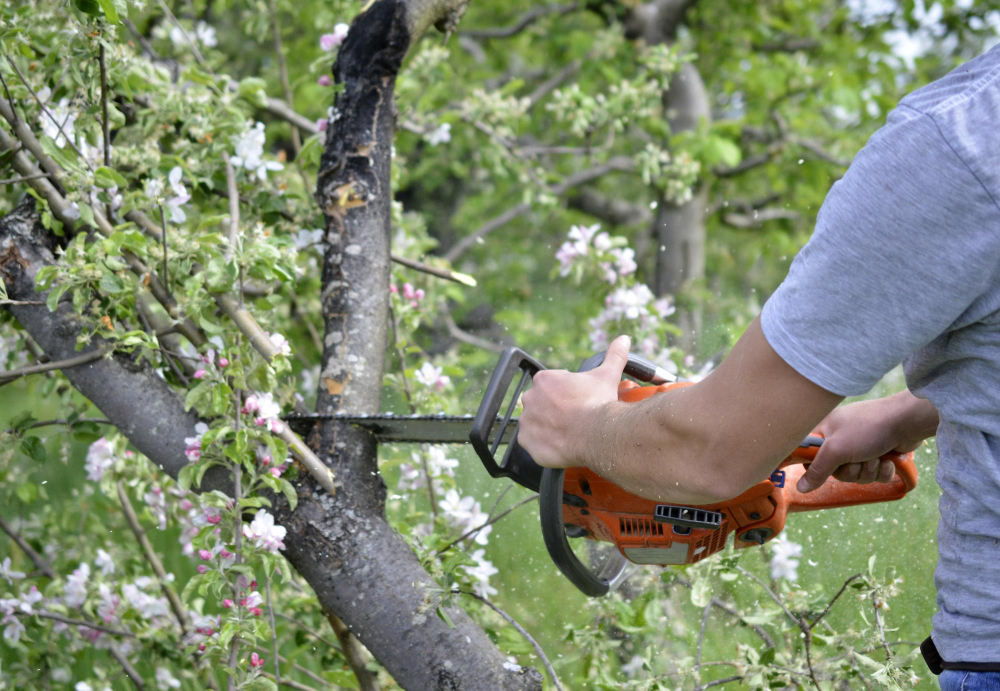
Setting up a proper spring tree care routine in Northeast Ohio gives your trees the best possible start after a hard winter. The work you do in March, April, and May determines how well your trees handle summer storms, heat, and pest pressure later in the year.
Spring arrives in Northeast Ohio with warming temperatures and new growth, but your trees need proper attention to thrive after the cold winter months. Caring for your trees in spring means checking for winter damage, pruning at the right time, and preparing the soil to prevent problems later in the year. These early steps help your trees stay healthy and strong throughout the growing season.
Winter weather can harm trees in ways you might not notice right away. Damaged branches, stressed roots, and poor soil conditions can all affect how well your trees grow in spring. Taking action now saves you from bigger issues when summer heat arrives.
This guide walks you through the key steps for spring tree care in Northeast Ohio. You'll learn how to spot hidden winter damage, when to prune for the best results, and what soil conditions your trees need to succeed.
In this article, we cover:
- Identifying hidden effects of winter on your trees
- Prioritizing early pruning for healthy growth
- Spotting early signs of tree health challenges
- Understanding the importance of soil conditions
- Preventive steps to minimize summer tree issues
Keep reading to learn exactly which tasks to tackle this spring and how to spot problems before they grow into emergencies.
Identifying hidden effects of winter on your trees
Winter damage often stays hidden until spring when trees start growing again. Cracked branches, salt exposure, and snow damage can all threaten your trees' health and safety even after the cold weather ends.
Cracked limbs can become dangerous during spring storms
Cold temperatures cause tree bark and wood to contract, which creates cracks that you might not notice at first. These cracks weaken the structural integrity of branches and limbs. When spring storms bring heavy rain and strong winds, these compromised limbs become serious hazards.
You should inspect your trees for vertical cracks in the trunk and splits where major branches connect to the main stem. Look for areas where bark has separated from the wood underneath. These damaged areas allow moisture and disease to enter the tree, and are often the first signs that a tree is in decline.
Temperature swings during late winter are especially hard on trees. When temperatures drop quickly after a warm day, the rapid contraction can split bark and create deep cracks. Storm damage prevention starts with identifying these weak points early.
Salt exposure may weaken roadside trees
Road salt used during winter seeps into soil and damages tree roots. Trees near streets, driveways, and sidewalks face the highest risk. Salt prevents roots from absorbing water and essential nutrients.
According to the University of Wisconsin Horticulture Extension, deicing salt is highly absorbent and binds tightly with water, which keeps roots from taking up moisture, and newly planted trees and shrubs with smaller root systems are especially vulnerable. Your trees may show brown leaf edges, stunted growth, or branch dieback starting in spring. The damage appears gradually as trees try to grow with compromised root systems. Evergreens often turn brown on the side facing the road first.
Salt also changes soil chemistry and makes it harder for trees to function normally. You can help affected trees by flushing the soil with water once the ground thaws completely.
Heavy snow damage is not always visible right away
Snow and ice weight can bend branches beyond their natural flexibility. Even after snow melts, internal damage remains. Branches may have small fractures or torn bark that you cannot see from the ground.
Watch for branches hanging at odd angles or limbs with exposed wood where bark tore away. Some branches develop a permanent bend that makes them more likely to break later. Trees with multiple leaders or narrow branch angles suffer the most snow damage.
Spring growth puts additional stress on already weakened branches. The combination of new leaf weight and spring winds can cause delayed failures weeks after winter ends, sometimes leading to a need for emergency response when a limb fails over a home or driveway.
Prioritizing early pruning for healthy growth
Early spring pruning sets the foundation for strong tree development throughout the growing season. Removing problem areas before buds break prevents pest infestations, reduces property damage risks, and creates better air circulation in the canopy.
Dead branches attract insects and disease
Dead and dying branches create entry points for harmful insects and fungal infections. When you leave dead wood on your trees, beetles and borers find easy access to the inner layers. These pests can quickly spread to healthy parts of the tree.
Fungal spores thrive in decaying wood and move into living tissue through cracks and wounds. According to the University of Maryland Extension, damaged, diseased, and dead branches can be removed at any time of year, and young trees benefit most from early structural pruning to prevent future branch defects. You should inspect your trees while they're still dormant to spot dead branches more easily.
The gray or brittle appearance of dead wood stands out against healthy bark during late winter. Removing these sections before April gives your trees time to seal the wounds before insects become active. Knowing the best time to trim trees in Northeast Ohio helps you time this work for maximum benefit.
Overgrown limbs create roof and power line risks
Branches that grow too close to structures pose serious safety hazards during storms. A single heavy branch can cause thousands of dollars in roof damage when it falls. You need at least 6 to 10 feet of clearance between tree limbs and your home.
Power line contact creates fire risks and service interruptions. Tree pruning in Ohio should address these hazards before spring winds arrive. March offers ideal conditions for this work because you can see the full branch structure without leaves blocking your view.
Overgrown limbs also scrape against siding and gutters during windy conditions. This constant contact damages paint and creates moisture problems. The choice between trimming and full removal depends on how much of the canopy is involved and the tree's overall health.
Proper trimming improves airflow through the canopy
Dense canopies trap moisture and create perfect conditions for disease development. When you thin out crowded branches, air moves freely through the tree. This circulation dries leaves faster after rain and reduces fungal growth.
Better airflow also strengthens the remaining branches. Each limb receives more sunlight and allocates energy to growth rather than competing for resources. You should remove crossing branches and those growing toward the center of the tree.
Strategic pruning opens up the canopy without removing too much foliage. The goal is to maintain the tree's natural shape while improving light penetration and air movement throughout the structure.
Spotting early signs of tree health challenges
Trees often show specific warning signs before serious problems develop. Catching issues like root decay, winter damage, or structural instability early can prevent tree loss and safety hazards.
Fungus near the base may point to root decay
Mushrooms or fungal growth around the base of your tree often indicates decay happening below ground. These fungi feed on dead or dying wood in the root system. The visible mushrooms are just the fruiting bodies of a much larger organism breaking down your tree's roots.
Check the area within three feet of the trunk for shelf-like growths, clusters of small mushrooms, or white fungal threads on the bark. Soft, spongy spots near the base also suggest rot. Root decay weakens the tree's stability and limits its ability to take up water and nutrients.
Trees with significant root decay may lean more over time or show thinning canopies even with adequate water. A tree health inspection by a certified arborist can determine how far the decay has spread. Some trees can survive with partial root loss, but others may need removal before they become hazardous.
Bare sections can signal winter stress or disease
Dead or leafless branches in spring usually mean the tree suffered winter injury or has developed a disease. Healthy trees should leaf out evenly across their canopy by late May in Northeast Ohio. Bare patches, especially on one side of the tree, require attention.
Winter damage happens when rapid temperature changes cause bark splitting or when ice and snow break branches. Look for cracks in the bark or areas where the outer layer has peeled away. Disease-related bare spots often start with discolored leaves before branches die completely.
Scratch a small section of bark on bare branches with your fingernail. Green tissue underneath means the branch is still alive and may recover. Brown or gray tissue indicates the branch is dead and should be pruned.
Leaning trees should be inspected before storm season
A tree that suddenly leans or has increased its lean angle needs immediate evaluation. Gradual leaning over many years is often normal, but new or worsening leans suggest root failure or soil movement. This becomes especially dangerous before summer storm season.
Check the ground around the base for raised soil, exposed roots, or cracks radiating outward. These signs mean the root plate is lifting and the tree could topple. Trees leaning toward structures, power lines, or high-traffic areas pose the greatest risk.
Wind, saturated soil, and root decay all contribute to leaning. A professional tree health inspection can measure the lean angle and assess whether the tree can be stabilized with cables or needs removal.
Understanding the importance of soil conditions
Soil conditions in Northeast Ohio directly affect how well your trees recover from winter stress and grow during spring. Winter freeze-thaw cycles compact soil, spring rains can waterlog root zones, and proper moisture retention becomes critical as temperatures rise.
Compacted soil limits root growth after winter
Winter weather in Northeast Ohio creates serious soil compaction problems. Snow, ice, and freezing temperatures press down on soil particles, squeezing out air pockets that roots need to grow and breathe.
Compacted soil prevents tree roots from expanding into new areas. Your trees struggle to absorb water and nutrients when soil is too dense. This is especially harmful for newly planted trees that need to establish strong root systems during their first growing season.
You can check for compaction by pushing a screwdriver into the soil near your trees. If it doesn't slide in easily to a depth of 6-8 inches, your soil is likely compacted. Avoid walking or driving near your trees during spring when soil is wet, as this makes compaction worse.
Aerating the soil around your trees helps solve this problem. Core aeration removes small plugs of soil and creates channels for air, water, and nutrients to reach the roots. You should aerate compacted areas in spring after the ground thaws but before temperatures get too warm.
Mulching helps protect moisture during warmer months
Proper mulching maintains consistent soil moisture as spring temperatures climb. A 2-3 inch layer of organic mulch around your trees reduces water evaporation from the soil surface and keeps roots cooler during warm days.
Apply mulch in a ring around the tree trunk, extending out to the drip line if possible. Never pile mulch against the trunk, as this traps moisture and invites disease and pest problems. According to Ohio State University's Buckeye Yard and Garden Line, organic mulch should be applied to a depth of no more than 2-3 inches, and any mulch that ends up on the tree trunk needs to be pulled back away from the trunk flare. Leave a 3-4 inch gap between the mulch and bark.
Wood chips, shredded bark, and leaf compost all work well as mulch materials. These organic materials slowly break down and add nutrients back into the soil. Refresh your mulch layer each spring to maintain the proper depth.
Mulch also prevents weed growth that competes with your trees for water and nutrients. It protects soil from heavy spring rains that can wash away topsoil and expose surface roots.
Excess water can damage already stressed roots
Spring brings heavy rainfall to Northeast Ohio, and too much water harms tree roots just as much as too little. Waterlogged soil forces oxygen out, and roots suffocate without adequate air circulation.
Trees stressed from winter damage are particularly vulnerable to root rot and fungal diseases in wet conditions. You might notice yellowing leaves, wilting, or slowed growth if your trees are sitting in overly wet soil.
Check drainage around your trees after heavy rains. Water should soak into the ground within 12-24 hours. If puddles remain for days, you have a drainage problem that needs attention.
Improve drainage by redirecting downspouts away from tree root zones and grading soil so water flows away from trees. Avoid planting trees in low spots where water naturally collects. For existing trees in wet areas, consider installing French drains or creating raised beds to lift roots above the water table.
Preventive steps to minimize summer tree issues
Taking action during spring helps your trees withstand the heat, storms, and pests that come with summer months. Regular inspections and maintenance now can prevent emergency situations and expensive removals later.
Early inspections help avoid emergency removals
Spring tree maintenance gives you the chance to spot problems before they become dangerous. Look for signs of disease, decay, or structural weakness while trees are still putting out new growth. Dead branches, cracks in the trunk, or fungal growth at the base are warning signs that need attention.
An ISA Certified Arborist can identify issues you might miss during a routine inspection. They check for root damage, internal decay, and unstable lean that could lead to tree failure. Addressing these problems in spring costs less than emergency removal after a tree falls on your property.
Many Northeast Ohio homeowners wait until a tree poses an immediate threat. By then, your options are limited and often more expensive. Major work may also require a tree removal permit from your municipality, which takes time to obtain. Schedule an inspection in late April or early May when arborists can assess winter damage and plan necessary work before summer storms arrive.
Weak limbs are more likely to fail during storms
Summer storms in Northeast Ohio bring heavy winds and rain that test your trees' structural integrity. Branches weakened by winter damage, disease, or poor growth patterns are prime candidates for failure during severe weather.
Spring pruning removes dead wood and corrects dangerous branch angles before storm season begins. Focus on removing branches with tight V-shaped crotches, which split easily under stress. Also remove any limbs rubbing against each other or growing back toward the trunk.
Priority pruning targets:
- Dead or dying branches
- Branches hanging over structures
- Limbs with visible cracks or splits
- Crossing or rubbing branches
Routine care improves long-term tree health
Consistent spring care builds resilience against summer stresses like drought, heat, and pest pressure. Proper watering, mulching, and soil management create conditions that help trees thrive during challenging months ahead. Healthy mature trees also support your property's value over time.
Apply 2-4 inches of mulch around the base of your trees, keeping it away from the trunk. This helps soil retain moisture during dry periods and regulates temperature around roots. Test soil in spring to identify nutrient deficiencies that could weaken trees before summer.
Young trees especially benefit from regular watering schedules established in spring. Deep watering encourages strong root development that supports trees through heat waves. Monitor for early signs of pest activity or disease so you can treat problems before they spread.
Conclusion
Spring tree care sets your trees up for success throughout the growing season. The work you do now in Northeast Ohio will help your trees handle summer heat and winter cold better.
Your trees need different care depending on their age and type. Young trees require more frequent watering and protection. Mature trees benefit from inspection and removal of dead wood.
Spring weather in Northeast Ohio can be unpredictable. Wait until the ground thaws completely before doing major work. Avoid pruning spring-flowering trees until after they bloom.
Regular maintenance prevents bigger problems later. Small issues like minor pest damage or nutrient deficiencies are easier to fix when caught early. You can handle some tasks yourself, but certain jobs need professional help.
The time you spend on spring tree care protects your investment. To schedule a professional spring inspection or get help with pruning, soil care, and storm-damaged limbs before summer arrives, contact Premier Tree Specialists for an expert assessment of your property.
