


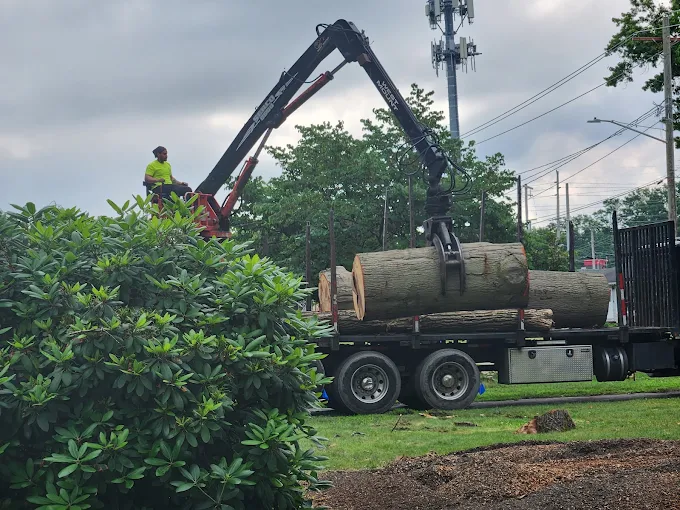
If you've got a dead ash tree leaning toward your roof or a maple that's dropping limbs every time the wind picks up, the first question on your mind probably isn't about species or soil conditions. It's simpler than that: what is this going to cost you?
The honest answer is that tree removal cost in Columbus, OH depends on a handful of variables that change from property to property, sometimes from tree to tree in the same yard. Height, trunk diameter, how close the tree stands to your house or power lines, and how much of a mess is left behind all move the number up or down.
That range matters because it protects you from two different problems. A quote that's too low often means a corner is about to get cut, whether that's skipping insurance, rushing the cleanup, or leaving the stump behind. A quote that's too high, with nothing to explain it, means you're probably overpaying for the exact same job someone else would do for less.
In this article, you will learn about:
- What actually drives the price of a tree removal in Columbus
- How tree size and condition change the estimate
- What a fair quote should include, and what it shouldn't hide
- How to compare quotes without getting burned
Keep reading to walk into your next estimate knowing exactly what questions to ask and why the number in front of you looks the way it does.
Why tree removal costs vary so much from job to job
Ask five homeowners in Clintonville or German Village what they paid to have a tree taken down, and you'll get five different numbers. That's not because anyone got a bad deal. It's because tree removal is priced job by job, not off a fixed rate card.
The core inputs are physical: how tall the tree is, how thick the trunk is at the base, and how healthy or hazardous the wood is. A dead ash that's been sitting for two seasons behaves very differently under a chainsaw than a live oak that's still holding moisture and weight in its canopy.
Access plays almost as big a role as the tree itself. A backyard tree with a clear drop zone and truck access from the driveway is a different job than one wedged between a fence, a shed, and a neighbor's property line.
- Tree height and trunk diameter at the base
- Species and wood density, since some trees are simply harder and heavier to cut and haul
- Whether the tree is standing dead, leaning, or storm-damaged
- Proximity to the house, garage, fence, or power lines
- Ground access for equipment versus a tight, fenced-in lot
- Cleanup scope, including whether you want the wood chipped, hauled, or left as firewood
None of these factors work in isolation. A tall, healthy tree in an open backyard can sometimes cost less than a smaller, storm-damaged tree tangled up in power lines and hanging over a roof. That's why two quotes for what looks like "the same size tree" can land far apart, and why a written estimate that explains the reasoning behind the number is worth more than one that's just a total at the bottom of a page.
Columbus's own housing stock adds another layer. Many neighborhoods carry mature shade trees planted decades ago, and a joint tree canopy assessment from the City of Columbus and Franklin County found canopy cover of 22 percent for the city and 24 percent for the county as of 2021, ranging from under 15 percent to over 56 percent depending on the jurisdiction. Older neighborhoods with dense canopy tend to have larger, more established trees, and those trees usually cost more to remove safely than younger, smaller ones in newer developments.
How tree size changes the number
Size is usually the first thing an estimator looks at, and it's the easiest variable for a homeowner to eyeball before anyone shows up. A tree under 30 feet, something like a smaller ornamental or a young shade tree, is generally the least expensive category to remove because it takes less time, less rigging, and less equipment.
Mid-size trees in the 30 to 60 foot range are where most residential removals fall, and this is where the price spread widens the most. A maple or oak in this bracket that's healthy and easy to access will run differently than one that's split, hollow, or leaning over a structure.
Trees over 60 feet, which includes many older oaks and some mature pines around Columbus, sit at the top of the range. Improper tree spacing between a mature tree and a home often pushes these larger removals into the higher end of the range, since crews need extra clearance and more careful sectioning to bring the tree down safely.
- Measure or estimate the tree's height against a known reference, like your gutter line or a two-story wall
- Note the trunk diameter at roughly chest height, since a thick trunk near a thin canopy can still mean a heavy, slow job
- Check for lean, since a tree leaning toward a structure or property line adds rigging time regardless of height
- Look at the canopy spread, because a wide canopy near a house or fence often means the crew has to remove branches in stages rather than felling the tree in one piece
Getting these basics right before you call anyone means you'll understand the estimate instead of just trusting it. It also helps you spot a quote that doesn't match what's actually standing in your yard.
What condition and species add to the equation
Not every problem tree needs full removal versus trimming, and that distinction is worth sorting out before you request a removal quote at all. A dead or dying tree isn't automatically cheaper to remove, even though it has no leaves left to deal with. Dead wood can be brittle and unpredictable, which sometimes means more careful rigging rather than less. A tree that's been dead for a while may also have weakened limbs that shift or drop without warning during the cut.
Species matters too, mostly because of wood density and branch structure. Hardwoods like oak and hickory are heavier per cubic foot than softer woods, which affects how a crew sections and hauls the material. Trees with wide, spreading branch structures, common in older maples, often take longer to bring down piece by piece than a narrower, more upright tree of similar height.
- Standing dead trees, which need extra caution for hidden rot or weak limb attachments
- Storm-damaged trees with splits, hangers, or partial breaks
- Trees with visible cavities, fungal growth, or bark separation
- Species with dense wood or wide canopy spread
- Trees co-dominant with two or more major trunks competing for the same root system
If a tree is diseased or infested, that changes the calculus further. Emerald ash borer has hit ash trees hard across Ohio for years, and a standing dead ash is one of the more common "surprise" removals homeowners deal with once a tree that looked fine the year before suddenly doesn't leaf out.
Access, obstacles, and why your yard layout matters
Two identical trees, same height, same species, same condition, can carry two very different price tags depending on what's around them. A tree too close to the house or squeezed against a fence line costs more to remove than the same tree standing in an open backyard with a straight shot for a truck and chipper.
Now picture that same tree six feet from a fence line, with overhead power lines running along the back property boundary and a shed blocking the easiest drop zone. Every one of those obstacles adds time, and time is what you're really paying for in a tree removal.
- Overhead utility lines, which may require the utility company to de-energize or the crew to work with extra clearance
- Fences, sheds, pools, or other structures inside the potential fall radius
- Narrow side-yard access that limits truck or chipper placement
- Slope or uneven terrain that affects footing and rigging
- Proximity to a neighbor's property, which can require extra coordination or permission
Crews sometimes have to remove a tree in sections, lowering each piece with a rope rather than felling it in one motion, specifically because of tight access. That approach is slower and more labor-intensive, but it's also the difference between a clean job and a damaged fence or a cracked driveway.
What's actually included in a tree removal quote
A number on a page doesn't tell you much without knowing what's behind it. Two companies can quote the same tree at very different prices because they're including, or excluding, different pieces of the job.
The core removal, felling the tree and getting the trunk down safely, is only part of the work in most cases. What happens to the wood and debris afterward is a separate decision that homeowners don't always realize they're making until the invoice arrives.
Before you compare two quotes side by side, it helps to know which of these pieces are baked into the number and which are billed separately.
The line items hiding inside a single total
Most homeowners picture "tree removal" as one task, but the invoice is usually made up of several distinct pieces of work stacked together. Knowing what those pieces are makes it much easier to tell whether a quote is complete or quietly missing something.
Felling the tree is really just the first step. Everything that happens after the trunk hits the ground, from sectioning the limbs to clearing the site, takes real time and labor that has to be accounted for somewhere in the price.
- Felling and sectioning the tree itself
- Limb and branch removal down to manageable pieces
- Hauling the wood and debris off-site
- Wood chipping on-site versus hauling logs away whole
- Splitting larger sections into firewood, if requested
- Site cleanup, including raking debris and blowing off nearby surfaces
Some companies fold every one of these into a single flat number, while others break them out as separate line items. Neither approach is wrong on its own, but you want to know which one you're looking at before you compare it against a competing quote.
Why stump removal almost always costs extra
Stump grinding or removal deserves its own mention because it trips up a lot of homeowners. Many quotes for "tree removal" stop at the base of the trunk, leaving the stump in the ground unless you specifically ask for grinding or full removal as an add-on.
Stump grinding chews the wood down below grade so grass or landscaping can go right over it, while full stump removal pulls the root ball out entirely, which is more invasive and typically costs more. Which one makes sense depends on what you're planning to do with that spot in the yard next.
If you're planning to replant in the same location, put in a patio, or just don't want a stump sitting in the yard, confirm whether either option is included before you sign anything. If it isn't, ask for it as an add-on price up front rather than circling back after the crew has already left.
Once you know what's on the table, the next step is figuring out how to weigh multiple estimates against each other instead of just picking the lowest number.
Reading an estimate the right way
A written estimate should tell you more than a price. It should reflect that someone actually walked the property, looked at the specific tree, and accounted for the obstacles around it rather than guessing over the phone.
Estimates that come in dramatically lower than everyone else's are worth a second look, not automatic celebration. A number that low sometimes means the crew is planning to skip debris hauling, leave the stump, or isn't carrying the insurance that protects your property if something goes wrong.
- Ask whether the quote includes full cleanup and debris removal, or just the felling
- Confirm whether stump grinding or removal is included or billed separately
- Ask about the company's insurance coverage, specifically liability and workers' compensation
- Get the estimate in writing, not just a verbal number over the phone
- Ask what happens if the job turns out to be more complex than expected once work begins
A company confident in its pricing will walk you through these points without hesitation. One that gets vague or defensive about insurance or scope is telling you something important before the work even starts.
Permits, timing, and other cost factors homeowners forget
Depending on where your property sits and what the tree is doing, permitting can enter the picture. Some municipalities around Columbus require a permit for removing certain trees, particularly larger specimens or those in designated protected zones, while others leave residential removal decisions entirely to the homeowner. It's worth a quick call to your local zoning or forestry office before work starts, since a company handling this for you as part of the job is a meaningful convenience worth asking about upfront.
Timing affects price too, though maybe not in the direction you'd expect. Emergency removals, a tree down across a driveway after a storm, or one leaning dangerously toward a structure, often carry a premium because the crew has to reprioritize their schedule and sometimes bring in extra equipment on short notice.
- Permit requirements, which vary by municipality and tree size or location
- Emergency versus scheduled service, since urgent jobs often cost more
- Seasonal demand, with storm season and late fall cleanup pushing schedules and pricing
- Multiple trees on one property, which can sometimes bring a better per-tree rate
- Distance from the property to a disposal or recycling site
None of these factors are hidden fees in the shady sense. They're real costs that a legitimate company has to account for, and a good estimator will explain them rather than bury them in a lump total. Property managers handling commercial tree services across several rental properties typically see these same factors multiply across each site.
How storms and severe weather change the cost picture
Central Ohio doesn't get hurricanes, but it gets its share of severe storms, and why trees fall in these events is a major driver of unplanned tree removal. High winds, ice loads, and the occasional tornado all put weakened trees on the ground with little warning.
Storm damage changes the removal calculus because the tree isn't standing anymore, or it's only half standing, and that changes both the risk and the technique required to deal with it safely. A tree that's fallen onto a structure or is hung up in another tree's canopy needs a different approach than a straightforward standing removal.
The hazard categories that show up after a storm
Not every downed tree presents the same risk, and the category it falls into changes both the approach and the price. A trunk lying flat in an open yard is one thing. A tree still partially rooted and leaning against a structure is something else entirely.
Understanding these categories ahead of time helps you describe the situation accurately when you call for help, which speeds up the response and the estimate alike.
- A tree fully down but not touching a structure
- A tree leaning or partially fallen against a house, fence, or another tree
- Split trunks or major limb failures still attached to the tree
- Root systems partially pulled from the ground, creating an unstable lean
Storm cleanup often gets treated as a single job when it's really several distinct hazards stacked together. A tree hung up in a neighbor's tree, for example, requires careful sequencing so neither tree comes down uncontrolled, and that complexity shows up in the quote.
The safety math behind storm response
Falling trees and limbs are a real safety concern that goes beyond property damage, and it's part of why storm cleanup isn't priced like a routine job. According to a tree care safety alert from the Massachusetts Department of Labor Standards, an average of 140 workers nationwide were killed annually by falling trees, logs, or limbs over a recent five-year period.
That statistic is one reason licensed crews follow strict rigging and drop-zone procedures rather than treating a downed or hanging tree as a simple cleanup task. A tree under tension from a partial fall can release suddenly, and the margin for error shrinks considerably compared to felling a healthy, standing tree.
Every precaution a crew takes around a storm-damaged tree, from establishing a wider drop zone to bringing in extra rigging, adds time to the job. That time is exactly what separates a routine storm cleanup quote from a standard scheduled removal.
Why emergency jobs carry a different price structure
An emergency removal isn't priced the same way as a scheduled one, and understanding why helps you avoid sticker shock in a stressful moment. Crews responding to storm damage are often working around active hazards, unstable footing, and sometimes live power lines, all of which slow the job down and raise the risk.
Scheduling is the other half of it. A company that has to pull a crew off a planned job, or call in extra hands after hours, is absorbing a real cost that gets reflected in the emergency rate.
- Off-hours or weekend response
- Working around downed power lines or active storm conditions
- Unstable trees that require extra rigging and slower, more careful cuts
- Coordination with utility companies before work can safely begin
- Higher demand across the whole service area right after a major storm
If you're in the middle of an active emergency, safety comes first. Keep people and pets away from the tree, don't attempt to clear it yourself if it's touching power lines, and call a licensed company as soon as it's safe to do so. That caution is backed by real numbers: a peer-reviewed survey published in Arboriculture & Urban Forestry found a fatality rate around 163 per 100,000 tree workers, several times higher than the average across all U.S. industries.
Comparing quotes and choosing a tree removal company
Once you've got two or three estimates in hand, the temptation is to sort by price and call it done. That approach works fine when every quote covers the exact same scope, but that's rarely the case in tree work.
Matching scope before you compare price
The better approach is lining up scope first, then price. A $600 quote that leaves the stump and skips cleanup isn't actually cheaper than a $900 quote that includes both, once you factor in what it would cost to handle those separately later.
Put each quote side by side and check whether they cover the same physical work, not just the same total. That comparison usually reveals that the "cheap" option and the "expensive" option were never really quoting the same job.
- Does the quote match the scope you actually asked for
- Is the price broken down, or delivered as a single flat number
- Does the estimate account for the specific obstacles on your property
- Are stump grinding, hauling, and cleanup spelled out clearly
- Does the estimator explain their reasoning, or just hand you a number
Once the scope lines up, price becomes a much more useful comparison point. That's also the moment to shift your attention from the number itself to the company standing behind it.
Why licensing and insurance matter more than the total
Licensing and insurance deserve real scrutiny here, not a box you check and move past. Tree removal is genuinely dangerous work, and a company operating without proper coverage is a liability risk that lands on your property if something goes wrong during the job.
If a crew member is injured on your property and the company doesn't carry workers' compensation, or a falling limb damages your neighbor's roof and there's no liability policy behind it, that risk doesn't disappear. It usually lands on the homeowner who hired the uninsured crew.
- Is the company insured for both liability and workers' compensation
- Does the crew have relevant certifications or documented experience
- Can the company provide proof of insurance on request, not just a verbal claim
- Has the company been operating in the Columbus area long enough to have a track record
A credentialed crew brings more than a lower risk profile. Trees near property lines, protected species, or ones showing signs of disease sometimes benefit from an arborist's eye before removal is even the right call, since a tree that looks dead from the ground can occasionally be saved, or a tree that looks fine can be structurally compromised in ways only a trained inspection catches.
Questions worth asking before you sign anything
A short conversation before you commit can save you from a bad surprise later. Homeowners who schedule regular arborist consultations tend to catch these problems long before an emergency call is even on the table. Most reputable companies expect these questions and answer them without hesitation.
Come prepared with specifics about your property, not just the tree. Where the truck will park, whether there's a gate wide enough for equipment, and whether neighbors need to be notified are all things worth raising early rather than letting the crew discover them on arrival.
- What exactly is included in this price, and what would trigger an additional charge?
- How will the crew protect my lawn, driveway, or nearby structures during the work?
- What's your timeline for both the removal and the cleanup?
- Can you provide proof of insurance directly, not just a verbal assurance?
- What happens to the wood, and do I have any say in whether it's chipped, hauled, or left as firewood?
Asking these questions upfront isn't about being difficult. It's about making sure the number you agreed to is the number you actually pay, with no gap between what was promised and what shows up in your yard.
Conclusion
Tree removal cost in Columbus, OH isn't a single figure you can look up and trust blindly, and that's a good thing once you understand why. The price reflects the real, physical variables of your specific tree and your specific property, from height and species to access and cleanup scope.
A fair estimate should walk you through those variables rather than hand you a total and move on. When you know what's driving the number, you're in a much better position to compare quotes, spot the ones that don't add up, and choose a company that's being straight with you from the first conversation.
If you've got a tree that needs a second opinion, whether it's a routine removal or something a storm just knocked loose, Premier Tree Specialists can walk your property and give you a clear, honest estimate before any work begins.
