


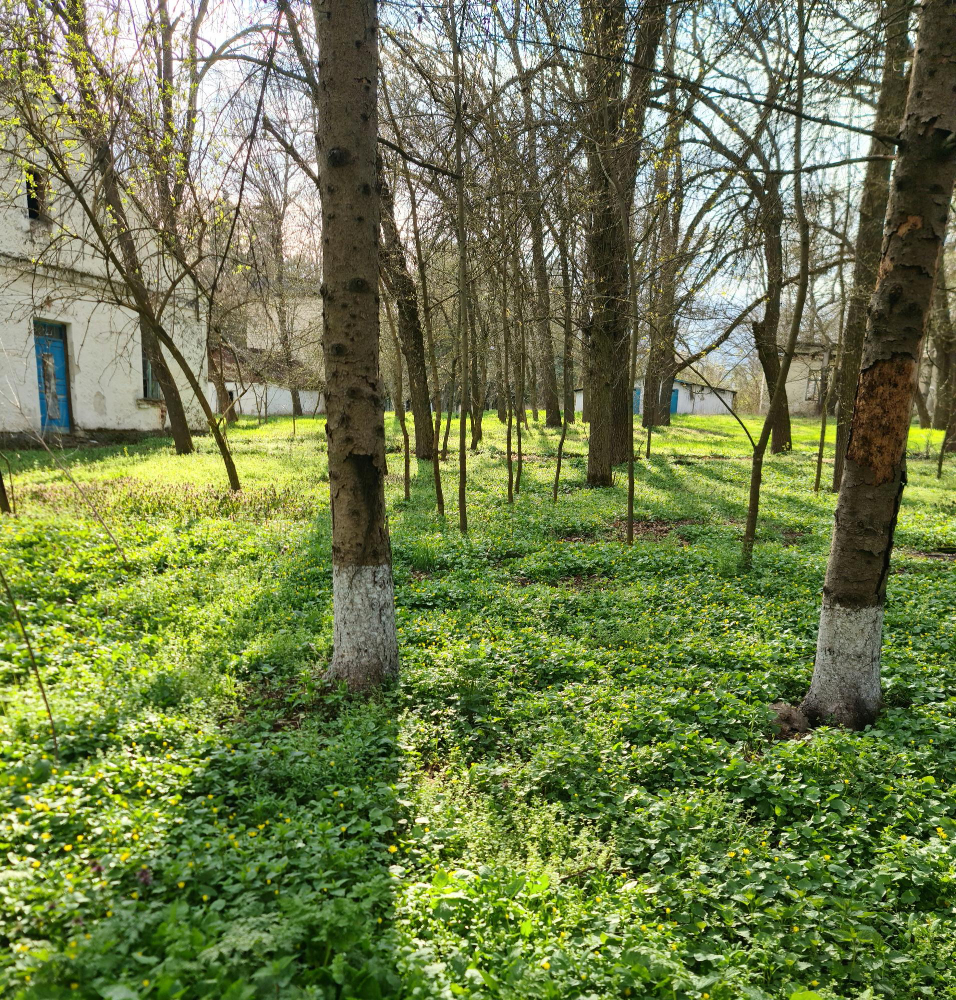
Proper tree spacing is one of the most consequential decisions in residential landscaping, and it is one of the most consistently gotten wrong. The problem almost never looks like a problem at planting time. A six-foot sapling planted eight feet from the house or twelve feet from another tree looks perfectly proportional in year one. By year fifteen, when the canopy has expanded to 40 feet across, the branches are grinding against the siding, the roots are lifting the driveway, and the competing crowns have forced both trees into lopsided, structurally compromised shapes that are far more likely to fail in a storm.
In Northeast Ohio, where mature trees face ice loading, heavy wet snow, summer thunderstorm winds, and saturated spring soils, structural integrity is not optional. Trees that developed in crowded conditions or too close to structures do not have the balanced canopy architecture or the anchored root systems that healthy, well-spaced trees develop. They are the trees that split, drop limbs, or uproot first when the loading conditions get serious.
This article covers why spacing matters, how to evaluate whether your existing trees are too close together or too close to structures, what problems poor spacing causes over time, and what can be done to correct it before the next storm makes the decision for you.
In this article, you will learn about:
- How overcrowded trees develop structural weaknesses that healthy trees avoid
- Spacing guidelines for common Northeast Ohio tree species
- Recognizing the signs that your trees have outgrown their space
- Corrective strategies from pruning and thinning to selective removal
Keep reading to understand the long-term consequences of spacing mistakes and the practical steps that fix them.
How overcrowded trees develop structural weaknesses that healthy trees avoid
A tree growing in open conditions with adequate space develops a balanced canopy, strong branch attachments, and a root system that extends well beyond the drip line in every direction. A tree growing in crowded conditions develops none of those things. Crowding forces trees to compete for light, water, and soil nutrients, and that competition reshapes every aspect of how the tree grows, from its branch architecture to the density of its wood.
The Arbor Day Foundation emphasizes that the most commonly overlooked factor when selecting trees is the available space at maturity. A tree that looks perfectly sized as a sapling will become an expensive problem if the planting location cannot accommodate its full-grown canopy and root system. The same principle applies when multiple trees compete for the same space.
Understanding how crowding creates weakness helps you recognize the early warning signs on your own property and act before the structural damage becomes irreversible.
Canopy competition and the one-sided growth it produces
When two or more trees are planted close together, their canopies begin competing for sunlight as they grow. Each tree redirects its growth away from its neighbors and toward the available light, producing a lopsided canopy that is heavier on one side and thin or absent on the other. This asymmetry creates an uneven weight distribution that increases the tree's vulnerability to wind and ice loading from the heavy side.
The structural consequences compound over time:
- Branches on the competing side are suppressed and eventually die, reducing the canopy's ability to photosynthesize and leaving large sections of deadwood that become fall hazards
- Branches on the open side grow disproportionately long and heavy to compensate, extending far beyond where they would naturally terminate on a properly spaced tree
- The trunk may develop a lean toward the heavy side as the tree's center of gravity shifts, especially in species with shallow root systems like silver maple
- Rubbing branches where two canopies overlap create repeated wounds that serve as entry points for decay organisms and fungal infections
In Northeast Ohio's older neighborhoods, particularly in communities like Lakewood, Cleveland Heights, Shaker Heights, and the tree-lined streets of Geauga and Lake counties, this pattern is extremely common. Trees planted 15 or 20 feet apart decades ago have long since grown into each other, and the resulting structural problems show up every winter and every storm season.
Root competition and the underground battle you cannot see
What happens above ground is mirrored below it. Trees planted too close together compete for the same soil volume, the same water, and the same nutrients. In Northeast Ohio's heavy clay soils, which drain slowly and compact easily, this competition is especially intense because the usable root zone is shallow. Most tree feeder roots are concentrated in the top 12 to 18 inches of soil, and when two root systems overlap in that same layer, neither tree gets what it needs.
The effects of root competition show up gradually:
- Reduced vigor, including smaller leaves, thinner canopy density, and slower annual growth compared to properly spaced trees of the same species and age
- Increased susceptibility to drought stress during dry periods, because neither tree's root system has enough exclusive soil volume to sustain the canopy when moisture is limited
- Greater vulnerability to pest and disease pressure, because stressed trees are less able to mount the chemical defenses that healthy trees use to resist insects and pathogens
- Girdling roots that form when competing root systems press against each other or against their own trunk, slowly restricting the flow of water and nutrients through the vascular system
Root competition is also a factor when trees are planted too close to structures. The foundation, driveway, or sidewalk limits root growth on one side, forcing the entire root system to develop asymmetrically. An asymmetric root system means an asymmetric anchor, which means the tree is more vulnerable to uprooting from wind loading on the poorly anchored side.
Reduced airflow and the disease pressure it creates
Overcrowded canopies restrict airflow through and between the trees, creating a humid microclimate that favors fungal diseases. In Northeast Ohio, where summer humidity is already high enough to fuel pathogens like anthracnose, apple scab, and powdery mildew, reducing airflow through overcrowding amplifies the disease pressure significantly.
Fungal spores need moisture on the leaf surface to germinate and infect. A properly spaced tree dries quickly after rain or dew because air moves freely through the canopy. A crowded tree stays damp longer, giving the spores more time to establish. Over successive growing seasons, the compounding effect of increased disease pressure weakens the tree's overall health, reduces its ability to photosynthesize, and makes it more vulnerable to secondary problems like pest infestations and structural decline.
The same principle applies to understory plantings beneath crowded tree canopies. Dense shade from overlapping canopies prevents lawn grass, groundcovers, and lower plantings from getting the light and air they need, often creating bare, compacted soil beneath the trees that exacerbates drainage problems and reduces the overall health of the landscape.
Spacing guidelines for common Northeast Ohio tree species
There is no single spacing number that works for every tree, because the right distance between trees depends on the species, the mature canopy spread, the purpose of the planting, and the site conditions. But there are well-established guidelines based on mature size categories that give you a reliable starting point for evaluating whether your existing trees have enough room or whether new plantings are being set up for future conflicts.
The International Society of Arboriculture recommends using the mature canopy spread as the primary guide for spacing. Trees planted at distances equal to or greater than their mature spread develop their full open-grown form. Trees planted closer sacrifice form, structure, and health proportionally.
Large shade trees: oaks, maples, and tuliptrees
Large canopy trees are the species most commonly underestimated at planting time because the gap between sapling size and mature size is enormous. A red oak sapling fits comfortably in a five-gallon pot. A mature red oak develops a canopy spread of 45 to 55 feet and a root system that extends even further.
Recommended minimum spacing for common large species in Northeast Ohio:
- Northern red oak: 40 to 50 feet between trees, at least 25 feet from any structure
- White oak: 50 to 60 feet between trees (wider canopy at maturity), at least 30 feet from structures
- Sugar maple: 35 to 45 feet between trees, at least 20 feet from structures, and set well back from salted roads
- Tuliptree: 35 to 40 feet between trees, at least 25 feet from structures given the height these trees reach
- Red maple: 30 to 40 feet between trees, at least 20 feet from structures
These distances assume you want the tree to develop its full, balanced, open-grown form. If you are intentionally planting a naturalized grove or woodland where some canopy overlap is acceptable, you can tighten the spacing, but you should expect to do corrective thinning as the trees mature to prevent the structural problems discussed above.
Medium trees: birch, hornbeam, and smaller maples
Medium trees with mature canopy spreads of 20 to 35 feet offer more flexibility in residential settings because they do not demand as much space. They are also easier to manage through pruning if they grow slightly closer than ideal.
General spacing ranges:
- River birch: 25 to 35 feet between trees, at least 15 feet from structures
- American hornbeam: 20 to 25 feet, can tolerate closer planting in understory or naturalized settings
- Japanese maple (ornamental varieties): 15 to 20 feet, at least 10 feet from structures
Small trees: redbud, serviceberry, and dogwood
Small trees with mature spreads under 20 feet are the most forgiving in terms of spacing, and they are the best options for locations where a large or medium tree would quickly outgrow the available room.
Typical spacing:
- Eastern redbud: 15 to 20 feet between trees, 8 to 10 feet from structures
- Serviceberry: 12 to 20 feet depending on whether single-stem or multi-stem form is desired
- Flowering dogwood: 15 to 20 feet, ideally with partial shade from larger trees rather than full competition
The key takeaway across all size categories: the distance that looks too far apart at planting time is almost always the correct distance at maturity. Five years from now the spacing will look proportional. Fifteen years from now you will be glad you did not crowd them.
Recognizing the signs that your trees have outgrown their space
If your trees were planted before you owned the property, or if they were planted closer than the guidelines above recommend, the spacing problem may already be developing. The signs start subtly and become more obvious as the trees grow, but catching them early gives you the widest range of corrective options.
Walking your property with these indicators in mind takes ten minutes and can save you thousands in future removal costs or storm damage repairs.
Canopy overlap, rubbing branches, and light competition
The most visible sign of overcrowding is canopy overlap. When two trees' canopies merge into each other, the branches in the overlap zone stop growing toward each other and either die back or grow laterally, creating a wall of foliage between the trees with no air movement.
Look for these specific indicators:
- Branches from adjacent trees that cross, touch, or rub against each other. Rubbing creates repeated bark wounds that do not heal properly and become entry points for decay.
- Dead or dying branches concentrated on the side facing the neighboring tree, while the opposite side of the canopy is full and healthy. This asymmetry tells you the tree is losing the light competition on that side.
- A noticeable lean away from the neighboring tree, as the canopy weight shifts toward the open side.
- Thin, sparse foliage in the overlap zone compared to the rest of the canopy, indicating that neither tree is getting enough light in that area to sustain healthy growth.
Root zone conflicts with hardscaping and structures
Below ground, spacing problems show up as physical damage to the things roots grow into or under. If you are seeing any of the following, the tree's root system has outgrown its allocated space:
- Sidewalks, driveways, or patio slabs that are lifting, cracking, or heaving unevenly near a tree's base
- Cracks in a foundation wall that correspond to a large tree planted within 15 feet of the house
- Slow drains or recurring sewer backups that may indicate roots infiltrating underground pipes
- Soil heaving or mounding on one side of a tree, which can indicate root plate pressure from a competing tree's root system pushing against it
- Girdling roots visible at the base of the trunk, which often develop when roots cannot grow outward freely and circle back against the trunk
Chronic health decline despite adequate care
If a tree is receiving proper watering, mulching, and soil management but still shows persistent signs of stress, such as undersized leaves, thin canopy, slow growth, repeated disease infections, or progressive branch dieback, overcrowding may be the underlying cause. All the care in the world cannot compensate for a root zone that is shared with two other trees and a driveway.
This is a common frustration for homeowners who invest in plant health care treatments and see only marginal improvement. The treatments address the symptoms, but the root cause, literally, is a spatial constraint that no spray or injection can fix.
Corrective strategies from pruning and thinning to selective removal
The good news about spacing problems is that they are almost always correctable if you act before the trees reach the point of no return. The correction strategies range from light intervention to significant restructuring of the landscape, depending on how advanced the crowding is and how much structural damage has already occurred.
The right approach depends on the species, the severity of the crowding, the value of the individual trees, and what the homeowner wants the landscape to look like going forward. An ISA Certified Arborist can evaluate the situation and recommend the option or combination of options that delivers the best long-term result.
Corrective pruning to reduce competition and restore structure
When crowding is moderate and the trees involved are still structurally sound, corrective pruning can relieve the immediate competition without requiring any tree to be removed. The arborist reduces the canopy on the competing sides to create separation, remove rubbing branches, and restore airflow between the trees.
Corrective pruning for spacing issues typically includes:
- Crown reduction on the side of each tree facing its neighbor, shortening overextended branches back to a lateral that can assume the terminal role
- Crown thinning to open the interior canopy and improve airflow, reducing disease pressure from the humid microclimate that crowding creates
- Removal of dead, crossing, and rubbing branches throughout both canopies
- Weight reduction on overloaded limbs, particularly those that developed disproportionate length and mass because they were growing toward the only available light
This approach is most effective when the trees are still young enough or small enough that the pruning removes no more than about 25 percent of the live canopy in a single session. Removing more than that in one pass puts excessive stress on the tree and can trigger the same epicormic sprouting response that topping causes.
For crowding that has progressed further, corrective pruning may need to be phased over two or three years, with each session removing a portion of the competing growth and allowing the tree to adjust before the next round.
Selective removal to give the best trees room to thrive
When two or more trees are planted so close that no amount of pruning can restore healthy form and adequate separation, selective removal of the least valuable or most compromised tree is often the best long-term investment. Removing one tree to save two or three others is not a loss. It is a strategic decision that improves the health, structure, and lifespan of the trees that remain.
How an arborist decides which tree to keep and which to remove:
- Species value: a native oak is generally worth preserving over a silver maple, an invasive Norway maple, or a Callery pear that should be removed regardless of spacing
- Structural condition: the tree with the better trunk form, stronger branch attachments, and fewer existing defects gets priority
- Health: the tree showing less canopy decline, less deadwood, and better overall vigor is the better candidate for long-term retention
- Location: the tree positioned to provide the most shade, privacy, or aesthetic value relative to the house and the outdoor living areas of the property
After removing the competing tree, the remaining trees typically respond with improved vigor within one to two growing seasons as the released root zone and canopy space allow them to expand. A post-removal arborist assessment can identify whether the retained trees need supplemental pruning to rebalance their canopies now that the competitive pressure has been removed.
Planning new plantings with mature size in mind
If you are planting new trees, the spacing decision you make today eliminates the correction work described above. The most common mistake, and the one that creates the most expensive long-term problems, is planting for how the landscape looks today rather than how it will look in 15 to 30 years.
Before you finalize any new tree planting:
- Look up the mature height and canopy spread of the species you are considering. Reliable sources include the Arbor Day Foundation tree database and your local OSU Extension office.
- Measure the distance from the planting hole to the nearest structure, driveway, sidewalk, utility line, property line, and existing tree. Compare that measurement to half the mature canopy spread (which represents how far the canopy will extend from the trunk in that direction).
- If the mature canopy will reach or overlap the structure, utility, or adjacent tree, either move the planting location or choose a smaller species.
- Think underground as well as above ground. The root system typically extends at least as far as the canopy and often further. Planting a large tree with a known aggressive root system 15 feet from a sewer line is planting a future conflict.
A pre-planting consultation with a certified arborist costs a fraction of what it costs to remove a tree that was planted in the wrong spot. The arborist evaluates your specific soil, drainage, sun exposure, and site constraints and recommends species and locations that set you up for decades of healthy, properly spaced growth.
Conclusion
Tree spacing is not a cosmetic concern. It is a structural and health issue that determines whether your trees develop into strong, long-lived assets or into crowded, weakened liabilities that cost more to manage and eventually remove than they would have cost to space correctly from the start. In Northeast Ohio, where weather events routinely test the structural limits of every tree on your property, the margin between a tree that handles the load and one that does not often comes down to how much room it had to grow.
If your property has trees that are growing into each other, pushing against structures, or showing the signs of competitive stress described in this article, the time to address the situation is before the next ice storm or summer thunderstorm forces the issue. Corrective pruning, selective removal, and strategic replanting can all restore proper spacing and give your remaining trees the room they need to thrive for decades.
Premier Tree Specialists provides ISA Certified Arborist evaluations, corrective pruning, selective tree removal, and replanting consultations across Northeast and Central Ohio. Their team can assess the spacing on your property, identify which trees are at risk, and develop a plan that protects the health and value of your landscape long-term. Reach out to schedule an on-site assessment and get a professional perspective on what your trees need.
