


Spotting the signs a tree needs to be removed early is the single best way to avoid a five-figure repair bill or a serious injury. Cleveland's mix of mature shade trees, harsh winters, and severe summer storms means warning signs that look minor on a calm day can turn into emergencies overnight.
Trees add beauty and value to your property, but they don't last forever. Sometimes a tree becomes more of a danger than an asset. Knowing when to remove a tree can protect your home, your family, and the rest of your landscape from serious damage.
Dead branches, leaning trunks, and visible decay are often clear signs that something is wrong. But some problems hide beneath the bark or underground where you can't easily see them. Storm damage can also turn a healthy tree into a hazard overnight.
This guide will help you spot the warning signs that a tree needs to come down. You'll learn about early symptoms that are easy to miss, structural problems that threaten your property, and why waiting too long can make the situation worse. Understanding these signs will help you make smart decisions about the trees in your yard.
In this article, we cover:
- Overlooked early warning signs
- Safety risks from storm damage
- Hidden internal tree issues
- Problems caused by proximity to structures
- Challenges of delaying removal
Keep reading to learn how to spot the warning signs before a failing tree damages your home, your neighbor's property, or someone you care about.
Overlooked early warning signs
Some of the most dangerous tree signs appear gradually and are easy to miss during your daily routine. These early indicators often show up in places you don't look at regularly, making them particularly hazardous if left unchecked. Learning to read the early warning signs gives you a head start on prevention.
Dead branches at the canopy
Dead branches high up in the tree canopy are one of the most commonly missed warning signs. You might not notice them from ground level, especially if the lower branches still look healthy. These dead branches can fall without warning, creating serious risks for anyone or anything below.
Look for branches with no leaves during growing season or brittle, gray wood that contrasts with healthy brown bark. Dead canopy branches often snap off during storms or high winds. Even small dead branches falling from 30 or 40 feet up can cause injury or property damage.
Check your tree from multiple angles and distances to spot these problem areas. If more than 25% of the branches in the canopy are dead, the tree may be in serious decline. This pattern suggests the root system isn't delivering enough nutrients to sustain the upper portion of the tree.
Peeling or missing bark
Bark protects the living tissue underneath from insects, disease, and weather damage. When bark starts peeling away in large sections or goes missing entirely, the tree loses this critical defense layer. You might see exposed wood that looks lighter in color or feels soft to the touch.
Peeling bark can indicate disease, pest infestation, or environmental stress. Vertical cracks or strips of missing bark on the trunk are particularly concerning. These wounds create entry points for fungi and insects that speed up decay.
Some trees naturally shed bark as they grow, but this looks different from damage. Natural shedding appears uniform and reveals healthy new bark underneath. Problematic peeling leaves raw, damaged wood exposed and often happens on just one side of the trunk.
Sudden changes in trunk angle
A tree that suddenly leans or shifts position signals major structural problems underground. This differs from trees that grow at an angle naturally over many years. Sudden changes mean the root system has failed or the soil has shifted.
Check the ground around the base for heaved soil, exposed roots, or cracks in the earth. These signs confirm that the tree has recently moved. A lean of more than 15 degrees from vertical raises serious safety concerns.
Trees near construction sites, areas with recent soil disturbance, or saturated ground are most at risk for sudden angle changes. Heavy storms can also trigger this shift if roots were already compromised.
Safety risks from storm damage
Storm damage creates urgent hazards that demand immediate attention. Structural failures in the trunk, unstable branches, and root system damage can lead to sudden tree collapse without warning. According to data from the National Weather Service, thunderstorm wind events alone caused 32 fatalities and 95 injuries in 2022, and falling trees are one of the most common mechanisms behind those deaths.
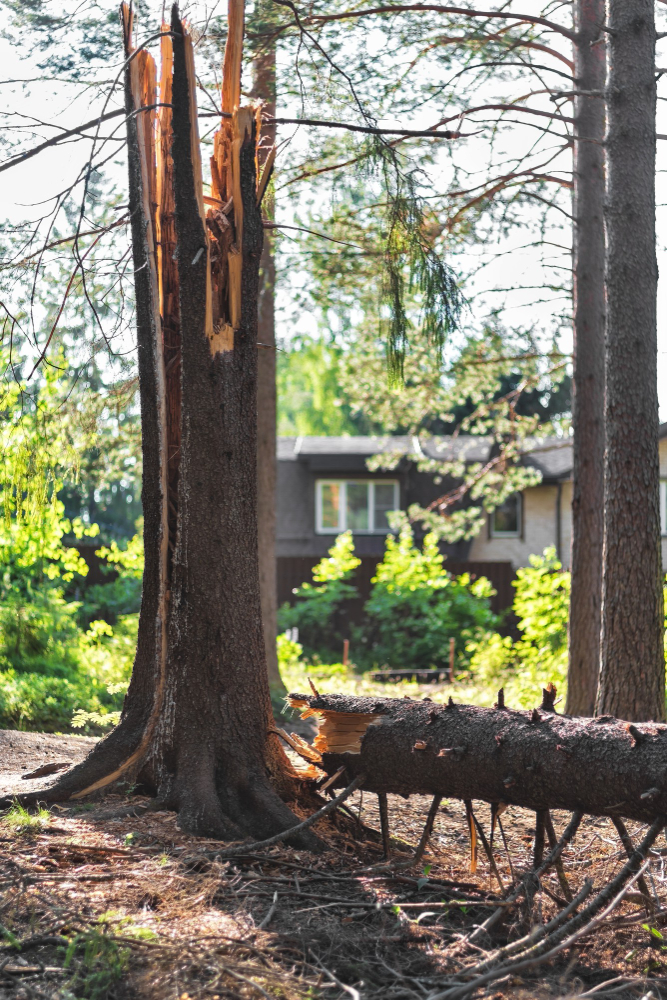
Severely split trunks
Deep cracks or splits running vertically through a tree's trunk indicate serious structural failure. These openings compromise the tree's ability to support its own weight and resist wind pressure. When a trunk splits more than halfway through its diameter, the tree loses most of its stability.
Lightning strikes often cause severe splitting that may not appear dangerous at first glance. However, internal damage can extend far beyond what you see on the surface. The wood fibers that hold the tree together have been torn apart, leaving the tree vulnerable to breaking during the next storm.
Trees with split trunks cannot be saved through pruning or cabling. The damage affects the core structure, making collapse likely during normal weather conditions. Emergency tree service Cleveland providers prioritize these removals because split trunks present immediate danger to nearby structures and people.
Dangerous limbs after high winds
Storm winds create multiple points of failure throughout a tree's canopy. Large branches that crack but don't fully break off become "hangers" or "widow makers" that can fall at any moment. These partially attached limbs swing with the wind and drop without warning.
Look for branches with torn bark, exposed wood, or V-shaped cracks at connection points. Limbs hanging over driveways, walkways, or rooflines pose the greatest threat. Even dead branches that held firm for years can loosen during high winds and become unstable.
The weight of a major limb ranges from several hundred to several thousand pounds. When these branches fail, they cause severe property damage or injury. A professional assessment from a certified arborist determines whether selective removal addresses the problem or if the entire tree has become too compromised.
Compromised root systems
Soil heaving around the tree base signals that roots have torn or pulled loose from the ground. You'll notice raised soil, exposed roots, or the tree leaning at a new angle after the storm. These signs mean the anchor system has failed.
Roots damaged on one side create an imbalanced tree that cannot withstand normal wind loads. Even if the tree appears upright, compromised roots continue to deteriorate. Additional storms, saturated soil, or winter weather stress can topple the entire tree.
Small cracks in the soil radiating from the trunk indicate root plate movement. Trees showing these symptoms rarely recover enough stability to remain safe. Quick action prevents the tree from falling onto homes, vehicles, or power lines during the next weather event.
Hidden internal tree issues
Trees often deteriorate from the inside out, making damage invisible until it becomes severe. Internal decay, fungal infections, and pest activity can weaken a tree's structure without obvious external symptoms.
Unnoticed hollow trunks
A hollow trunk develops when the inner wood decays while the outer bark remains intact. You can tap the trunk with a mallet or hammer to listen for a hollow sound instead of a solid thud. This indicates significant internal rot that compromises the tree's ability to support its own weight.
According to the Mississippi State University Extension, a hollow trunk generally needs at least one-third of its thickness in structurally sound wood to support itself, and any visible cavity should occupy one-third or less of the tree's diameter. Cavities often start small and expand over years. Look for small holes or cracks in the bark where decay may have begun. A tree that crosses these thresholds typically lacks the structural integrity to remain standing safely.
Some trees survive with hollow centers for years, but they pose serious risks during storms or high winds. Professional arborists use specialized tools like resistograph drills to measure the extent of internal decay without causing additional harm to the tree.
Fungal growth at the base
Mushrooms or conks growing at the base of your tree signal active fungal decay inside the trunk or roots. These fruiting bodies appear only after the fungus has already spread extensively through the tree's internal tissues. Different fungi cause different types of rot, but all compromise structural strength.
Bracket fungi attach directly to the bark and often indicate advanced decay. You might spot them on the trunk, near the root flare, or on major roots just above the soil line. The presence of these growths means the tree has lost significant structural support and may require diseased tree removal.
Infestations indicating decline
Wood-boring insects create tunnels throughout a tree's interior, weakening its structure and blocking nutrient flow. You might notice small holes in the bark, sawdust-like material called frass around the base, or woodpecker activity as birds hunt for insects inside.
Beetles, borers, and carpenter ants target stressed or dying trees. Heavy infestations spread quickly and cause extensive internal damage that remains hidden until limbs break or the tree fails. Peeling back loose bark may reveal winding galleries or tunnels carved into the wood beneath.
These pests often attack trees already weakened by disease or environmental stress. The combination of pest damage and existing health problems accelerates decline and increases the likelihood that diseased tree removal becomes necessary.
Problems caused by proximity to structures
Trees planted too close to your home create risks that go beyond simple inconvenience. Overhanging branches can damage your roof, roots can crack foundations and driveways, and limbs near power lines pose serious safety threats. In some cases, removing a hazardous tree can also protect your property's market value.
Roof damage from overhanging limbs
Branches hanging over your roof cause multiple problems that worsen over time. When limbs scrape against shingles during windy conditions, they wear away the protective granules and create entry points for water. This constant friction shortens your roof's lifespan and leads to leaks.
Falling branches pose an even greater threat. Dead or weakened limbs can drop without warning, punching holes through roofing materials or damaging gutters and flashing. Even smaller branches accumulate on your roof and trap moisture against the shingles. This is why timing matters: knowing the best time of year to trim overhanging limbs can prevent damage before it starts.
Overhanging trees also deposit leaves and debris into your gutters. This buildup clogs drainage systems and causes water to back up under roof edges. The shade from dense canopy keeps your roof damp longer, encouraging moss and algae growth that deteriorates roofing materials.
Impact of roots on driveways and foundations
Tree roots grow toward water sources and can extend far beyond the tree's canopy. When roots encounter your driveway or foundation, they don't stop growing. They push upward and sideways, creating cracks and uneven surfaces.
According to the Michigan State University Extension, tree roots cause serious damage to sidewalks, sewers, and foundations, and a survey of 15 cities found that the average annual cost to repair sidewalks damaged by trees exceeded $3 per tree, with another $1.66 per tree per year going toward sewer repairs. For individual homeowners, foundation damage from roots can run into thousands of dollars.
Foundation damage from roots is more serious and costly. Roots can crack foundation walls or create gaps that let water into your basement. Large trees planted within 20 feet of your home pose the highest risk, especially species with aggressive root systems. You might notice doors that stick, cracks in interior walls, or uneven floors as signs of foundation movement caused by root pressure.
Power line hazards requiring assessment
Trees growing near power lines create dangerous situations during storms and high winds. Branches that contact electrical lines can spark fires, cause power outages, or electrocute anyone who touches them. A tree leaning toward house structures with nearby power lines presents an immediate safety concern.
You should maintain a minimum clearance of 10 feet between tree branches and power lines. Contact your utility company if branches have grown into this zone. Never attempt to trim them yourself. Trees taller than 25 feet planted under or near power lines will eventually require professional attention.
Storm damage becomes more likely when trees stand too close to electrical infrastructure. High winds can send branches into lines or topple entire trees onto utility poles. These situations require emergency response and often leave entire neighborhoods without power for extended periods.
Challenges of delaying removal
Waiting to remove a problematic tree creates risks that grow worse with time and often leads to higher costs than taking action right away. Trees don't improve on their own when they show signs of failure, and the dangers multiply as structural problems worsen.
Increasing instability over time
A tree that shows early warning signs will continue to deteriorate. Rot spreads through the trunk and root system, weakening the tree's ability to support its own weight. What starts as a small area of decay can expand throughout the entire structure within months.
Weather events accelerate this decline. High winds put stress on already weakened branches and trunks. Heavy rain saturates soil around compromised roots, reducing their grip. Each storm increases the chance of failure.
The lean of an unstable tree becomes more pronounced as roots fail and the trunk weakens. A tree leaning at 15 degrees today might reach 30 degrees within a year. At that point, removal becomes more complicated because specialized equipment is needed to handle the extreme angle safely, which also affects how long the job takes.
Dead trees lose their structural integrity faster than most property owners realize. Without living tissue to maintain flexibility, the wood becomes brittle and unpredictable. Branches can snap without warning, even on calm days.
Higher emergency removal costs
Emergency tree removal after a failure costs two to three times more than scheduled removal. You pay premium rates for immediate service, often during nights or weekends. The crew must work quickly to clear hazards, which requires more workers and equipment.
When a tree falls on a structure, you face multiple expenses at once. You need emergency tree service plus immediate repairs to your home, fence, or vehicle. Your insurance deductible applies, and premiums may increase after a claim. Some jobs also require a tree removal permit before work can begin legally, which adds time and paperwork to an already urgent situation.
Damage to utilities adds another layer of cost. If a fallen tree takes down power lines or damages underground pipes, you're responsible for repair bills that can reach thousands of dollars. The utility company charges for emergency response and system restoration.
Property damage from delayed dead tree removal in Cleveland often extends beyond the obvious. Root systems from fallen trees tear up driveways and foundations, and you may also have to decide between stump grinding and full stump removal afterward. Large branches punch through roofs, leading to water damage and mold growth if not addressed immediately.
Value of early professional inspections
A certified arborist can identify problems before they become emergencies. Professional inspections reveal decay inside the trunk, root damage below ground, and structural weaknesses that aren't visible to untrained eyes. These assessments cost $150 to $300 but can save you from $5,000+ in emergency removal and property repairs.
Early detection gives you time to plan and budget for removal during off-peak seasons when rates are lower. You can schedule the work when weather conditions are ideal and crews have more availability.
Professional removal companies use proper techniques and safety equipment when trees are handled proactively. They can fell trees in sections, protect your landscaping, and grind stumps completely. Emergency situations often require faster, less careful methods that cause additional property damage.
Regular inspections create documentation of your tree care efforts. This record protects you from liability claims if a tree does fail, showing you took reasonable steps to maintain your property safely.
Conclusion
Knowing when to remove a tree protects your property and keeps your family safe. Dead branches, leaning trunks, and root damage are clear warning signs that require immediate attention.
You should inspect your trees regularly for signs of disease, decay, or structural problems. Look for cracks in the trunk, fungus growth, and branches that hang over your house or power lines.
Not every struggling tree needs to come down right away. Some issues can be fixed with proper pruning, watering, or fertilizing. A certified arborist can examine your tree and tell you the best course of action.
When you notice any warning signs, call a professional tree service for an evaluation. They have the expertise to assess the risk and determine if removal is necessary. Waiting too long on a dangerous tree can lead to property damage or injury.
Taking action early saves you money and stress in the long run. To get an expert evaluation of any tree on your property in the Cleveland area, contact Premier Tree Specialists and schedule an inspection before a warning sign turns into an emergency.
