


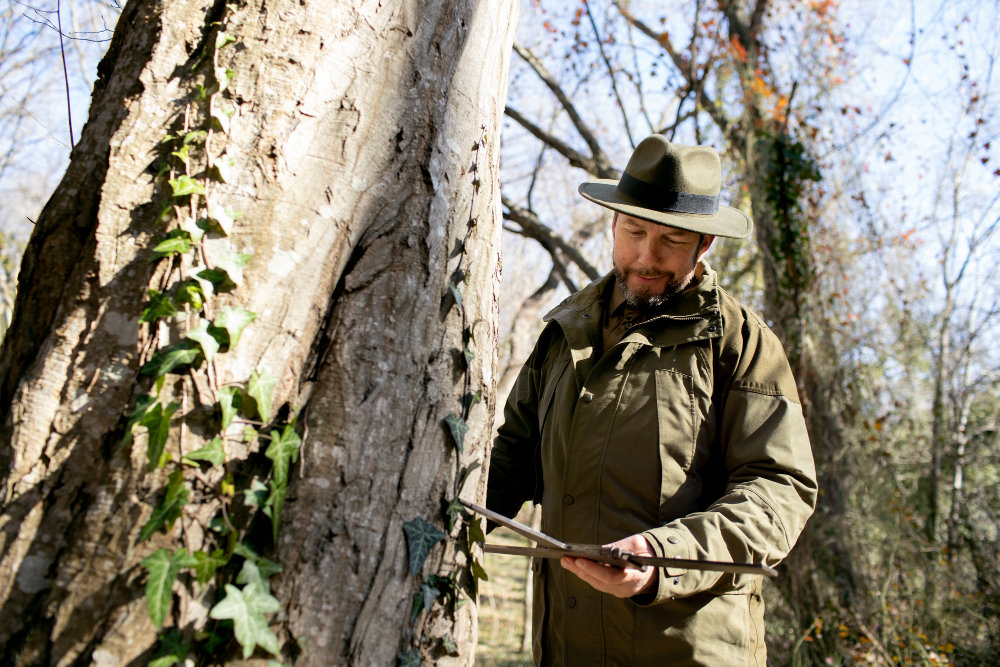
Late summer is the most informative time of year to have your trees professionally assessed, and it is the window that most Franklin County homeowners miss entirely. By August and September, every stress event of the year is written into your trees' canopy: drought damage, insect pressure, disease spread, and structural weakening from spring storms. A trained arborist reading that canopy can see a full season's worth of damage that would be invisible in winter or early spring.
The timing matters because late summer sits at a crossroads. Trees are still actively showing symptoms of stress, which makes diagnosis accurate. But fall is close enough that intervention, treatment, or removal can happen before the ground freezes and before winter loads start testing the same branches that spent the summer under pressure.
Franklin County's mix of older Columbus neighborhoods, suburban developments, and rural properties in communities like Hilliard, Westerville, Grove City, and Dublin means the tree population is diverse and the risks are real. A late summer tree inspection gives homeowners a clear picture of what they are actually managing heading into the most structurally demanding seasons of the year.
In this article, you will learn about:
- Why late summer reveals tree problems that other seasons hide
- What drought stress looks like and why it matters more than most homeowners realize
- The pest and disease activity that peaks in summer and requires fall intervention
- How a late summer inspection sets up a smarter fall and winter maintenance plan
Keep reading to understand why August and September are the most valuable months to put a certified arborist's eyes on your Franklin County property.
Why late summer is the right diagnostic window
Every season stresses trees differently, but late summer is when the cumulative effects of the entire year become readable. A tree that experienced a wet spring, a hot July, and a dry August is displaying all of that history in its foliage, bark, and branch structure by the time September arrives.
Spring inspections happen before most of that stress accumulates. Winter inspections happen after the canopy has dropped, removing one of the primary diagnostic tools arborists use. Late summer keeps the canopy intact while stacking enough seasonal history to make a thorough assessment possible.
That window is narrow. By October, some stress symptoms begin masking themselves as normal seasonal senescence. The arborist looking at a stressed silver maple in late August can distinguish abnormal early leaf drop from normal fall color change. The same arborist in late October cannot.
What a full canopy tells an arborist
The canopy is the primary diagnostic surface for tree health. Leaf color, density, distribution, and condition each carry information about what is happening inside the tree's vascular system, root zone, and branch structure.
Late summer canopy conditions that signal underlying problems include:
- Leaf scorch along edges, which points to root stress, drought, or vascular disease
- Premature yellowing or browning in isolated sections of the crown, often indicating a localized disease or pest event
- Thin, sparse canopy in a tree that should be full, suggesting root damage or systemic decline
- Early leaf drop on branches that flowered or leafed out normally in spring, which can indicate secondary pest colonization
None of these symptoms disappear when leaves fall. The underlying conditions drive the same structural problems through winter and into the next growing season. Catching them in late summer means treatment or removal happens on a schedule the homeowner controls.
Comparing inspection windows: why late summer beats the alternatives
Spring inspections are valuable, but they happen before the year's stress accumulates. A late spring visit catches winter damage but misses anything driven by summer heat, drought, and pest pressure. Winter inspections lose the canopy entirely, reducing the evaluation to bark, trunk, and visible branch structure.
A late summer inspection effectively combines information from all three other windows while adding the full canopy picture. It is the most complete diagnostic moment of the year, which is why regular arborist consultations timed to late summer deliver more actionable results than visits at any other point on the calendar.
The practical value is in what happens after the inspection. Every problem identified in late summer can be addressed before fall. That means diseased branches removed before ice loads them. Structural weaknesses supported before winter wind tests them. Pest treatments applied before populations overwinter in bark and re-emerge in spring.
How often Franklin County homeowners should schedule inspections
For most properties in Franklin County, a late summer inspection combined with a spring visit covers the two most productive diagnostic windows. Together they catch winter damage before it compounds and summer stress before it carries into fall.
Properties with older trees, known disease history, or trees within fall distance of structures benefit from the late summer inspection most. A certified arborist can assess your specific property and recommend a visit frequency based on the actual risk profile of the trees present, rather than a generic annual schedule.
The how often to trim your trees guide covers species-specific maintenance intervals, which vary considerably. A red oak and a Bradford pear are not on the same schedule, and neither should be managed as if they were.
Drought stress is Franklin County's most underdiagnosed tree problem
Franklin County does not think of itself as drought country, but the data says otherwise. In September 2024, 87.7 percent of Ohio was experiencing drought conditions, with more than a third of the state classified as extreme to exceptional. Central Ohio homeowners in Franklin County were managing drought-stressed trees whether they knew it or not.
The problem with drought stress is that large trees mask it. Root damage from a dry summer may not show up in the canopy for one to three growing seasons. A tree that looks healthy in October after a dry August may be exhibiting significant canopy dieback the following spring, driven by root damage that accumulated while the surface appeared normal.
Drought-stressed trees in central Ohio are also structurally weaker. A tree that spent the summer under water stress has reduced capacity to close wounds, maintain cell wall density in new wood, and resist fungal intrusion. It enters winter in a physically compromised state even when it appears visually intact.
What drought stress looks like in a late summer canopy
The symptoms of drought stress are most visible in August and early September, before normal fall senescence obscures them. Franklin County homeowners walking their property with an informed eye should look for:
- Leaf scorch: brown, crispy margins on otherwise green leaves, particularly on the side of the canopy with the most sun exposure
- Wilting or curling of leaves on branches that are not in full sun and should not be wilting
- Early defoliation on interior branches while the outer canopy still holds leaves
- Reduced leaf size compared to the same tree in prior years
- Buckeyes dropping leaves early, which is a species-specific drought response common in Ohio summers
These symptoms are telling an arborist something specific about where the stress is concentrated, how severe it is, and whether intervention can still change the outcome. By the time the same tree drops its leaves in October, that diagnostic information is gone.
Why deep root intervention works better in late summer
When drought stress is confirmed, the primary intervention is deep root watering and, in some cases, biostimulant or soil amendment treatments that support root recovery. These treatments are far more effective in late summer than in spring because the root system is still in active growth mode and can actually absorb and utilize what is applied.
A late summer inspection that catches drought stress gives the homeowner time to act during the window when acting still makes a meaningful difference. Waiting until the following spring means the tree has gone through an Ohio winter in a compromised state, potentially with further root damage from freeze-thaw cycles. The spring tree care checklist covers recovery steps, but recovery is always harder than prevention.
Mulching as a late summer drought recovery tool
One of the most effective and underused late summer interventions is proper mulching at the root flare. A two-to-four-inch ring of organic mulch, kept clear of the bark itself, retains soil moisture, moderates root zone temperature, and reduces competition from turf grass during the stretch of the season when soil moisture is lowest.
The right way to mulch around trees is straightforward, but it is commonly done wrong. Mulch piled against the trunk traps moisture against the bark and creates the exact fungal entry conditions that drought stress makes trees vulnerable to. A late summer inspection that catches drought stress and recommends a corrected mulch application is addressing both the symptom and a contributing cause at the same time.
Pest and disease activity that a late summer inspection catches
Late summer is not just the end of the pest season. For several of the insects and diseases most damaging to Franklin County trees, it is peak activity or just past it, and the evidence left in bark and canopy is still fresh enough to identify accurately.
Emerald ash borer, Japanese beetles, and various scale insects all complete their most destructive life cycle phases between June and September. The damage those populations inflict shows most clearly in August, when defoliation, dieback, and bark disruption are at their maximum extent and have not yet been covered or complicated by fall color change.
Common Ohio tree diseases including oak wilt, anthracnose, and fire blight also leave visible canopy signatures in late summer that would be difficult to interpret in any other season. An arborist identifying active disease in August can recommend a treatment or intervention timeline while there is still time in the current growing season to act.
What the arborist is looking for on bark and branches
A late summer inspection does not stop at the canopy. The bark and branch structure carry their own set of diagnostic signals that accumulate over the course of the growing season.
On the bark surface, an arborist looks for:
- D-shaped exit holes in ash trees, which are the signature of emerald ash borer adults emerging from the bark
- Serpentine galleries under bark plates on ash, indicating borer larval tunneling beneath the surface
- Cankers: sunken, discolored bark sections that indicate a localized fungal or bacterial infection
- Pitch tubes or resin flow on conifers, which signal bark beetle activity
- Scale insect colonies on branch undersides, which appear as small, immobile bumps
Spotting any of these during a late summer arborist inspection immediately changes the management plan. A confirmed emerald ash borer infestation, for instance, has a treatment window that closes after certain larval development stages. Catching it in August versus the following spring can mean the difference between a tree that survives and one that needs removal.
When disease found in summer means fall treatment
Several fungal diseases active in Ohio trees during summer can be addressed with fall treatments that prevent winter spread and spring reinfection. This is particularly true for diseases that overwinter in leaf litter, bark crevices, or infected wood.
An arborist who identifies active disease in late summer will typically recommend a pruning protocol to remove infected material before it drops and spreads inoculum across the root zone. This late summer or early fall pruning, timed correctly relative to the disease lifecycle, is a standard part of managing anthracnose, apple scab, and various canker diseases common to the tree species in Franklin County's residential neighborhoods.
Recognizing when pest damage has crossed into removal territory
Not every pest-affected tree can be saved. Late summer is the point at which an experienced arborist can assess whether a pest-damaged tree has enough structural integrity and vascular function remaining to justify treatment and recovery, or whether removal is the more practical outcome.
A tree in the middle stages of emerald ash borer damage, for instance, may still be a viable treatment candidate. A tree showing late-stage crown dieback across more than half the canopy almost certainly is not. Understanding tree removal versus trimming as distinct responses to different levels of damage is something a late summer inspection makes concrete. The arborist is not guessing at that point. The tree's late season condition has answered the question.
Structural assessment before fall and winter loads arrive
Beyond stress and disease, a late summer inspection serves an important structural role. It is the last opportunity before Ohio's most demanding weather season to assess every major limb and the primary trunk for the weaknesses that ice storms and December windstorms exploit.
Ice loading in an Ohio winter can add hundreds of pounds to individual branch sections. A branch that has spent the summer with a compromised attachment, a slow-developing crack, or internal decay from a fungal infection is the one that fails at 2 a.m. in January. The late summer inspection is when that branch gets found and removed on schedule rather than on the tree's.
Winter tree damage in Ohio follows a predictable pattern: the trees that fail are almost always the ones with pre-existing structural vulnerabilities. A late summer assessment identifies those vulnerabilities while the weather is cooperative and the work is straightforward.
Cabling and bracing decisions are best made in summer
Trees with co-dominant stems, heavy lateral limbs, or split unions sometimes need cabling and bracing to survive Ohio winters safely. These systems are installed to redistribute load and prevent catastrophic branch or stem failure during high-stress events.
The decision to cable a tree is not always obvious from the ground. It requires an arborist evaluating the attachment angle of the co-dominant stems, the wood condition at the union, the weight distribution of the canopy, and the proximity of the tree to structures or people. Late summer is the right time for that evaluation because the full canopy is present, showing the actual weight and distribution the cable system needs to manage.
Installing cables in fall, after a late summer inspection confirms the need, positions the system in place before any significant winter loading occurs.
What gets flagged for winter removal
Not every problem identified in a late summer inspection calls for immediate action. But some do, and correctly separating them from the ones that can wait until spring is one of the most valuable things a professional assessment provides.
Conditions that an arborist will typically flag for removal before winter include:
- Dead trees or trees with extensive crown death, particularly those within fall distance of structures
- Trees with confirmed basal decay or root system failure that makes winter stability unreliable
- Large dead limbs that cannot be safely cabled and are positioned over occupied areas
- Trees showing signs they need to be removed that will only worsen under ice and snow load
Everything else gets a prioritized action plan with timing recommendations, so the homeowner enters winter with a clear picture of what is stable, what is being monitored, and what is scheduled.
Planning tree removal and stump work before the ground freezes
When the late summer inspection flags a tree for removal, scheduling that work in fall rather than spring has real advantages. Ground conditions are better before freeze-up, crews can access the root zone without damaging frozen turf, and the removal site can be fully cleaned up before winter makes access difficult.
Stump grinding is significantly easier in fall than in spring, when saturated soil creates access and equipment stability challenges. A late summer inspection that identifies a removal need gives the homeowner a natural path to completing both the felling and the stump work before conditions change. That sequence keeps the property clean, eliminates disease reservoirs before winter, and avoids carrying a grinding job through mud season.
Conclusion
A late summer tree inspection in Franklin County, OH is the most complete and actionable assessment a homeowner can schedule. The combination of a full canopy, a full season of stress history, and enough time before winter to act on every finding makes August and September uniquely valuable months for tree care decisions.
The homeowners who avoid unexpected emergency removals, insurance disputes, and winter storm damage are the ones who had their trees looked at before the problems were urgent. A professional arborist does not just check on your trees. They give you a roadmap for the next twelve months.
Premier Trees provides certified arborist inspections across Franklin County and the surrounding Ohio area. Contact the team to schedule a late summer assessment before the fall preparation window closes.
