


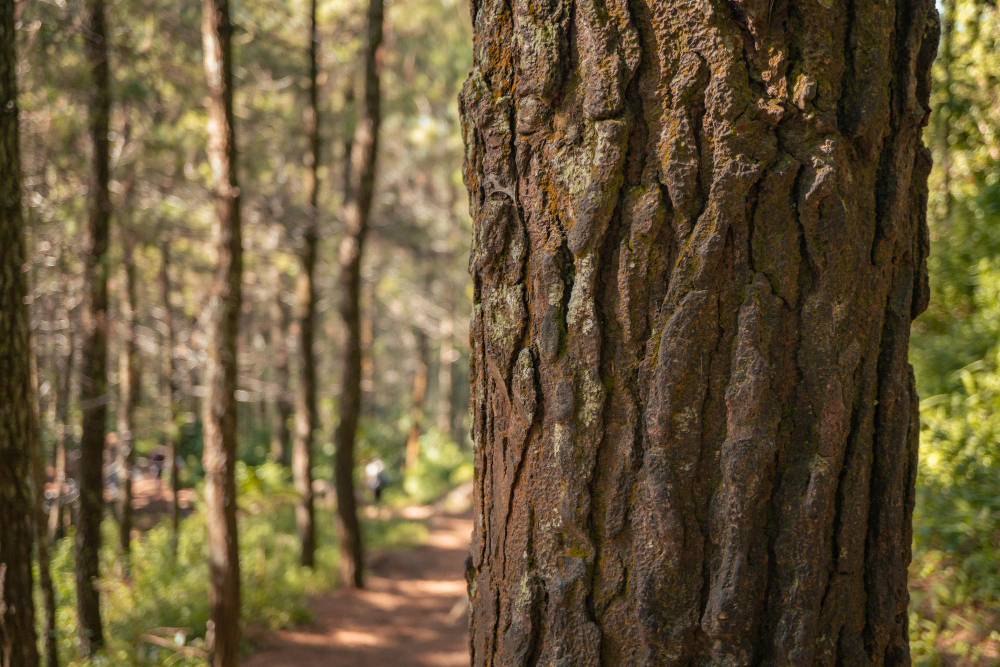
Planting the best and worst trees in Northeast Ohio is often a matter of what the nursery had in stock the weekend you decided to fill that empty spot in the yard. That is how most homeowners end up with a Colorado blue spruce that looks like a skeleton by year twelve, or a Bradford pear that splits clean down the middle during the first serious ice event. The difference between a tree that becomes the best feature on your property and one that becomes your most expensive problem is almost always information you did not have at the time of planting.
Northeast Ohio's climate is specific. The region sits primarily in USDA hardiness zones 6a through 6b, with small pockets along the Lake Erie shoreline now classified as 7a under the 2023 updated map. That means average extreme winter lows between roughly negative ten and five degrees Fahrenheit. But cold hardiness is only one variable. The heavy clay soils across Cuyahoga, Summit, Lake, and Geauga counties drain slowly and compact easily. Summers are humid enough to fuel fungal diseases that trees from drier climates cannot handle. Lake-effect snow and ice storms hammer the snowbelt counties every winter. And a growing list of invasive pests, from emerald ash borer to spotted lanternfly, adds pressure that did not exist a generation ago.
The trees that succeed here are the ones adapted to all of those conditions at once. This article breaks down which species earn their place in a Northeast Ohio landscape and which ones you should walk past at the garden center, no matter how good they look on the tag.
In this article, you will learn about:
- Native shade and canopy trees built for this climate
- Smaller native trees that fit tight lots and understory spaces
- Non-native species that have proven themselves in this region
- Commonly planted trees that fail, split, invade, or die here
- Matching the right species to your specific soil and site conditions
Keep reading to make a planting decision backed by what actually works in this part of Ohio, not what sells fastest in April.
Native shade and canopy trees built for this climate
The large canopy trees native to Northeast Ohio are the ones that define mature neighborhoods, anchor property values, and hold up under the weather that this region throws at them year after year. They evolved in these soils, alongside these insects and fungi, through centuries of the same freeze-thaw cycles and summer humidity that challenge every landscape planting today.
The Ohio State University Extension has documented how native trees support dramatically more biodiversity than non-native alternatives. A single native oak species supports over 500 species of caterpillars, which are the primary protein source for nesting songbirds. A non-native ginkgo in the same spot supports roughly five. That difference cascades through the entire food web, affecting everything from bird populations to pollinator health to the soil microbiome beneath the canopy.
Choosing a native canopy tree is not just a feel-good ecological decision. It is a practical one. These species need less intervention, tolerate local soil and weather extremes more reliably, and deliver better long-term structural performance than most imports.
Why northern red oak outperforms almost everything for shade and storm resistance
Northern red oak is arguably the single best large shade tree you can plant in a Northeast Ohio yard, and it is not close. The wood is dense and strong, the branch architecture develops wide, sturdy angles that resist ice and snow loading, and the root system anchors deeply enough to handle saturated clay soils during spring thaw without toppling.
Red oaks grow at a moderate pace of roughly two feet per year once established, which is fast enough to provide meaningful shade within a decade but slow enough to develop the dense wood that makes them storm-resistant. The fall color is a deep, consistent red that performs reliably in this climate, unlike some species that only color well in certain years.
Red oaks handle the heavy clay soils common across Cuyahoga, Summit, and Lake counties without the drainage amendments that pickier species require. They tolerate partial shade during establishment, though they perform best in full sun at maturity. And they are one of the most ecologically productive trees you can plant, providing acorns for wildlife and supporting a massive insect community that feeds the bird populations that make Northeast Ohio backyards feel alive.
The one management consideration that matters: red oaks are susceptible to oak wilt, a lethal fungal disease spread by sap-feeding beetles and connected root systems. The prevention is straightforward:
- Never prune oaks between approximately April and July, when the beetle vectors are active
- Schedule all structural trimming and pruning for late fall through late winter, after the first hard frost
- If a branch breaks during the high-risk window, have an arborist treat the wound immediately
- Avoid wounding the trunk or root flare during lawn maintenance, as any fresh wound during the active season is an entry point
Sugar maple's unmatched fall color and what it needs to thrive
Sugar maple delivers the most spectacular autumn display of any tree in the region. The foliage turns a mix of orange, red, and gold that no other species can match in intensity or consistency. Beyond aesthetics, sugar maple develops dense, hard wood that holds up well under storm loads, and the rounded canopy provides excellent summer shade once it fills in.
Growth is moderate, roughly one foot per year, which means sugar maple is a long-term investment rather than an instant-shade solution. The trees develop strong branching structure over time and become more valuable as they mature, both visually and in terms of property value. A healthy, well-placed sugar maple is one of the most valuable individual trees on any residential lot in this region.
The key limitation is salt sensitivity. Sugar maple roots are highly vulnerable to road salt runoff, and the foliage can suffer marginal leaf scorch from salt spray carried by winter traffic. This makes sugar maple a poor choice for the strip between the sidewalk and a heavily salted road, but an excellent choice for interior yard positions set back from the right-of-way.
A few other site requirements to get right before planting:
- Sugar maples prefer well-drained soils and can struggle in the lowest, wettest spots on a property where water pools after rain
- Full sun is ideal, though young trees tolerate light shade during establishment
- Avoid planting directly under existing large canopy trees, as sugar maples need room and light to develop their characteristic dense crown
- Compacted soil around the root zone from construction or heavy foot traffic inhibits the fine root growth that sugar maples depend on, so mulching the root area properly is especially important for this species
White oak as a multi-generational investment that outlasts everything else
White oak is the tree you plant for your grandchildren. It grows slowly, roughly one foot per year or less in its early years, but it can live for three hundred years or more, and mature specimens develop the broadest, most structurally impressive canopy of any native tree in the region. The wood is among the strongest of any North American hardwood. White oaks handle ice loading, wind, and wet clay soils with a composure that faster-growing species simply cannot match.
The acorns are lower in tannins than red oak acorns, which makes them a preferred food source for deer, turkey, squirrels, and dozens of other species. A mature white oak on your property supports an entire micro-ecosystem of wildlife.
White oaks share the same oak wilt susceptibility as red oaks, so the same seasonal pruning restrictions apply: no pruning during the active growing season, and any storm-damaged branches treated immediately if they break during the high-risk window. Because white oaks grow slowly and develop massive structural wood over time, they are less likely to need heavy pruning than faster-growing species, which reduces the management burden over the life of the tree.
The practical consideration with white oak is space. A mature specimen can develop a canopy spread of 50 to 80 feet. Planted too close to a house, driveway, or utility line, it becomes a long-term conflict that requires constant correction. Planted with adequate room, it becomes the defining feature of a landscape for generations.
Swamp white oak for wet sites and salt-heavy frontages
Not every lot in Northeast Ohio has the well-drained soil that sugar maple and white oak prefer. Properties with low-lying areas, poor drainage, or seasonal standing water need a tree that can handle wet feet without rotting. Swamp white oak is that tree.
Swamp white oak is native to the region and naturally occurs in bottomlands and floodplains across Ohio. It tolerates periodic flooding, heavy clay, and compacted urban soils better than most other oaks. Equally important for many Northeast Ohio homeowners, swamp white oak is one of the most salt-tolerant native shade trees available. If your property fronts a road that gets heavily salted every winter, this is the large canopy tree that can handle the runoff without the leaf scorch and root damage that sugar maple would suffer.
The canopy is broad and rounded, the fall color is a warm yellow-brown, and the wood is strong enough to handle the region's storm loading without the branch-drop problems that plague weaker species. Growth rate is moderate, comparable to red oak, and the tree reaches 50 to 60 feet at maturity.
Smaller native trees that fit tight lots and understory spaces
Not every yard in Northeast Ohio has room for a 70-foot oak. Smaller lots in Cleveland neighborhoods, inner-ring suburbs, and newer developments with utility easements and tight setbacks need trees that stay compact, perform well in partial shade, and still deliver seasonal interest and ecological value.
The native trees in this category are not just scaled-down versions of the canopy species. They fill a different ecological niche, often blooming earlier in spring to feed pollinators emerging from dormancy, producing berries that sustain birds through fall and winter, and thriving in the dappled light beneath taller neighbors.
Eastern redbud as the best early-spring pollinator tree for residential lots
Eastern redbud is one of the first trees to bloom in a Northeast Ohio spring, producing vivid pink-purple flowers directly on its branches and even its trunk before the leaves emerge. That timing is not just beautiful. It is ecologically critical, because redbud flowers appear when native bees, hummingbirds, and other pollinators are just coming out of winter dormancy and food sources are still scarce.
The tree stays compact, typically reaching 15 to 30 feet, which makes it a fit for small yards, side-yard plantings, and locations under utility lines where a larger canopy tree would create clearance problems. The heart-shaped leaves turn bright yellow in fall, and the branching structure is open and architectural enough to look interesting in winter even without foliage.
Redbuds grow well in a range of conditions common across Northeast Ohio residential lots:
- Full sun to partial shade, making them viable for yards with existing mature trees casting intermittent shade
- Clay soils, as long as the specific spot is not the lowest point on the property where water pools for extended periods
- Urban and suburban microclimates, including sites near buildings, fences, and pavement
Redbud is also a host plant for the Henry's elfin butterfly and serves as food for dozens of other moth and butterfly species as caterpillars. Planting one is a direct investment in the pollinator community that supports your vegetable garden, flower beds, and the broader neighborhood ecosystem.
Serviceberry as a four-season performer with edible fruit
Serviceberry, sometimes sold as shadbush or Juneberry, is one of the most versatile native trees for Northeast Ohio residential landscapes. It delivers something worth looking at in every season: white spring flowers before most other trees bloom, edible blue-purple berries in June that taste like a cross between blueberry and almond, orange-red fall foliage, and attractive silvery bark that catches winter light.
Downy serviceberry and Allegheny serviceberry are the two species most commonly available from Ohio nurseries and native plant suppliers. Both stay in the 15-to-25-foot range and can be grown as either a single-trunk small tree or a multi-stemmed clump, depending on your aesthetic preference and how you manage the suckers in the early years.
Serviceberries handle the conditions of a typical Northeast Ohio lot without drama:
- They grow in full sun to partial shade, which gives you flexibility in placement
- Clay soils are tolerated well, though they appreciate decent drainage
- They have no significant chronic disease or pest problems in this region, unlike many ornamental trees that require ongoing spray programs
- The root system is noninvasive, which means you can plant them near patios, walkways, and foundations without worrying about root problems down the road
The berries are a magnet for cedar waxwings, robins, thrushes, and other fruit-eating birds. If you enjoy watching wildlife in your yard, a serviceberry will pull more bird activity than almost any other small tree you could plant.
Flowering dogwood for shaded spots and refined structure
Flowering dogwood is the native small tree that homeowners in Northeast Ohio reach for when they want something elegant in a shaded or partially shaded location. The white or pink bracts in spring are among the most recognizable of any native tree, and the red berries in fall are an important food source for migrating songbirds.
Dogwoods naturally grow as understory trees in Ohio's hardwood forests, which means they evolved in filtered light and do not need or want full, blazing sun. That makes them ideal for spots on the north or east side of a building, beneath the canopy edge of a larger shade tree, or in a courtyard that gets morning sun and afternoon shade.
The main challenge with flowering dogwood in recent decades has been dogwood anthracnose, a fungal disease that can be severe in cool, wet springs. Planting in a location with good air circulation, avoiding overhead irrigation, and maintaining overall tree health through proper mulching and soil management significantly reduces the risk. Kousa dogwood, a non-native Asian species, is more resistant to anthracnose but does not support the same native pollinator and bird communities, so the tradeoff is ecological rather than purely aesthetic.
Non-native species that have proven themselves in this region
Native trees should form the backbone of any Northeast Ohio landscape, but a handful of non-native species have earned their place through decades of reliable performance in this specific climate. These are not trendy imports or untested novelties. They are trees that arborists, municipalities, and experienced landscape professionals plant confidently because the track record is long enough to trust.
The distinction that matters is between a non-native tree that adapts well without causing ecological harm and one that becomes invasive or disease-prone. The species in this section fall clearly in the first category.
Norway spruce as the evergreen screen that actually survives Ohio's humidity
If you need a large, dense evergreen for screening, windbreak, or specimen use in Northeast Ohio, Norway spruce is the answer. It handles the clay soils, the humidity, the lake-effect snow loads, and the temperature extremes of this region without the chronic fungal problems that plague other popular evergreen choices.
The comparison that matters most is against Colorado blue spruce, which is the tree most homeowners default to at the garden center and the one that most consistently disappoints. Norway spruce's drooping branch habit actually works in its favor during Northeast Ohio winters, because heavy snow slides off the pendulous branches rather than accumulating and snapping them. Colorado blue spruce's stiffer branches catch and hold snow and ice until something breaks.
Norway spruce grows quickly for an evergreen, adding one to two feet per year under good conditions, and reaches 40 to 60 feet at maturity with a spread of 25 to 30 feet. Key advantages for this region include:
- Strong resistance to the Rhizosphaera needle cast and cytospora canker that devastate blue spruce in Ohio's humidity
- Tolerance of heavy clay soils and less-than-perfect drainage
- Dense, year-round foliage that provides effective visual screening and wind reduction from the day it reaches a useful size
- No chronic pest problems in Northeast Ohio, unlike Austrian pine and Scotch pine, which have been decimated by diplodia tip blight and dothistroma needle blight since the early 2000s
For tall screening, Green Giant arborvitae is another solid option. For a native evergreen that stays smaller, eastern red cedar handles dry, rocky, and poor-soil sites across the region well. But for the combination of size, density, speed, and disease resistance that most homeowners want from a large evergreen, Norway spruce is the best overall performer.
Bald cypress in wet spots where other shade trees struggle
Bald cypress is a deciduous conifer native to the southeastern United States that has been thriving in Northeast Ohio landscapes for decades. It is fully hardy in zone 6, and its natural tolerance for standing water, poorly drained clay, and periodic flooding makes it uniquely valuable on the low-lying, slow-draining lots that challenge so many other shade tree species.
The feathery foliage turns a warm rusty copper-orange in fall, the textured bark adds strong winter interest, and the pyramidal form is distinctive enough to anchor a landscape without looking fussy. Bald cypress also handles urban stresses, including compacted soil, restricted root space, and air pollution, better than many native canopy trees.
This is the tree to consider for the spot on your property where water pools after every rain, where the soil stays soggy into June, or where a previous planting failed because the roots sat in too much moisture. Where a sugar maple or white oak would slowly decline from waterlogged roots, bald cypress actually thrives.
Male ginkgo cultivars for salt-blasted, compacted urban sites
Ginkgo is essentially indestructible in urban conditions. It handles compacted soil, road salt, pollution, drought, and Ohio's full temperature range with less fuss than any other large shade tree available. The fan-shaped leaves turn a uniform bright gold in fall and drop in a narrow window, sometimes over just a day or two, which makes cleanup remarkably simple compared to species that shed gradually over weeks.
The critical rule is simple: plant only named male cultivars. Female ginkgos produce a fruit with a rancid odor that is genuinely intolerable in a residential or commercial landscape. Cultivars like "Autumn Gold" and "Princeton Sentry" are widely available from Ohio nurseries and have been confirmed male.
Ginkgo's salt tolerance makes it especially valuable along busy Northeast Ohio streets and highways where winter salt application is heavy. Where sugar maple and white pine suffer visible foliage damage and root decline from salt exposure, ginkgo shows no effect. It is one of the best options for that difficult strip between the sidewalk and the road.
Commonly planted trees that fail, split, invade, or die here
The trees in this section are not hypothetical risks. They are species that arborists across Northeast Ohio evaluate and remove regularly, often from homeowners who had no idea what they were getting into when they planted them. Some of these trees are still actively sold at garden centers. Others are banned or flagged by the state. All of them have better alternatives.
Every one of these trees shares a common trait: the initial appeal, whether it is fast growth, pretty flowers, or a low price tag, masks problems that compound over time and eventually cost more to deal with than the tree was ever worth.
Callery pear is banned in Ohio for a reason, and your existing one is still a problem
Callery pear, including the Bradford pear and every other named cultivar like Cleveland Select and Chanticleer, is the single worst tree planting choice in Ohio. This is not an opinion. As of January 1, 2023, Ohio law prohibits the sale, propagation, distribution, importation, and intentional planting of any Callery pear cultivar. The ban exists because different cultivars cross-pollinate and produce fertile seeds that birds spread into fields, roadsides, and natural areas, where the offspring revert to thorny, aggressive thickets that displace native vegetation across the state.
The structural problems are equally bad. Callery pears develop narrow, upright branch angles with included bark at nearly every major union. That architecture is the textbook setup for catastrophic splitting under snow and ice loads. A 15-year-old Bradford pear that splits in half during a February ice storm is one of the most common emergency calls tree services handle in Northeast Ohio.
If you still have a Callery pear on your property, here is what to understand:
- The ban does not require you to remove existing trees, but every spring your tree blooms, it contributes pollen and seeds to the invasive spread
- The structural risk increases with age, as the included bark at the branch unions weakens over time and the canopy gets heavier
- Many Ohio communities have launched buyback or incentive programs that help offset the cost of removal and replacement
- Direct native replacements that offer the same spring beauty without the problems include serviceberry (white spring flowers, edible berries, strong structure) and eastern redbud (vivid pink blooms, compact form, pollinator value)
Silver maple trades fast shade for decades of property damage
Silver maple grows fast, often adding three feet or more per year under good conditions. That speed is genuinely appealing when you are staring at a shadeless backyard. It is also the reason silver maple causes more ongoing property damage than almost any other tree commonly planted in Northeast Ohio.
The wood is notably brittle compared to other native maples. Every ice storm, every summer thunderstorm with straight-line winds, every heavy wet snowfall tests that weakness, and silver maple fails regularly. Dropped branches, split trunks, and hanging limbs are the predictable consequences of planting a large, weak-wooded tree in a climate that produces multiple significant loading events per year.
The root system creates a separate category of problems entirely. Silver maple roots are shallow, aggressive, and widespread. They lift sidewalks, crack driveways, invade sewer and storm drain lines, and make the soil surface around the trunk a bumpy, mowable-only-with-frustration obstacle course. Planting one within 20 feet of any hardscaping, foundation, or underground utility is setting up a conflict that will require resolution within a decade.
Better alternatives that provide faster-than-average shade without the structural and root problems:
- Red maple grows nearly as fast, produces dramatically better fall color, and has significantly stronger wood
- Tuliptree (yellow poplar) grows quickly, reaches impressive size, and produces attractive summer flowers that support pollinators
- Bur oak is slower than silver maple but faster than white oak, with extremely strong wood and excellent storm resistance
Colorado blue spruce cannot survive Northeast Ohio's humidity long-term
Colorado blue spruce is native to the high-altitude, arid Rocky Mountain West. Northeast Ohio is the opposite of that environment in nearly every way that matters to this tree. The humidity drives two fungal diseases, Rhizosphaera needle cast and cytospora canker, that blue spruce has almost no natural resistance to in this climate.
Needle cast causes the inner needles to drop progressively, starting from the bottom of the tree and working upward and inward. Within ten to fifteen years, most blue spruce in Northeast Ohio look thin, patchy, and bare on the inside, with healthy-looking needles only at the tips of the outermost branches. Cytospora canker attacks branches directly, causing resin-soaked, dead patches that kill entire limbs from the bottom up.
The result is a tree that costs real money to buy, takes years to reach a useful size, and then spends the second half of its life looking progressively worse until it is removed. The U.S. Forest Service has documented how healthy trees contribute to property values, and by the same logic, a visibly declining specimen detracts from curb appeal rather than enhancing it.
Norway spruce is the direct replacement. It provides the same large evergreen form, the same screening density, and the same year-round green, without the disease pressure that makes blue spruce a losing investment in this climate.
Tree of heaven fuels spotted lanternfly and poisons the soil around it
Tree of heaven is an invasive species from China that the Ohio Department of Natural Resources has flagged as a serious problem across the state. It spreads aggressively through both seeds and root suckers, grows up to six feet per year, and releases allelopathic chemicals from its roots that actively suppress the growth of native plants in the surrounding soil.
Cutting a tree of heaven down without treating the root system makes the problem worse, not better. The tree responds to cutting by sending up dozens of root suckers across a wide area, turning one tree into a thicket. Professional removal with targeted herbicide application to the cut stump and follow-up treatment of any emerging sprouts is the only reliable control method.
Tree of heaven is also the preferred host for spotted lanternfly, an invasive pest that has been confirmed in multiple Ohio counties and continues to spread. Leaving tree of heaven on your property creates habitat that supports the lanternfly lifecycle and contributes to the regional spread of a pest that damages grapevines, fruit trees, and dozens of other plant species.
Norway maple outcompetes everything underneath it and spreads into wild areas
Norway maple was planted heavily as a street tree across older Northeast Ohio neighborhoods because it tolerates urban conditions and grows quickly. The problems it causes were not well understood at the time. The canopy is so dense that it casts deeper shade than any native maple, and almost nothing survives beneath it, not lawn grass, not native wildflowers, not shade-tolerant shrubs.
The seeds germinate readily in lawns, garden beds, and nearby natural areas, where Norway maple seedlings establish aggressively and displace native understory plants that local wildlife depends on. The shallow root system competes with surrounding plantings for moisture and nutrients and can buckle sidewalks and driveways similar to, though less aggressively than, silver maple.
Sugar maple is the direct replacement. It provides similar shade, better fall color, and none of the invasive behavior. Red maple works in wetter or more variable conditions. American basswood is a strong alternative for larger lots where you want a broad canopy with fragrant summer flowers that pollinators love.
Matching the right species to your specific soil and site conditions
Picking from a list of recommended species is only useful if the tree you choose matches the specific conditions on your lot. A northern red oak that thrives in one yard can struggle in the neighbor's yard across the street if the drainage, sun exposure, or proximity to a salted road are different. Site assessment is where good tree selection starts.
The variables that matter most in Northeast Ohio are soil drainage, sun exposure, salt proximity, available space at maturity, and proximity to structures and utilities. Getting any one of these wrong creates a conflict that either stunts the tree or creates a problem you will be managing for decades.
Reading your soil before you dig the hole
Northeast Ohio soils are predominantly clay-based, which means they hold moisture well but drain slowly. Most of the native species recommended in this article evolved in these soils and handle them without amendment. But there is significant variation across properties, and understanding what you are working with before you plant eliminates the most common cause of early tree failure.
A simple observation test tells you more than you might expect. After a heavy rain, walk your yard and note where water pools, where it drains within an hour, and where it sits for half a day or more.
- Spots where water pools for six hours or more after rain are candidates for only the most water-tolerant species: bald cypress, swamp white oak, red maple, or river birch
- Spots where water drains within one to two hours are suitable for the widest range of species, including sugar maple, red oak, white oak, and most ornamentals
- Elevated, well-drained spots that dry out quickly in summer are ideal for trees that prefer good drainage, like eastern redbud, ginkgo, and most oak species
A soil test through your county extension office, which costs roughly $20 through Ohio State University Extension, reveals pH, nutrient levels, and organic matter content. Heavy clay soils in this region tend to run alkaline, which can limit nutrient uptake for certain species. Knowing your pH before you plant helps you choose a tree that will thrive in your soil as it is, rather than one that needs ongoing amendment.
Accounting for salt, wind, and sun exposure
Salt exposure from winter road treatment is one of the most overlooked site factors in Northeast Ohio. Roads in this region get salted heavily from November through March, and that salt reaches trees through both splash spray and runoff that pools in the root zone. Species sensitivity varies dramatically:
- Highly salt-sensitive (avoid near salted roads): sugar maple, white pine, red pine, hemlock
- Moderately tolerant: red oak, red maple, northern white cedar
- Highly tolerant (best for roadside planting): swamp white oak, bur oak, ginkgo, honeylocust
Wind exposure matters especially on hilltop properties, open lakefront lots, and sites at the edge of developed areas where there is no windbreak from neighboring structures or trees. Trees in exposed locations face greater winter desiccation, higher snow and ice loading, and more physical stress on roots and trunk. Oaks, hickories, and bald cypress handle exposed conditions better than thin-barked or shallow-rooted species.
Sun mapping your planting site through a full day reveals whether you have the full sun (six-plus hours of direct sunlight) that most canopy trees need or the partial shade where understory species like redbud, dogwood, and serviceberry perform best.
Planning for the tree your sapling will become in thirty years
The most expensive tree mistake in Northeast Ohio is not planting the wrong species. It is planting the right species in the wrong spot. A white oak that fits perfectly as a six-foot sapling will develop a canopy spread of 50 to 80 feet at maturity. Planted twelve feet from your house, it will eventually require either aggressive crown reduction pruning that disfigures the tree, or complete removal that costs thousands of dollars and leaves you starting over.
Before you finalize a planting location, research the mature height and canopy spread of your chosen species and measure the distance to every potential conflict:
- House foundation and roofline
- Driveway, sidewalk, and patio edges
- Overhead utility lines (the power company will prune to maintain clearance, and their pruning is not gentle)
- Underground utility lines, including sewer, water, and gas
- Property lines and your neighbor's structures
- Other existing or planned trees that will compete for light and root space
A certified arborist consultation before planting is one of the smartest investments you can make in a landscape. An arborist can evaluate your specific soil, grade, drainage, and sun exposure, assess existing canopy, and recommend species and planting locations that set you up for decades of success instead of decades of correction.
Conclusion
The trees you plant today will outlast your roof, your driveway, and most of the other investments you make in your property. In Northeast Ohio, the safest strategy is to anchor your landscape with native species that evolved for this soil, this weather, and this ecosystem. Northern red oak, sugar maple, white oak, redbud, and serviceberry are not the only options, but they are the ones with the longest track record of success in this specific region.
The trees to avoid are the ones that have already proven themselves to be expensive mistakes. Callery pear is banned for good reason. Silver maple grows fast and breaks faster. Colorado blue spruce cannot handle the humidity. Tree of heaven and Norway maple damage the native ecosystems that support every other living thing in your yard. Every one of these has a better alternative that provides the same function without the compounding problems.
If you are planning to add trees to your Northeast Ohio property, or if you have existing trees you are uncertain about, start with a professional assessment. Premier Tree Specialists provides ISA Certified Arborist consultations, species recommendations, planting services, and ongoing tree care across Northeast and Central Ohio. Reach out to schedule a site visit and plant something that will still be an asset in fifty years.
