


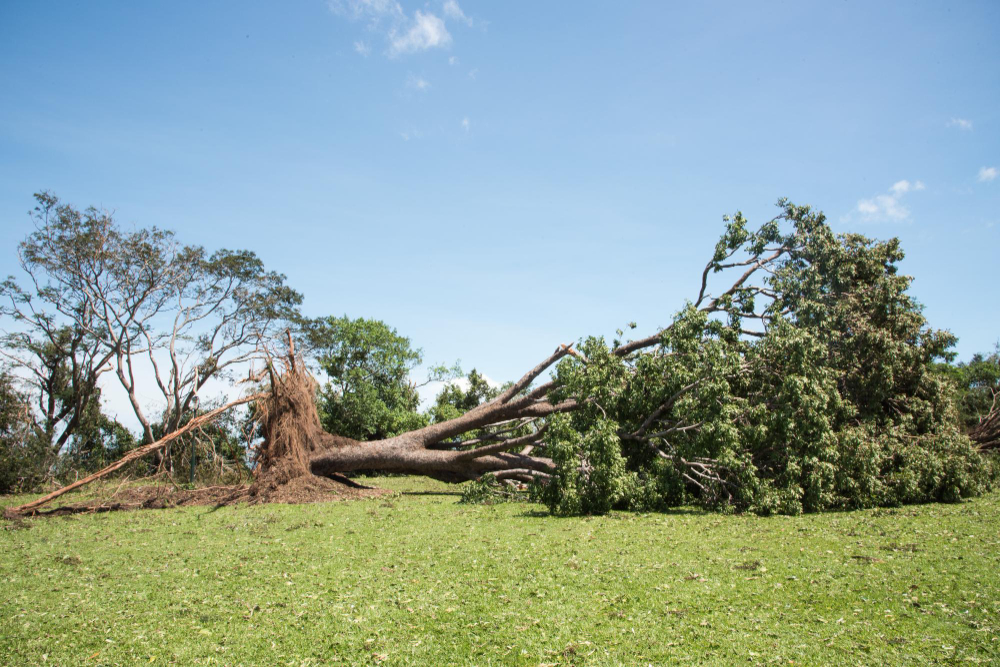
A tree storm damage checklist gives Central Ohio homeowners a clear way to respond when fall winds, soaked soil, and early ice leave limbs on the roof or a trunk leaning toward the driveway. September through November brings strong cold fronts across Franklin, Delaware, and Fairfield counties, and trees still carrying full leaves catch far more wind than most people expect.
In this article, you'll learn how to handle the first hour after a storm safely, how to judge whether a damaged tree can be saved, what to document for your insurance claim, and how to prepare weakened trees before winter arrives. Each section follows the same order a certified arborist uses on a real storm call.
Here's what you need to know.
- What should you do in the first hour after a storm damages your trees?
- How does a tree storm damage checklist help you judge what you're seeing?
- How do you document damage and clean up without getting hurt?
- What should you do this fall to protect storm-damaged trees before winter?
Keep reading to protect your family, your home, and the trees worth saving after the next Central Ohio storm.
What should you do in the first hour after a storm damages your trees?
The first hour after a storm sets the tone for everything that follows. Many serious injuries happen during this window, when homeowners rush outside to assess damage before the hazards are clear. A calm, methodical approach protects your family and preserves the evidence your insurer will need later. Treat every downed limb as a potential hazard until you've confirmed otherwise.
According to the National Weather Service, a thunderstorm is classified as severe when it produces wind gusts of 58 mph or stronger, a threshold that regularly snaps large limbs and uproots shallow-rooted trees. Central Ohio sees storms near that range most years, and the fall season adds saturated soil and full canopies to the equation. That combination means even healthy, well-maintained trees can fail. The three checks below give you a safe, repeatable starting point for emergency tree removal decisions.
Why should downed power lines be the first thing you look for?
Fallen limbs often drag service drops and utility lines to the ground, and those wires can stay energized even when your lights are out. Electricity can travel through wet grass, puddles, chain-link fences, and the branches themselves. Utility safety guidance generally advises staying at least 35 feet away from any downed line and anything it touches. Never assume a quiet wire is dead, because crews may re-energize circuits during restoration.
Once you've confirmed there's no electrical hazard nearby, walk the perimeter of the house before approaching any tree. If a line is tangled in the canopy, the job belongs to the utility first and a qualified line-clearance crew second. When a tree has already struck the home, emergency tree removal takes priority over any other cleanup work. Report the outage to AEP Ohio or your municipal utility, then work through these safety steps.
- Call 911 immediately if a line is sparking, burning, or lying across a road or vehicle.
- Keep children and pets indoors until the utility confirms the area is safe.
- Avoid touching fences, gutters, or metal siding that a fallen branch is resting against.
- Never use a ladder, pole saw, or rope to move a limb that is near or touching a wire.
- Note the time and location of the downed line for your utility report and insurance records.
Which hanging limbs and leaning trunks mean you need to stay back?
Broken branches that remain lodged in the canopy, often called hangers or widowmakers, can drop without warning hours or days after the storm passes. A sudden gust, a squirrel, or the vibration of cleanup work nearby is enough to release them. Leaning trunks deserve the same caution, especially when the lean appeared overnight. A fresh lean usually means the root plate has shifted and the tree has lost anchorage in the soil.
Use the tree storm damage checklist below to separate stable damage from active hazards. Any item that applies means the area under and around that tree should stay off-limits. Knowing the difference between cosmetic damage and a true safety hazard helps you prioritize calls when local crews are booked solid. Most trees follow a predictable pattern of structural failure, so these warning signs rarely appear at random.
- Soil heaving at the base: raised or cracked soil on one side signals that the roots are pulling free.
- Cracks through the main trunk: vertical splits compromise the tree's primary load-bearing column.
- Hangers in the canopy: detached limbs held only by other branches can fall at any moment.
- Split codominant stems: a V-shaped union that opened during the storm rarely holds under the next wind load.
- Bark torn down the trunk: large tears below a broken limb expose wood to decay and mark a heavy failure point.
When is a damaged tree an emergency instead of a scheduled repair?
A tree becomes an emergency when it threatens people, blocks access to the home, or continues damaging a structure. Limbs resting on a roof can shift and puncture decking as the wood dries and settles. Trunks leaning over a bedroom, driveway, or neighbor's garage call for a same-day evaluation. Trees with trunks near the foundation carry higher stakes because even a partial failure reaches the structure.
Non-emergency damage includes small broken branches, stripped leaves, and limbs down in open lawn areas. Those can wait for a scheduled visit once priority calls are handled. Homeowners in Columbus and the surrounding suburbs often face multi-day waits after widespread storms, so accurate triage helps you land on the right list. When you call, describe what the tree is touching, how large the damaged section is, and whether anyone is at risk.
How does a tree storm damage checklist help you judge what you're seeing?
Once the immediate hazards are clear, the next goal is an honest assessment of each tree on the property. Damage that looks catastrophic can be survivable, while a tree with only a few missing limbs may be hiding a failed root system. A structured tree storm damage checklist keeps emotion out of the decision. It also gives you organized notes to share with an arborist or insurance adjuster.
Assessment works best in daylight, from the ground, with binoculars and a phone camera. Walk slowly around each tree and look from the root flare to the top of the crown. Compare what you see against the tree's condition before the storm, using older photos if you have them. The sections below cover the inspection process, survival odds for storm-damaged trees, and the local weather patterns behind fall damage.
What does a safe ground-level inspection actually involve?
A ground-level inspection follows the same top-to-bottom logic a professional tree inspection uses, minus the climbing gear and specialty tools. You're looking for structural defects rather than cosmetic ones. Stay outside the drip line of any tree with hangers, and never stand downhill from a leaning trunk. Take photos at every step, because damage often looks different a week later.
The steps below take about ten minutes per tree. If you're unsure what separates a hazard from normal growth, comparing your notes with common visual warning signs makes the call easier. Record each tree's location, approximate height, and species if you know it. That record becomes useful for insurance, permits, and scheduling.
- Start at the root flare and look for lifted soil, severed roots, or mushrooms growing at the base.
- Scan the trunk for vertical cracks, cavities, and bark that has separated from the wood.
- Check each major branch union for splits, especially on trees with two or more competing stems.
- Look up through the crown for hangers, broken tops, and limbs that are twisted but still attached.
- Estimate the percentage of canopy lost and note which side of the tree took the damage.
Can a tree that lost major limbs still recover?
Many storm-damaged trees recover better than homeowners expect, as long as the trunk and root system remain sound. According to Iowa State Extension, trees with split trunks or extensive trunk damage are no longer structurally sound, and large trees that lose half or more of their canopy should generally be removed. Oaks and sugar maples tend to tolerate pruning wounds better than weak-wooded species such as silver maple and Callery pear. Age and pre-storm health also shift the odds considerably.
Corrective crown reduction can rebalance a tree that lost limbs on one side, lowering wind load while new growth fills in. When the damage falls in a gray area, the choice between removal or trimming depends on the tree's location and the risk it poses. Use the two groups below as a starting framework. A certified arborist should confirm the decision before you remove a mature shade tree.
Signs the tree can likely be saved:
- More than half of the crown remains intact and evenly distributed.
- The main trunk and central leader show no cracks or splits.
- Broken branches are small in diameter compared to the trunk.
- The tree was healthy and vigorous before the storm.
Signs removal is the safer choice:
- The trunk is split, cracked, or partially uprooted.
- More than half of the canopy was lost or stripped.
- The root plate has lifted or the lean increased after the storm.
- Existing decay, cavities, or disease had already weakened the wood.
Why do fall storms hit Central Ohio trees so hard?
Fall storms in Central Ohio often arrive while trees are still in full leaf, which turns every canopy into a sail. Cold fronts sweeping through in September and October frequently follow weeks of summer drought stress, leaving roots and wood less resilient. Heavy autumn rain then saturates the clay soils common around Columbus, reducing root anchorage right when wind loads peak. The result is more uprooting than you'd typically see during a dry midsummer storm.
The region has a clear precedent for this pattern. The NWS Wilmington office recorded a 75 mph gust at Port Columbus International Airport during the September 2008 windstorm driven by the remnants of Hurricane Ike, which brought down trees across the metro area. Trees already weakened by common tree diseases or borer activity were among the first to fail. Homeowners who schedule a late-summer inspection can address weak limbs before the season turns.
How do you document damage and clean up without getting hurt?
Documentation and fallen tree cleanup happen in the same window, and the order matters. Photograph everything before anyone moves a limb, because insurers want to see damage in its original position. Once the record is complete, cleanup can begin with the lowest-risk tasks. Anything involving height, tension, or heavy wood should wait for a trained crew.
This stage is also where many homeowners make costly mistakes. Cutting a tree before documenting it can weaken a claim, and hiring the first crew that knocks on the door can lead to poor work or inflated invoices. A deliberate approach protects both your safety and your budget. The following sections cover records, safe do-it-yourself limits, and contractor selection.
What records will your insurance adjuster want to see?
Homeowners policies typically cover tree removal when a tree damages a covered structure, such as the house, a detached garage, or a fence. Coverage for trees that fall in open yard areas without striking anything is often limited or excluded. Reviewing your insurance coverage before calling a contractor helps you understand what the claim is likely to include. Adjusters rely on clear evidence, so thorough records speed up approval.
Gather the items below within the first 24 to 48 hours after the storm. Knowing typical removal costs in the Columbus area also helps you judge whether a contractor's estimate is reasonable. Keep receipts for any emergency tarping, board-up, or temporary repairs. Most policies expect you to take reasonable steps to prevent further damage.
- Wide-angle photos: show the tree, the structure it struck, and the surrounding yard for context.
- Close-up photos: capture the break point, roof or siding damage, and any exposed roots.
- Date and time log: note when the storm hit and when you discovered each area of damage.
- Written estimates: request itemized quotes that separate removal, hauling, and stump work.
- Weather records: save the storm date so the adjuster can match your claim to a verified event.
Which cleanup jobs are safe to handle on your own?
Chainsaw work after storms is one of the most common sources of homeowner injuries. According to the CDC, roughly 36,000 people are treated in emergency departments each year for chainsaw injuries, and that risk rises after major storms. Bent trunks and branches pinned under other wood store energy that can release with enough force to cause serious harm. The same federal guidance recommends keeping bystanders at least 30 feet from anyone cutting limbs or a fallen tree.
Guidance from MU Extension advises leaving bent trees and branches larger than about 6 inches in diameter to experienced operators rather than weekend woodcutters. Picking up small debris, raking, and stacking brush are reasonable tasks for most homeowners. Anything overhead, under tension, or resting on a structure is not. Use these common scenarios to set realistic expectations.
- Small twigs and leaves in the lawn: safe to rake and bag, with gloves and eye protection.
- Limbs under 3 inches lying flat on the ground: manageable with a handsaw or loppers once no wires are nearby.
- Large limbs resting on the roof: expect a crew with rigging or a crane to lower the wood without causing further structural damage.
- A fallen trunk with a remaining stump: plan for professional removal followed by stump grinding once the site is cleared.
How do you choose a storm crew you can actually trust?
Storm events bring out door-to-door operators who may lack insurance, training, or proper equipment. Asking a few direct questions filters out most of them within minutes. Reputable companies expect these questions and answer them without hesitation. Having an ISA Certified Arborist on staff is one of the clearest signals of professional standards.
Beyond credentials, look for written estimates, clear timelines, and a physical business address. The same principles for vetting a contractor apply in Columbus as they do anywhere else in Ohio. Pruning should follow ANSI A300 standards, and crews should work under ANSI Z133 safety requirements. The questions below are the ones Central Ohio homeowners ask most often.
Should you pay a large deposit before work starts?
Reputable companies rarely require full payment upfront. A modest deposit for large jobs is normal, but final payment should follow completed work and cleanup.
What insurance should the company carry?
Ask for certificates of general liability and workers' compensation coverage. Without them, an injury on your property could become your financial responsibility.
Can you spread out the cost of major storm work?
Many established companies offer financing options for large removals and multi-tree jobs. This can help when insurance covers only part of the damage.
Are there discounts for certain homeowners?
Some local providers offer veteran discounts and senior pricing. It's worth asking about them before you sign an estimate.
What should you do this fall to protect storm-damaged trees before winter?
Storm recovery doesn't end once the debris is gone. Trees that survived with damage enter winter carrying fresh wounds, uneven crowns, and stressed root systems. Snow and ice loads in December and January test those weak points again. The work you do in October and November largely determines which trees make it to spring.
Late fall is also an ideal time for corrective work on many species. Leaves drop, which makes branch structure easier to see, and many insects and pathogens slow down in cooler weather. Crews can plan cuts precisely and reduce the chance of infection. The three areas below focus on repair, winter preparation, and long-term Central Ohio tree care.
Which repairs give a damaged tree the best chance to recover?
Recovery starts with clean cuts. Torn or jagged branch stubs invite decay, so each break should be pruned back to the branch collar following ANSI A300 standards. Proper pruning technique preserves the collar tissue that allows the tree to seal the wound naturally. Skip wound paint and sealants, which tend to trap moisture and slow the tree's own defenses.
Structural support may be needed for trees with weakened unions or heavy limbs. Cabling and bracing systems reduce stress on vulnerable branch attachments without removing healthy wood. A soil and nutrient program delivered through plant health care can also support root recovery after a hard season. Common repair priorities include the following.
- Pruning broken branches back to healthy wood at the branch collar.
- Removing hangers and cracked limbs that could fall in winter wind.
- Installing dynamic or static cables in trees with split-prone codominant stems.
- Spreading 2 to 4 inches of organic mulch over the root zone, kept away from the trunk flare.
- Deep watering before the ground freezes if fall rainfall has been light.
How should you prepare weakened trees for ice and snow loads?
Ice can add hundreds of pounds of weight to a single mature limb, and damaged trees have less capacity to carry it. Long horizontal branches and trees with narrow V-shaped crotches are especially vulnerable. Selective thinning reduces the surface area where ice accumulates. Following a pre-winter checklist before Thanksgiving gives you time to schedule work before crews get busy with the first freeze.
Pay close attention to trees with exposed or severed roots from uprooting or heavy cleanup equipment. Root damage reduces stability all winter, when frozen soil shifts and wind loads increase. Familiarity with typical winter damage patterns, such as frost cracks and sunscald, helps you spot new problems early. Homeowners who follow year-round tree maintenance routines tend to see far less winter breakage.
Why does an annual arborist visit pay off after a stormy season?
Some storm damage doesn't show up for months. Internal cracks, root injuries, and fungal infections that entered through fresh wounds may only become visible the following spring or summer. Regular arborist consultations catch those developments before they turn into sudden failures. A yearly visit also creates a documented history of each tree's condition, which supports future insurance and permit decisions.
Trees that die slowly after a storm become more dangerous the longer they stand, whether they're in Fairfield County or anywhere else in Central Ohio. Dead wood turns brittle, and removal gets harder and more expensive as the tree deteriorates. Planning early gives you realistic removal timelines rather than emergency scheduling. Pairing inspections with a consistent trimming schedule keeps small defects from becoming storm failures. Property managers overseeing HOA properties benefit from the same approach applied across dozens of trees at once.
Conclusion
Storm season in Central Ohio rewards homeowners who respond with a plan rather than a chainsaw. Securing the area, assessing each tree honestly, documenting the damage, and preparing survivors for winter turns a chaotic morning into a manageable process. The same approach arborists use on professional storm calls, from root flare inspections to ANSI A300 pruning cuts, is one you can follow safely from the ground. Knowing which signs call for immediate action keeps your family protected and your insurance claim on solid footing.
Healthy trees add shade, value, and character to your property, and many of them can recover from serious storm damage with timely care. The key is getting qualified eyes on each tree before small problems become costly failures. Keep this tree storm damage checklist handy through fall and winter so you can act quickly when the next front moves through. Revisit it each spring to catch delayed damage early. When you're ready for a professional storm damage evaluation, reach out to Premier Trees LLC to schedule a visit with a certified arborist.
