


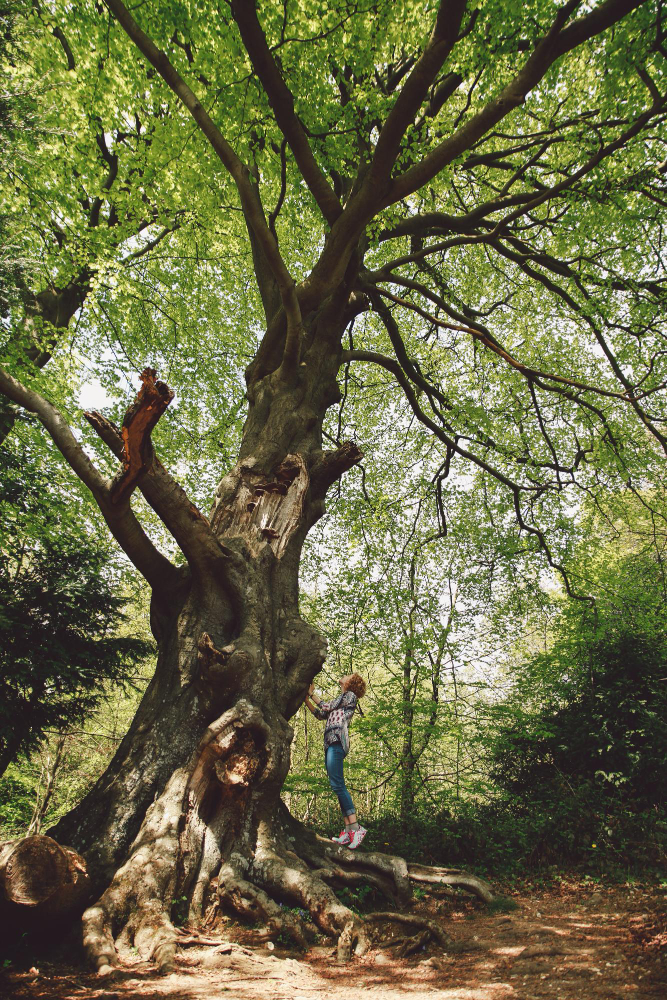
Figuring out whether a tree is dead or dormant gets tricky in Columbus every fall, when maples, oaks, and ash trees drop their leaves and bare branches start to look lifeless against a gray October sky. The same question returns in April, when one tree stays bare while the rest of the street has already leafed out.
In this article, you'll learn why dormancy and death look so similar, how to test a tree without harming it, what failed tests usually mean, and what steps to take once a tree is confirmed dead. Each section is built around the conditions Central Ohio trees actually face.
Below, we'll walk through each important aspect.
- Why can a healthy dormant tree look exactly like a dead one?
- How can you tell if a tree is dead or dormant without hurting it?
- What does it mean when your tree fails the test?
- What should Columbus homeowners do after confirming a dead tree?
Keep reading to avoid removing a healthy tree too soon or leaving a hazardous one standing too long.
Why can a healthy dormant tree look exactly like a dead one?
Dormancy is a survival strategy, and from the outside it looks a lot like death. Deciduous trees shed their leaves, slow their metabolism, and stop visible growth for several months each year. A dead tree shows the same bare silhouette, which is why so many homeowners struggle to tell the two apart. The differences are real, but they sit beneath the bark and inside the buds.
Knowing whether your tree is dead or dormant starts with understanding what normal dormancy looks like in Central Ohio. Timing varies by species, weather, and the stress a tree experienced during the growing season. A tree that goes dormant early is not automatically dying, and a tree that wakes up late is not automatically lost. The three sections below explain what's happening and which trees tend to confuse homeowners most.
What actually happens inside a tree during dormancy?
As days shorten and temperatures fall, deciduous trees pull nutrients from their leaves and store them in roots, trunk, and branches. A layer of cells forms at the base of each leaf stem, sealing it off so the leaf can drop cleanly. Water movement slows, and cells adjust their chemistry to tolerate freezing temperatures. The tree is alive the entire time, simply running at a much lower rate.
Buds for next year's leaves and flowers are already formed before the tree goes dormant, protected by tough outer scales. Those buds are the clearest proof of life during winter, which is why arborists check them first. Dormancy is also the reason many arborists favor dormant-season pruning for most species, since branch structure is visible and many pests are inactive. Good winter preparation in the fall helps a tree enter this resting phase with its energy reserves intact.
Why do some Columbus trees drop their leaves early in the fall?
Early leaf drop is one of the most common reasons homeowners call about a tree they think has died. In most cases, the tree is responding to stress rather than dying outright. Late-summer heat, compacted urban soils, and root damage from construction can all push a tree into dormancy weeks ahead of its neighbors. The key is to separate a stressed tree from one with a serious underlying problem.
Trees across Columbus and the surrounding suburbs face a predictable set of stressors by September. Each one can trigger early color change or leaf drop, and several can happen at once. A late-summer inspection helps pinpoint which factor is driving the problem. The most frequent causes include the following.
- Extended dry spells, since drought stress forces trees to shed leaves to conserve water.
- Defoliating insects, including Japanese beetles and other summer pests that strip foliage by August.
- Leaf diseases such as anthracnose and tar spot, which cause spotting and premature drop on maples and sycamores.
- Root injury from trenching, grade changes, or soil compaction near driveways and new additions.
- Girdling roots that wrap around the trunk flare and slowly restrict water and nutrient flow.
Which species are naturally slow to wake up in spring?
Not every tree leafs out on the same schedule, and late species are often mistaken for dead ones. According to Iowa State Extension, species such as black walnut naturally break bud later than others, and comparing a tree to others of the same species nearby helps show whether a delay is environmental. Cool spring weather slows bud development across the board. A harsh winter can also injure buds, forcing the tree to rely on backup buds that take longer to open.
Species at the northern edge of their natural range are especially prone to winter setbacks.
Research from Michigan State University documented delayed leaf-out and stem dieback on redbud, sweetgum, tulip poplar, and baldcypress after an unusually cold winter. Columbus landscapes include many of these same trees, so a slow start after a hard winter is common. Keeping a spring checklist helps you track which trees are simply late. Trees that often lag behind include:
- Black walnut, which commonly leafs out weeks after maples and elms.
- Honeylocust and Kentucky coffeetree, both late to break bud in Central Ohio.
- White and bur oaks, which often wait until mid to late spring.
- Catalpa, one of the last shade trees to produce leaves each year.
- Baldcypress and sweetgum, especially after a winter with deep cold snaps.
How can you tell if a tree is dead or dormant without hurting it?
You don't need special tools to get a reliable first answer. A few simple checks on twigs, buds, bark, and the base of the trunk reveal most of what an arborist looks for during an initial visit. The goal is to gather evidence from several parts of the tree rather than relying on a single sign. One brown twig means very little, while a pattern across the whole crown means a great deal.
These checks work in any season, though they're easiest to read in late winter and early spring when buds are swelling. Avoid climbing or using ladders, and stick to branches you can reach from the ground. On oaks, limit wounding between April and July, when fresh cuts can attract the beetles that spread oak wilt. The sections below cover the scratch test, bud and twig inspection, and the trunk and root clues that matter most.
How do you perform a scratch test correctly?
The scratch test is the fastest way to confirm whether a branch is still alive. It exposes the cambium, the thin layer of living tissue just beneath the bark that produces new wood and bark each year. Guidance from Nebraska Extension explains that bright green tissue under the bark means that part of the tree is alive, while tan or brown tissue means it has died. The same guidance notes that a deciduous tree still bare by mid-July is almost certainly dead.
Technique matters, because a careless test can give a false result or leave an unnecessary wound. Test several branches on different sides of the crown before drawing conclusions about the whole tree. Keep each scratch small, no larger than a thumbnail. If results are mixed or hard to read, a professional check can reveal unhealthy trees that look fine at first glance.
- Choose a young twig about the thickness of a pencil, since older bark is too thick to read easily.
- Use your thumbnail or a clean pocketknife to scrape away a small strip of the outer bark.
- Look for moist, bright green tissue directly under the bark, which indicates living cambium.
- Move closer to the trunk and repeat the test if the first twig shows brown, dry tissue.
- Repeat on at least four branches from different sides of the tree to map where tissue is alive.
What do the buds and twigs tell you about the tree's health?
Buds are a tree's blueprint for the coming season, and they hold up well to close inspection. Healthy dormant buds feel firm and plump, with tight scales and a color that matches the species. Dead buds tend to be shriveled, hollow, or crumbly, and they often fall off when touched. Checking buds alongside the scratch test gives you two independent signals instead of one.
Twig flexibility adds a third clue, though it's less reliable on brittle species like silver maple and willow. Compare what you find against a visual comparison of healthy and hazardous trees to calibrate your judgment. Work through the checks below on several branches at eye level. Record what you find, because comparing notes a few weeks apart shows whether the tree is progressing or declining.
- Bud firmness: plump, firm buds signal a living branch, while papery or hollow buds point to dieback.
- Bud color: live buds keep their species color, while dead ones turn dull gray or black and dry out.
- Twig flexibility: living twigs bend before breaking, while dead twigs snap cleanly with a dry interior.
- Swelling in spring: buds that enlarge as temperatures rise confirm the tree is coming out of dormancy.
- Distribution: live buds spread across the whole crown suggest a healthy tree, while buds only on lower limbs suggest decline from the top down.
What trunk and root clues point to a dead tree?
The trunk and root flare often tell the story more clearly than the branches. Bark that peels away in large sheets, exposing dry wood underneath, is a strong sign the tissue beneath has died. Fungal growth such as bracket fungi or clusters of mushrooms at the base points to internal decay. Cracks, cavities, and oozing sap can indicate disease or insect activity that has cut off the tree's supply lines.
Many of these dead tree signs develop slowly, so they're easy to miss until the problem is advanced. Pay attention to the root flare, where soil should gently slope away from a visible widening at the base of the trunk. Buried flares and volcano-shaped piles, two of the most common mulching mistakes, can hold moisture against the bark and encourage rot. Broader root problems often show up first as thinning canopy and sparse leaves in the upper crown.
What does it mean when your tree fails the test?
A failed scratch test on a few branches doesn't always mean the whole tree is gone. Many trees lose individual limbs to storms, disease, or winter injury while the rest of the crown stays healthy. The real question is how much of the tree is affected and why. Those two factors decide whether the right response is pruning, treatment, or removal.
Context matters just as much as the test result. A single dead limb on a vigorous oak calls for a very different plan than widespread dieback on an ash tree in a neighborhood hit hard by pests. Location also plays a role, since a declining tree over a driveway carries more risk than one at the back of a large lot. The sections below help you interpret what a failed test is likely telling you.
Could emerald ash borer be the reason your ash tree died?
If the tree in question is an ash, emerald ash borer should be the first suspect. This invasive beetle arrived in Ohio in the early 2000s, and its larvae feed beneath the bark, cutting off the flow of water and nutrients. Infested trees often show thinning from the top down, D-shaped exit holes in the bark, and woodpecker damage as birds hunt for larvae. Many untreated ash trees in Columbus neighborhoods have already died or are standing dead.
The scale of the damage is significant. According to Ohio State University, researchers studying surviving ash trees focus on areas where emerald ash borer has killed more than 95 percent of the ash population, and much of that work has been based at the USDA Forest Service laboratory in Delaware, Ohio. Dead ash wood becomes brittle quickly, which makes these trees dangerous to climb and unpredictable to fell. A professional tree inspection can confirm the cause and determine whether any remaining ash trees on your property are candidates for treatment.
When is partial dieback still worth saving?
Partial dieback is common, and many trees recover well once the cause is addressed and dead wood is removed. The deciding factors are how much of the crown is affected, whether the trunk is sound, and whether the underlying cause can be managed. A tree with a few dead branches after a dry summer is a very different case from one with half its crown bare. Species tolerance and age also influence recovery.
When dieback falls in a gray area, the choice between removal or trimming should rest on a clear assessment rather than a guess. Trees worth saving often respond to a targeted plant health care program that addresses soil, nutrients, and pests. Following a steady trimming schedule afterward keeps dead wood from building up again. Use the two groups below as a starting point.
Signs the tree is likely worth saving:
- Dead wood is limited to a few branches or less than a third of the crown.
- The trunk is solid, with no major cavities, cracks, or fungal growth.
- The cause, such as drought or a treatable pest, can be identified and managed.
- The remaining crown produces healthy buds and full-sized leaves.
Signs removal is the better choice:
- More than half of the crown is dead or failing to leaf out.
- Decay fungi or large cavities appear on the trunk or root flare.
- The tree is an untreated ash showing advanced emerald ash borer damage.
- The declining tree stands over a house, driveway, or play area.
How long can a dead tree safely stay standing?
A dead tree starts losing strength as soon as its tissues stop functioning. Wood dries, decay fungi move in, and roots that once anchored the tree begin to rot. The timeline varies by species, soil, and weather, but the direction never reverses. Every season a dead tree stands, it becomes a greater safety hazard to people and property.
Waiting also tends to raise the cost of removal, since brittle wood limits how crews can climb and rig the tree. The same pattern plays out whether a tree stands in Fairfield County or in a Columbus backyard. Ice and wind in Central Ohio winters add even more pressure, and typical winter damage hits dead wood hardest. Here's what homeowners can generally expect over time.
- First few months: fine twigs and small branches begin dropping, especially during wind.
- First year: bark loosens, larger limbs become brittle, and decay fungi may appear on the trunk.
- Second year: major limbs can fail without warning, and climbing the tree becomes unsafe for crews.
- Beyond two years: root decay increases the risk of whole-tree failure, often requiring cranes or specialized equipment for removal.
What should Columbus homeowners do after confirming a dead tree?
Once the evidence points to a dead tree, the priority shifts to safe, well-planned removal. That process starts with a professional confirmation, continues with a clear estimate, and ends with decisions about the stump and what to plant next. Rushing any of these steps can lead to property damage or unnecessary costs. A deliberate plan protects your home and makes the most of your landscape budget.
Fall is a practical time to act, since leaf-free branches are easier for crews to assess and rig. Frozen or firm ground in late fall and winter can also reduce lawn damage from equipment. Scheduling before the first major storm season of the year keeps a dead tree from becoming an emergency. The sections below cover who to call, what removal involves, and how to move forward.
Who should confirm the diagnosis before removal?
A home diagnosis is a useful starting point, but a professional opinion should confirm it before any mature tree comes down. An ISA Certified Arborist can tell the difference between dormancy, partial dieback, and true death with far greater accuracy. Arborists also evaluate risk to nearby structures and recommend the safest removal method. Their assessment protects you from removing a tree that could have recovered.
Choosing a trustworthy company matters just as much as the diagnosis itself. Look for proper insurance, written estimates, and crews that follow ANSI Z133 safety standards. Ongoing arborist consultations can also catch declining trees years before they become hazards. Homeowners often ask the following questions.
Can an arborist tell if a tree is dead in the middle of winter?
Yes. Bud condition, cambium color, bark, and trunk defects can all be evaluated during dormancy, and winter is often when branch structure is easiest to see.
Should you wait until spring to see if the tree leafs out?
Waiting makes sense for trees that pass the scratch test in several places. If tests show widespread dead tissue or the trunk is failing, waiting only adds risk.
Is a free estimate the same as a professional assessment?
Not always. An estimate prices the job, while an assessment evaluates the tree's health and risk, so ask whether a credentialed arborist will inspect it.
Do you need a permit to remove a dead tree in Columbus?
Trees on private property usually don't require a permit, but trees in the public right-of-way are managed by the city. Confirm ownership before scheduling any work near the street.
What does dead tree removal in Columbus usually involve?
Most removals follow a similar sequence, adjusted for the tree's size, condition, and surroundings. Crews assess the site, plan the drop zone or rigging points, and remove the tree in sections when space is tight. Dead trees often require extra rigging because brittle limbs can't support a climber's weight. Homeowners in Columbus neighborhoods with tight lots and overhead lines frequently need this more controlled approach.
Understanding typical removal costs helps you evaluate estimates with confidence. Most residential jobs finish within a day, though a realistic removal timeline depends on access, tree size, and cleanup requirements. If the dead tree damaged a structure, review your insurance coverage before work begins. Plan ahead for stump grinding as well, since a leftover stump can sprout, attract pests, and interfere with replanting. For larger projects, ask whether flexible financing options are available.
How do you replace a lost tree and protect the rest of your yard?
Losing a mature tree changes the light, shade, and feel of a property, but it also creates an opportunity. Choosing the right replacement species for the site prevents repeating the same problems. Diversity matters too, since landscapes dominated by one species, as ash once was, are vulnerable to a single pest. Thoughtful planting also supports long-term home value and curb appeal.
Protecting the trees you still have is just as important as planting new ones. Regular year-round maintenance catches stress early, before it leads to decline. Property managers overseeing HOA properties can apply the same approach across entire neighborhoods. Keep these priorities in mind as you plan your next steps.
- Select replacement species suited to your soil, sun exposure, and available space.
- Plant in fall or early spring, when cooler temperatures help new roots establish.
- Keep the root flare exposed and water new trees deeply through their first two growing seasons.
- Schedule periodic checks on remaining trees, especially any ash, maple, or oak showing thinning crowns.
- Avoid trenching, grading, or parking equipment within the drip line of mature trees.
Conclusion
Telling dormancy from death comes down to reading the right signals in the right places. Healthy buds, green cambium, and a sound trunk point to a tree that is simply resting, while brittle twigs, brown tissue, and decay point to a tree that has stopped living. Checking several branches, comparing trees of the same species, and understanding local pressures like emerald ash borer and drought all sharpen the picture. With that knowledge, you can avoid both premature removal and the risk of leaving a dead tree standing.
The checks in this guide give Columbus homeowners a practical first step, but mature trees deserve a professional second look before any final decision. A trained arborist can confirm whether a tree is dead or dormant, identify the cause, and recommend the safest next move. Acting before winter storms arrive protects your home, your family, and the healthy trees that remain. Your landscape is a long-term investment, and informed decisions keep it strong for years to come. If you'd like an expert opinion on a tree you're unsure about, Premier Trees LLC can schedule an assessment with a certified arborist.
